Akai MPC Key 61 — VS — Akai MPC1000
Akai MPC Key 61
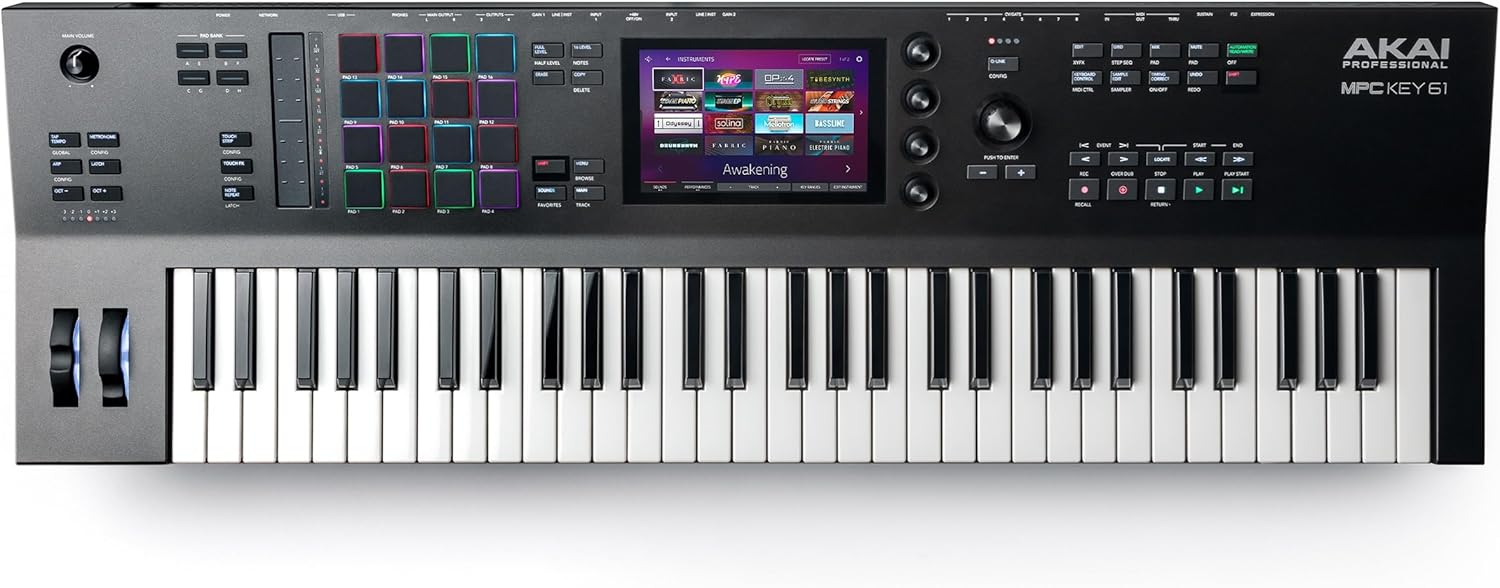
The MPC Key 61 is a powerful music keyboard that lets you make songs without needing a computer. It has 61 smooth keys you can play, colorful drum pads for making beats, and over 6,000 awesome sounds built in. You can change sounds with cool effects, twist and shape them using special controls, and even record your voice with a microphone. It connects to other music gear, works with Bluetooth and Wi-Fi, and even comes with software if you want to use it on a computer too. It's like a full music studio in one keyboard!
Akai MPC1000
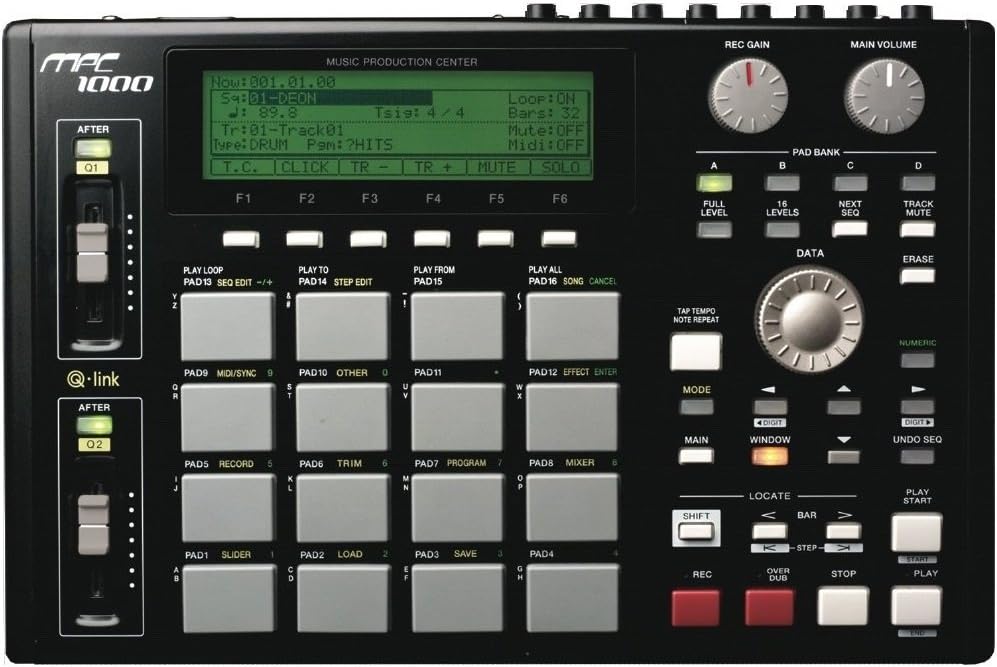
The Akai MPC1000 packs powerful music-making tools into a small, affordable machine. It features 32-voice stereo sampling, a 64-track sequencer, and 16 responsive pads for real-time playing and recording. With 16MB of built-in memory (expandable to 128MB) and the ability to save projects on a Compact Flash card, it’s easy to keep your sounds handy. Plus, you can connect it to a computer via USB to drag and drop your work quickly. Compact and rugged, the MPC1000 is perfect for producers on the go.
| Spec | Akai MPC Key 61 | Akai MPC1000 |
|---|---|---|
| Manufacturer | Akai Professional | Akai Professional |
| Year Released | 2022 | 2003 |
| Polyphony | 128 | 64 |
| Sample Rate | 44.1kHz | 44.1kHz |
| Storage | Internal SSD | CompactFlash |
| Pads | 16 velocity-sensitive RGB pads | 16 velocity-sensitive pads |
| Sequencer | Yes | Yes |
| Effects | EQ, Reverb, Delay, Compression | EQ, Compression, Reverb |
| I/O | MIDI In/Out, USB, Audio In/Out | MIDI In/Out, Audio In/Out |
| Screen | 7-inch multi-touch display | LCD |
| Software Integration | MPC Software | MPC Software |
| Build | Keyboard controller with standalone capabilities | Standalone |
| Price | $1600 | $700 used |
| More about | Details | Details |
Buy the Akai MPC Key 61 on Amazon.com
Buy Now On AmazonAkai MPC Key 61 vs. Akai MPC1000: Which Sampler is Right for You?
Summary: In this blog post, we explore the exciting world of music production with a comparison between two popular samplers from Akai: the Akai MPC Key 61 and the Akai MPC1000. Each has its unique features and charms, appealing to different types of music enthusiasts. Dive in to see which one suits your needs best!
Introduction
Music production can feel like a magical journey, and having the right tools can make all the difference. Today, we’re comparing two beloved samplers: the Akai MPC Key 61 and the Akai MPC1000. Whether you’re a seasoned musician or just starting your musical adventure, these devices offer unique features to help you create amazing sounds.
Feature Comparisons
Year of Release and Design
Let’s start with the basics. The Akai MPC Key 61 is a modern marvel, released in 2022. It combines the traditional MPC features with a full 61-key keyboard, making it a powerhouse for both production and live performance. On the other hand, the Akai MPC1000 was released in 2003 and has become a classic in its own right. Unlike the MPC Key 61, the MPC1000 is a standalone device without the keyboard, focusing purely on sampling and sequencing.
Polyphony and Sound Capabilities
When it comes to polyphony, which is the ability to play multiple notes at once, the MPC Key 61 shines with 128-note polyphony. This allows for rich, layered compositions. In comparison, the MPC1000 offers 64-note polyphony, which was impressive at its time and still holds up for many music styles.
Storage and Sample Rate
Storage is crucial for keeping your sounds and projects. The MPC Key 61 features an internal SSD, providing ample space for samples and projects. The MPC1000 relies on CompactFlash cards for storage, which was standard in the early 2000s but is less convenient by today’s standards. Both devices have a sample rate of 44.1kHz, ensuring high-quality sound.
Pads and User Interface
The MPC Key 61 has 16 velocity-sensitive RGB pads, which not only respond to how hard you hit them but also light up in different colors. This adds a visual element to your music-making experience. The MPC1000 also has 16 velocity-sensitive pads, but they lack the RGB lighting, offering a more straightforward approach.
In terms of user interface, the MPC Key 61 boasts a 7-inch multi-touch display, making navigation intuitive and easy. The MPC1000 uses an LCD screen, which, while functional, lacks the touch capabilities and modern feel.
Connectivity and Effects
Both samplers offer MIDI In/Out and Audio In/Out, making them versatile for connecting with other gear. The MPC Key 61 includes USB connectivity, adding another layer of modern convenience. When it comes to effects, the MPC Key 61 offers EQ, Reverb, Delay, and Compression, giving you plenty of options to shape your sound. The MPC1000 provides EQ, Compression, and Reverb, which, while fewer, are still powerful tools for sound design.
Software Integration and Build
Both devices integrate with MPC Software, allowing for extended capabilities and seamless music production workflows. The MPC Key 61 is a keyboard controller with standalone capabilities, making it ideal for those who want an all-in-one solution. The MPC1000 is purely standalone, appealing to those who prefer a more traditional approach to sampling.
Pros and Cons
Akai MPC Key 61
Pros:
- Modern design with a full 61-key keyboard
- High polyphony for complex compositions
- Intuitive 7-inch multi-touch display
- Ample internal SSD storage
- Versatile effects suite
Cons:
- Higher price point ($1600)
- May be overwhelming for beginners
Akai MPC1000
Pros:
- Classic, reliable design
- Affordable, especially on the used market ($700)
- Solid standalone capabilities
- Compact and portable
Cons:
- Limited storage options
- No RGB pads or touch display
Final Verdict
The Akai MPC Key 61 is perfect for musicians who want a modern, all-in-one production and performance tool. Its advanced features make it ideal for both studio work and live performances.
The Akai MPC1000 is a great choice for those who appreciate classic gear and prefer a straightforward, standalone sampler. Its affordability makes it accessible to those just starting out or looking for a reliable addition to their setup.
Whether you’re drawn to the cutting-edge features of the MPC Key 61 or the timeless appeal of the MPC1000, both samplers offer unique ways to explore your musical creativity.