Akai MPC Key 61 — VS — Elektron Analog Rytm MKII
Akai MPC Key 61
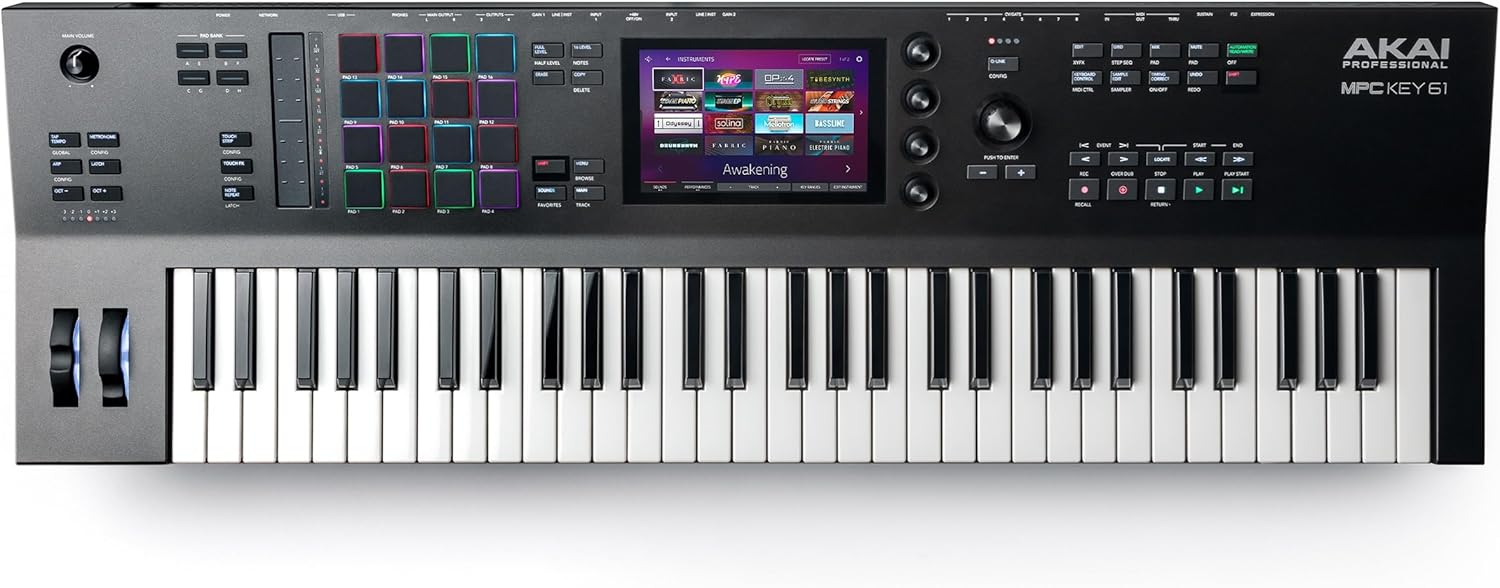
The MPC Key 61 is a powerful music keyboard that lets you make songs without needing a computer. It has 61 smooth keys you can play, colorful drum pads for making beats, and over 6,000 awesome sounds built in. You can change sounds with cool effects, twist and shape them using special controls, and even record your voice with a microphone. It connects to other music gear, works with Bluetooth and Wi-Fi, and even comes with software if you want to use it on a computer too. It's like a full music studio in one keyboard!
Elektron Analog Rytm MKII
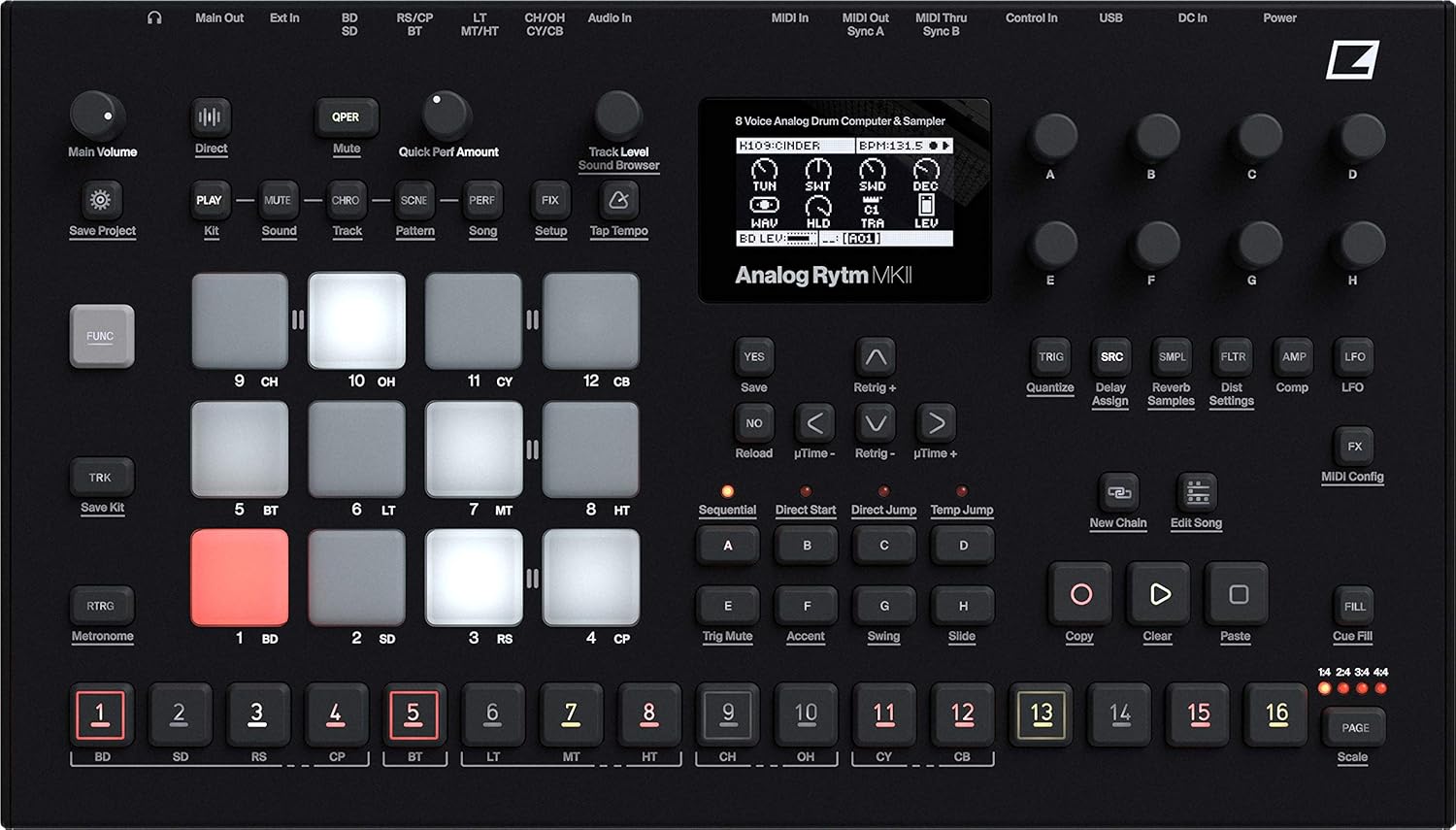
The Analog Rytm MKII is a powerful drum machine and sampler that helps you make awesome beats. It has 8 different drum sounds you can shape with real analog power and digital samples. You can tap on big, fun pads to play your sounds, or use the step sequencer to build cool rhythms. It lets you record sounds, change them up, and mix them however you like. Whether you're making music at home or performing on stage, this beat machine is ready to help you create something amazing.
| Spec | Akai MPC Key 61 | Elektron Analog Rytm MKII |
|---|---|---|
| Manufacturer | Akai Professional | Elektron |
| Year Released | 2022 | 2018 |
| Polyphony | 128 | 12 |
| Sample Rate | 44.1kHz | 48kHz |
| Storage | Internal SSD | SD card |
| Pads | 16 velocity-sensitive RGB pads | 8 velocity-sensitive pads |
| Sequencer | Yes | Yes |
| Effects | EQ, Reverb, Delay, Compression | Analog and digital effects |
| I/O | MIDI In/Out, USB, Audio In/Out | MIDI In/Out/Thru, USB, Audio In/Out |
| Screen | 7-inch multi-touch display | OLED display |
| Software Integration | MPC Software | Elektron Transfer |
| Build | Keyboard controller with standalone capabilities | Desktop |
| Price | $1600 | $2299 |
| More about | Details | Details |
Buy the Akai MPC Key 61 on Amazon.com
Buy Now On AmazonBuy the Elektron Analog Rytm MKII on Amazon.com
Buy Now On AmazonAkai MPC Key 61 vs. Elektron Analog Rytm MKII: Which Sampler is Right for You?
Summary: In this detailed comparison, we will explore the features and capabilities of two popular music production tools: the Akai MPC Key 61 and the Elektron Analog Rytm MKII. Both are highly respected in the world of music production but serve different needs. Read on to discover which one might be the best fit for your creative endeavors.
Introduction
Are you a music enthusiast looking to take your beats to the next level? Whether you’re a seasoned producer or just starting, choosing the right gear is crucial. Today, we’re diving into a head-to-head comparison of two incredible music production devices: the Akai MPC Key 61 and the Elektron Analog Rytm MKII. Both are amazing in their own right, but they cater to different musical needs. Let’s explore their features, weigh their pros and cons, and help you find the right fit for your music-making journey.
Features and Capabilities
Sound and Polyphony
When it comes to creating music, polyphony—or the number of notes a device can play at once—is key. The Akai MPC Key 61 boasts an impressive polyphony of 128, allowing for rich and complex compositions. In contrast, the Elektron Analog Rytm MKII offers a polyphony of 12. While this is significantly lower, it focuses more on providing high-quality analog sounds for drum and percussion tracks, thus excelling in its specialized field.
Sample Rate and Storage
The Akai MPC Key 61 operates at a sample rate of 44.1kHz, which is standard for most music production needs. It also features an internal SSD for storage, providing ample space for your samples and projects. On the other hand, the Elektron Analog Rytm MKII steps it up with a 48kHz sample rate, offering slightly better sound resolution. However, it relies on an SD card for storage, which might be less convenient for some users who prefer built-in storage solutions.
Pads and Sequencing
Pads are integral to music production, allowing for dynamic and expressive beat-making. The Akai MPC Key 61 features 16 velocity-sensitive RGB pads, offering a colorful and responsive experience. With a robust sequencer, it’s designed for both performance and production.
Conversely, the Elektron Analog Rytm MKII has 8 velocity-sensitive pads. While fewer in number, these pads are highly responsive and work seamlessly with its powerful sequencer, which is particularly tailored for rhythm and drum patterns. This makes it a favorite among electronic and beat-focused musicians.
Effects and Integration
Both devices offer a range of effects to enhance your sound. The Akai MPC Key 61 includes EQ, Reverb, Delay, and Compression, providing a comprehensive toolkit for sound shaping. It also integrates smoothly with MPC Software, allowing for extended capabilities and workflow enhancements.
The Elektron Analog Rytm MKII, however, shines with its combination of analog and digital effects, adding a unique character to its outputs. Its integration with Elektron Transfer software ensures easy file management and firmware updates, although it may not offer as expansive an ecosystem as the MPC Software.
Build and Design
The Akai MPC Key 61 is a keyboard controller with standalone capabilities, making it a versatile choice for those who want an all-in-one solution for both studio and live performances. Its 7-inch multi-touch display is a standout feature, offering intuitive control over your projects.
In contrast, the Elektron Analog Rytm MKII is designed as a desktop unit, ideal for those who prefer a dedicated drum machine setup. Its OLED display provides clear visibility, although it lacks the touch functionality of the Akai MPC’s screen.
Pros and Cons
Akai MPC Key 61
Pros:
- High polyphony of 128
- 16 velocity-sensitive RGB pads
- Integrated with MPC Software
- 7-inch multi-touch display
- Internal SSD storage
Cons:
- Higher price point at $1600
- May be overwhelming for beginners
Elektron Analog Rytm MKII
Pros:
- High-quality analog and digital effects
- Excellent for drum and rhythm production
- Compact desktop build
- 48kHz sample rate for high-resolution sound
Cons:
- Lower polyphony of 12
- External SD card storage
- Fewer pads than Akai MPC Key 61
- Pricey at $1800
Conclusion
In conclusion, the Akai MPC Key 61 and the Elektron Analog Rytm MKII offer distinct advantages for different types of music creators. The Akai MPC Key 61 is perfect for those seeking a versatile, all-in-one solution with robust production and performance capabilities. It’s particularly well-suited for musicians who want both keyboard and pad functionalities in a single device.
On the other hand, the Elektron Analog Rytm MKII is a powerhouse for percussion and rhythm-focused producers. Its analog sound and specialized effects make it a top choice for those who prioritize drum and beat creation.
Whether you’re crafting complex compositions or delivering powerful beats, these devices have something unique to offer. Choose the one that best aligns with your creative vision and production style. Happy music-making!