Akai MPC Key 61 — VS — Elektron Digitakt
Akai MPC Key 61
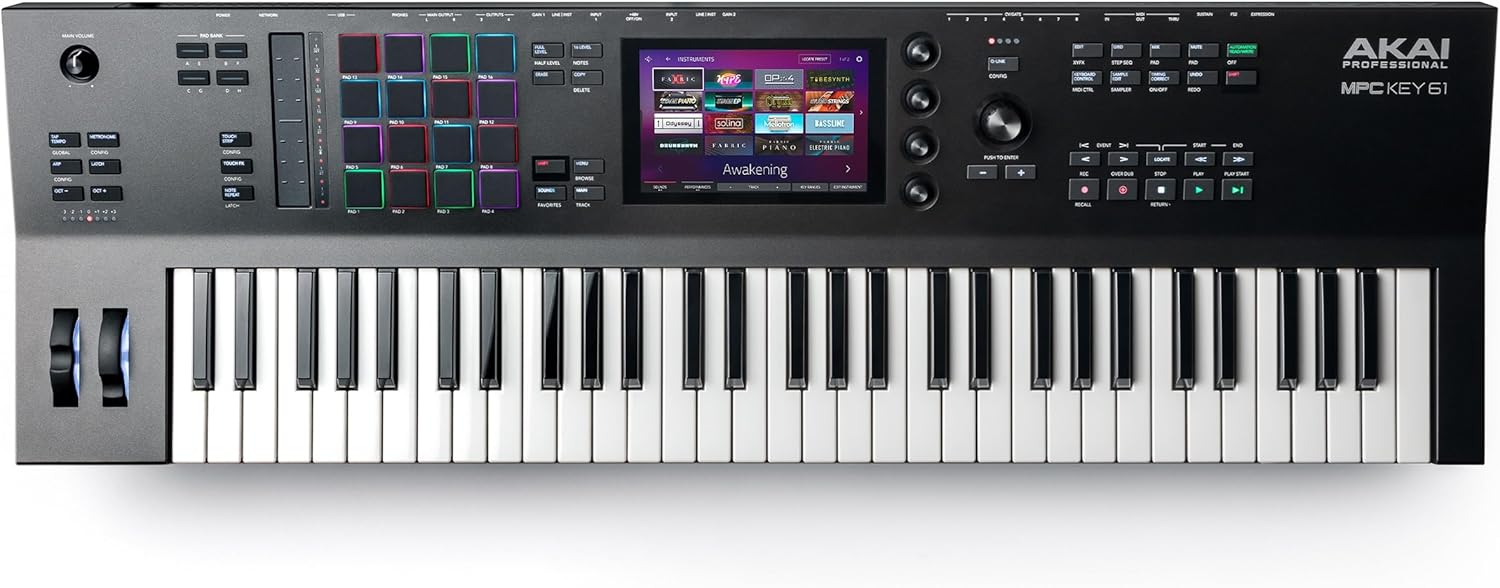
The MPC Key 61 is a powerful music keyboard that lets you make songs without needing a computer. It has 61 smooth keys you can play, colorful drum pads for making beats, and over 6,000 awesome sounds built in. You can change sounds with cool effects, twist and shape them using special controls, and even record your voice with a microphone. It connects to other music gear, works with Bluetooth and Wi-Fi, and even comes with software if you want to use it on a computer too. It's like a full music studio in one keyboard!
Elektron Digitakt
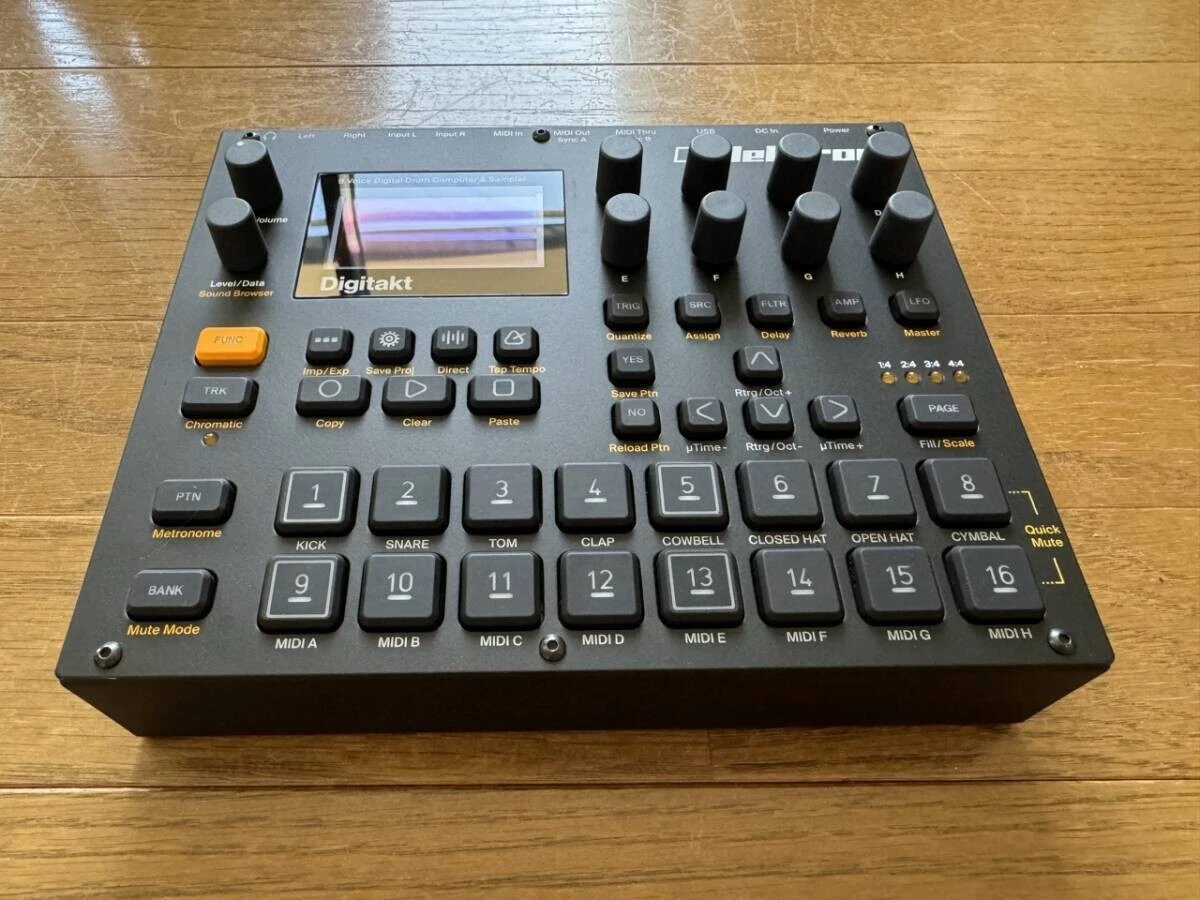
Digitakt is a super cool music machine that helps you make beats and mix sounds. It's small, tough, and built to last. You can record sounds, play them back, and create your own songs using 8 sound tracks and 8 more tracks to control other music gear. It also has awesome buttons and a bright screen to help you see what you're doing. Whether you're just starting or already making music, Digitakt gives you all the tools you need to have fun and make people dance!
| Spec | Akai MPC Key 61 | Elektron Digitakt |
|---|---|---|
| Manufacturer | Akai Professional | Elektron |
| Year Released | 2022 | 2017 |
| Polyphony | 128 | 8 |
| Sample Rate | 44.1kHz | 48kHz |
| Storage | Internal SSD | Internal storage |
| Pads | 16 velocity-sensitive RGB pads | No pads, uses buttons |
| Sequencer | Yes | Yes |
| Effects | EQ, Reverb, Delay, Compression | Reverb, Delay |
| I/O | MIDI In/Out, USB, Audio In/Out | MIDI In/Out/Thru, USB, Audio Out |
| Screen | 7-inch multi-touch display | OLED display |
| Software Integration | MPC Software | Elektron Transfer |
| Build | Keyboard controller with standalone capabilities | Desktop |
| Price | $1600 | $700 |
| More about | Details | Details |
Buy the Akai MPC Key 61 on Amazon.com
Buy Now On AmazonAkai MPC Key 61 vs. Elektron Digitakt: Which Sampler is Best for You?
Summary: If you’re a music gear enthusiast, you might be wondering whether the Akai MPC Key 61 or the Elektron Digitakt is the right sampler for you. Both are powerful tools for music production, but they offer different features and experiences. Let’s explore what makes each of these devices unique.
Introduction
Welcome to our deep dive into the world of samplers! Whether you’re just starting out in music production or you’re a seasoned pro, finding the right gear is crucial. Today, we’re putting the spotlight on two popular samplers: the Akai MPC Key 61 and the Elektron Digitakt. These two devices come from well-respected manufacturers and offer a wealth of features for musicians and producers alike. But which one is right for you? Let’s compare them to find out!
The Akai MPC Key 61
Features and Build
The Akai MPC Key 61 is a sampler that combines the classic MPC features with a 61-key keyboard. Released in 2022 by Akai Professional, it’s designed for both production and live performance. The MPC Key 61 offers an impressive polyphony of 128 voices, letting you create complex songs with many layers.
The device includes a 7-inch multi-touch display, which makes navigating through its features a breeze. It comes with 16 velocity-sensitive RGB pads, which are perfect for finger drumming or triggering samples. The internal SSD storage provides plenty of space for your sounds and samples.
Effects and Connectivity
When it comes to effects, the MPC Key 61 doesn’t disappoint. It includes EQ, reverb, delay, and compression, giving you the tools you need to shape your sound. Connectivity is also robust, with MIDI In/Out, USB, and audio In/Out options. The MPC Software integration adds even more functionality, making it a versatile tool for any studio setup.
The Elektron Digitakt
Features and Build
The Elektron Digitakt, introduced in 2017, is a compact drum machine and sampler that has become a favorite among electronic musicians. Unlike the MPC Key 61, the Digitakt is a desktop unit without a keyboard. It offers an 8-voice polyphony, which is lower than the MPC Key 61, but still sufficient for many styles of electronic music.
The Digitakt features an OLED display that, while smaller than the MPC’s, provides clear information about your sounds and sequences. Instead of pads, it uses buttons for playing samples, which some users may find less intuitive.
Effects and Connectivity
The Digitakt includes basic effects such as reverb and delay, which are essential for adding depth and space to your tracks. Its connectivity options include MIDI In/Out/Thru, USB, and audio out, covering all the basics for integrating with other gear. The Elektron Transfer software allows for easy sample management and updates.
Pros and Cons
Akai MPC Key 61
Pros:
- High polyphony with 128 voices
- Large 7-inch multi-touch display
- 16 velocity-sensitive RGB pads
- Extensive effects including EQ, reverb, delay, and compression
- Comprehensive connectivity options with MIDI, USB, and audio In/Out
- Integration with MPC Software
- Standalone capabilities with internal SSD
Cons:
- Higher price at $1600
- Larger and less portable due to keyboard and size
Elektron Digitakt
Pros:
- Compact and portable design
- Essential effects like reverb and delay
- Comprehensive MIDI and USB connectivity
- Lower price at $700
- Strong reputation for deep sequencing capabilities
Cons:
- Only 8 voices of polyphony
- No keyboard or pads, uses buttons
- Smaller OLED display
Final Verdict: Which Sampler is Right for You?
Both the Akai MPC Key 61 and the Elektron Digitakt are excellent samplers, but they cater to different needs. If you’re looking for a powerful, all-in-one solution with a keyboard and extensive features for both production and performance, the MPC Key 61 is the way to go. It’s ideal for musicians who want to create complex compositions and perform live.
On the other hand, if you need a more portable solution that’s great for beat-making and electronic music, the Digitakt is perfect. It’s a budget-friendly option for those who want deep sequencing capabilities without the need for a keyboard.
In the end, the choice between these two samplers will depend on your specific needs, budget, and workflow preferences. Happy music-making!