Akai MPC Key 61 — VS — Elektron Digitakt II
Akai MPC Key 61
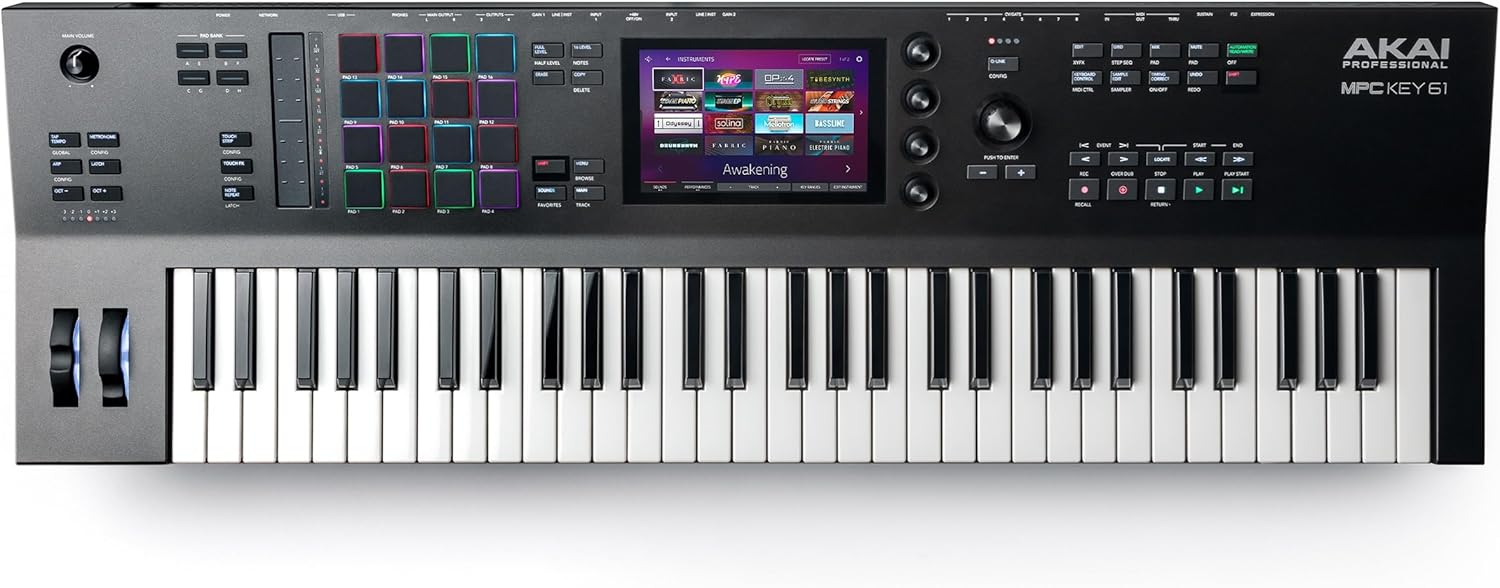
The MPC Key 61 is a powerful music keyboard that lets you make songs without needing a computer. It has 61 smooth keys you can play, colorful drum pads for making beats, and over 6,000 awesome sounds built in. You can change sounds with cool effects, twist and shape them using special controls, and even record your voice with a microphone. It connects to other music gear, works with Bluetooth and Wi-Fi, and even comes with software if you want to use it on a computer too. It's like a full music studio in one keyboard!
Elektron Digitakt II
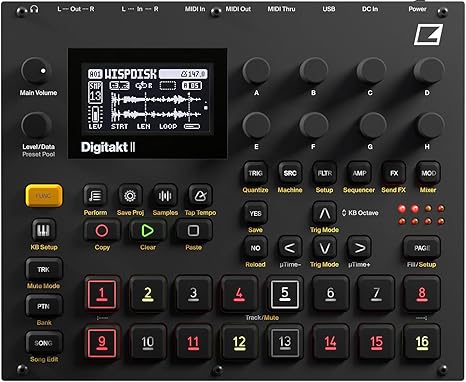
The Digitakt II is a fun music machine that lets you make beats and play with sounds. It has 16 tracks you can use to mix music, record sounds in stereo, or control other gear. You can change and shape your sounds in cool ways, with lots of new and improved features. It has tons of memory so you can store lots of sounds and keep creating for a long time. It's like a sound playground for your imagination!
| Spec | Akai MPC Key 61 | Elektron Digitakt II |
|---|---|---|
| Manufacturer | Akai Professional | Elektron |
| Year Released | 2022 | 2024 |
| Polyphony | 128 | 16 |
| Sample Rate | 44.1kHz | 48kHz |
| Storage | Internal SSD | Internal storage |
| Pads | 16 velocity-sensitive RGB pads | No pads, uses buttons |
| Sequencer | Yes | Yes |
| Effects | EQ, Reverb, Delay, Compression | Delay, reverb, chorus, bit reduction, sample reduction, and overdrive per track |
| I/O | MIDI In/Out, USB, Audio In/Out | MIDI In/Out/Thru, USB, Audio Out |
| Screen | 7-inch multi-touch display | OLED display |
| Software Integration | MPC Software | Elektron Transfer |
| Build | Keyboard controller with standalone capabilities | Desktop |
| Price | $1600 | $1149 |
| More about | Details | Details |
Buy the Akai MPC Key 61 on Amazon.com
Buy Now On AmazonBuy the Elektron Digitakt II on Amazon.com
Buy Now On AmazonAkai MPC Key 61 vs. Elektron Digitakt II: Which Sampler is Right for You?
If you’re passionate about making music and are looking for the perfect sampler to suit your needs, you might be considering the Akai MPC Key 61 and the Elektron Digitakt II. Both of these devices are powerful tools for music creation, but they have unique features that cater to different types of musicians. In this article, we’ll dive deep into what each of these samplers offers, comparing their features, pros, and cons to help you decide which one is best for your music-making journey.
Introduction
Creating music is like painting a picture with sound, and having the right tools can make all the difference. Samplers are fantastic devices that let you capture, manipulate, and play back sounds, turning your ideas into reality. Today, we’re exploring two popular samplers: the Akai MPC Key 61 and the Elektron Digitakt II. Let’s see how they stack up against each other!
Features Comparison
Akai MPC Key 61: A Full Studio in One Keyboard
The Akai MPC Key 61 is a robust music keyboard released in 2022 by Akai Professional. It features 61 smooth keys, which makes it feel like a traditional keyboard. With 128 polyphony voices, you can layer sounds and create rich textures in your music. The sample rate of 44.1kHz ensures that your audio is clear and crisp.
One of the standout features of the MPC Key 61 is its 16 velocity-sensitive RGB pads. These colorful pads are perfect for making dynamic beats and triggering samples. The 7-inch multi-touch display provides an intuitive interface for navigating your projects. Additionally, the MPC Key 61 comes with built-in software integration, allowing you to use MPC Software on a computer.
The keyboard comes equipped with a variety of effects, including EQ, reverb, delay, and compression, giving you plenty of options to shape your sound. It also has versatile I/O options, including MIDI In/Out, USB, and audio inputs and outputs, which means you can easily connect it to other gear.
Elektron Digitakt II: A Playground for Your Imagination
The Elektron Digitakt II, released in 2024, is a desktop sampler from Elektron. Unlike the MPC Key 61, the Digitakt II does not have traditional keys or pads; it uses buttons to control sounds. It offers 16 tracks for music creation, with a polyphony of 16 voices, and a higher sample rate of 48kHz, which provides excellent sound quality.
The Digitakt II is known for its powerful effects, including delay, reverb, chorus, bit reduction, sample reduction, and overdrive for each track. These effects can add depth and character to your music, allowing for creative sound manipulation. The OLED display provides a clear view of your settings and adjustments.
With its MIDI In/Out/Thru and USB connectivity, the Digitakt II can easily integrate with other devices. It also features internal storage, providing plenty of space for your sounds and projects. The Elektron Transfer software helps you manage your samples and updates seamlessly.
Pros and Cons
Akai MPC Key 61
Pros:
- Full Keyboard: The 61 keys allow for traditional piano-style playing.
- High Polyphony: 128 voices enable complex compositions.
- Versatile Connectivity: MIDI, USB, and audio I/O facilitate integration with other gear.
- Built-in Software: MPC Software enhances functionality and workflow.
- Standalone Capability: Operates without the need for a computer.
Cons:
- Price: At $1600, it is a significant investment.
- Size and Weight: As a keyboard, it is less portable than a desktop unit.
Elektron Digitakt II
Pros:
- Compact Design: Desktop build is portable and space-saving.
- High Sample Rate: 48kHz provides detailed audio quality.
- Extensive Effects: Multiple effects per track for creative sound shaping.
- Affordable: Priced at $1149, it’s more budget-friendly.
- Easy Software Integration: Elektron Transfer simplifies sample management.
Cons:
- Limited Polyphony: 16 voices may not suffice for complex compositions.
- No Traditional Keys or Pads: May not appeal to those looking for a traditional playing experience.
Final Verdict
Choosing between the Akai MPC Key 61 and the Elektron Digitakt II ultimately depends on your music-making style and needs. If you prefer a traditional keyboard feel with the capability of a standalone music studio, the MPC Key 61 is an excellent choice. It’s ideal for musicians who want versatility and a comprehensive feature set in one package.
On the other hand, if you’re looking for a compact, budget-friendly option with powerful sound-shaping abilities, the Digitakt II is the way to go. It’s perfect for electronic musicians and producers who love experimenting with different effects and sounds in a compact setup.
Whether you’re a seasoned musician or a budding producer, both of these samplers have something special to offer. Consider your preferences and needs, and you’ll find the perfect tool to bring your musical visions to life.