Akai MPC Key 61 — VS — Polyend Play
Akai MPC Key 61
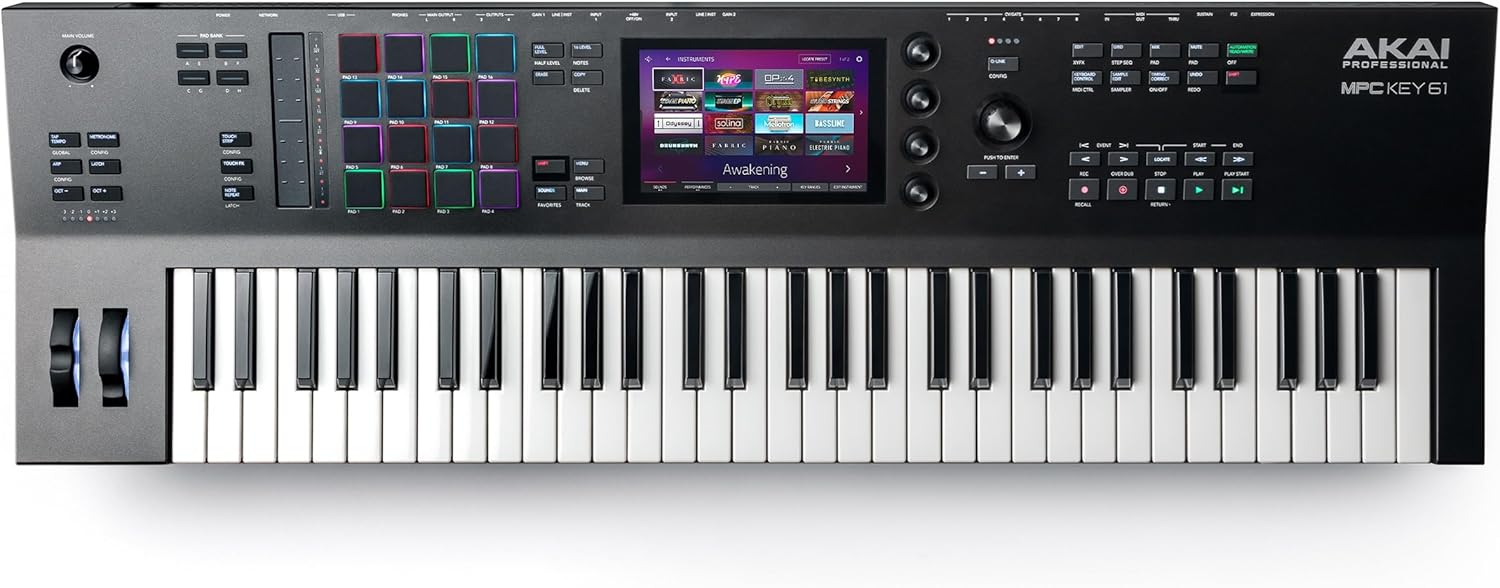
The MPC Key 61 is a powerful music keyboard that lets you make songs without needing a computer. It has 61 smooth keys you can play, colorful drum pads for making beats, and over 6,000 awesome sounds built in. You can change sounds with cool effects, twist and shape them using special controls, and even record your voice with a microphone. It connects to other music gear, works with Bluetooth and Wi-Fi, and even comes with software if you want to use it on a computer too. It's like a full music studio in one keyboard!
Polyend Play
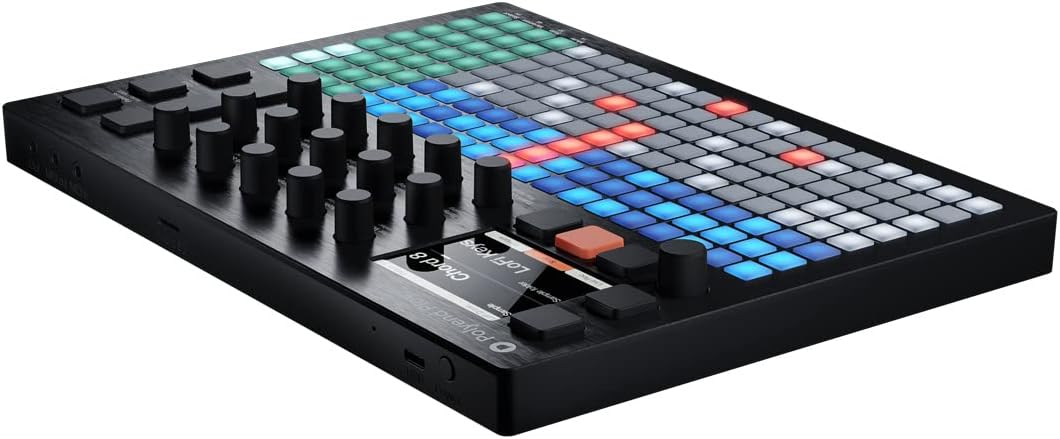
The Polyend Play is a powerful and intuitive sampler and groovebox designed for creative freedom without the complexity. It features over 30 ready-to-use sample kits, eight audio tracks, and eight polyphonic MIDI tracks, all accessible through a user-friendly interface tailored for both studio production and live performance. With 35 unique playback modes, randomizer and step repeater functions, a flexible 64-step sequencer, customizable pattern placement, onboard effects, and deep MIDI integration, the Play invites hands-on experimentation and effortless arrangement—whether you're jamming or building complete tracks from scratch.
| Spec | Akai MPC Key 61 | Polyend Play |
|---|---|---|
| Manufacturer | Akai Professional | Polyend |
| Year Released | 2022 | 2022 |
| Polyphony | 128 | 64 |
| Sample Rate | 44.1kHz | 44.1kHz |
| Storage | Internal SSD | MicroSD card |
| Pads | 16 velocity-sensitive RGB pads | 16 velocity-sensitive pads |
| Sequencer | Yes | Yes |
| Effects | EQ, Reverb, Delay, Compression | Multiple effects |
| I/O | MIDI In/Out, USB, Audio In/Out | MIDI In/Out, USB, Audio In/Out |
| Screen | 7-inch multi-touch display | LCD display |
| Software Integration | MPC Software | No |
| Build | Keyboard controller with standalone capabilities | Groovebox |
| Price | $1600 | $1100 |
| More about | Details | Details |
Buy the Akai MPC Key 61 on Amazon.com
Buy Now On AmazonBuy the Polyend Play on Amazon.com
Buy Now On AmazonAkai MPC Key 61 vs. Polyend Play: Which Sampler Should You Choose?
Summary: If you’ve ever dreamed of making your own music, you’ve probably thought about getting a sampler. Samplers let you record, modify, and play back pieces of sound, making them perfect for creating beats or even entire songs. Today, we’ll compare two popular options: the Akai MPC Key 61 and the Polyend Play. Both are powerful tools, but they suit different needs. Let’s find out which one is right for you!
Introduction
Music is a magical thing. It can make us feel happy, sad, excited, or calm. And if you love music, you might want to create your own. That’s where samplers come in. Samplers are like musical magic boxes. They let you take sounds from the world around you and turn them into music. But not all samplers are the same. Today, we’re going to look at two of them: the Akai MPC Key 61 and the Polyend Play. Both are amazing, but they do different things. Let’s see how they compare!
Features of Akai MPC Key 61
The Akai MPC Key 61 is like a music studio in a keyboard. It was made by Akai Professional in 2022. This sampler has 61 keys and is perfect for people who love to play the piano and make beats. It has 128 voices of polyphony, which means it can play lots of sounds at the same time. The sound quality is crisp and clear with a sample rate of 44.1kHz.
Inside the MPC Key 61, you’ll find an internal SSD for storage, which means you can save lots of your music and sounds right inside the machine. It also has 16 velocity-sensitive RGB pads that light up and let you play beats with your fingers. The sequencer helps you arrange your sounds into songs. Plus, it comes with effects like EQ, reverb, delay, and compression to make your music sound even better.
One of the coolest parts is the 7-inch multi-touch display. It’s like a big tablet screen that you can use to control everything. The MPC Key 61 also connects to other devices through MIDI, USB, and audio inputs and outputs. It even works with special MPC software to give you more options for making music.
Features of Polyend Play
The Polyend Play is a groovebox. That means it’s designed for making beats and electronic music. Made by Polyend in 2022, it’s smaller and more portable than the MPC Key 61. It has 64 voices of polyphony, which is still a lot! The sample rate is also 44.1kHz, so the sound quality is great.
Instead of a built-in SSD, the Polyend Play uses a microSD card for storage. This makes it easy to swap out cards and take your music with you. It also has 16 velocity-sensitive pads, but they don’t light up like the MPC’s. The sequencer is there to help you build your tracks, and it has multiple effects to spice up your sounds.
The screen is an LCD display, which is smaller and not a touchscreen. The Polyend Play connects to other devices using MIDI, USB, and audio inputs and outputs, just like the MPC. However, it doesn’t have special software integration, which means you do everything on the device itself.
Pros and Cons
Akai MPC Key 61
Pros:
- Keyboard and Pads: Combines a full keyboard with pads for versatile music creation.
- High Polyphony: 128 voices allow for complex compositions.
- Touchscreen Display: Big and easy to use.
- Storage: Internal SSD allows for lots of sample storage.
- Software Integration: Works with MPC software for extra features.
Cons:
- Price: At $1600, it’s more expensive.
- Portability: Bigger and less portable.
- Complexity: Might be overwhelming for beginners.
Polyend Play
Pros:
- Portability: Compact and easy to take anywhere.
- User-Friendly: Great for quick beat-making.
- Affordable: Costs $1100, less than the MPC Key 61.
- Storage Flexibility: Uses microSD cards, which are easy to switch.
Cons:
- Lower Polyphony: 64 voices, which might limit complex arrangements.
- Screen: Smaller LCD, not a touchscreen.
- No Software Integration: Everything is done on the device itself.
Who Should Choose the Akai MPC Key 61?
The Akai MPC Key 61 is perfect for people who want a powerful all-in-one studio setup. If you love playing the keyboard and want lots of options for making and shaping your sound, this is the one for you. It’s also great for those who like working with software and don’t mind spending a bit more money for extra features.
Who Should Choose the Polyend Play?
The Polyend Play is best for people who want a portable and easy-to-use device. If you love making beats on the go and want something that’s simple and fun, this is a great choice. It’s also better if you’re just starting out and don’t want to spend as much money.
Final Verdict
Both the Akai MPC Key 61 and the Polyend Play are fantastic samplers, but they serve different needs. The MPC Key 61 is like a musical powerhouse for serious musicians who want it all. The Polyend Play, on the other hand, is perfect for beat-makers who love portability and simplicity. Choose the one that fits your style, and start making amazing music today!