Akai MPC Key 61 — VS — Roland Verselab MV-1
Akai MPC Key 61
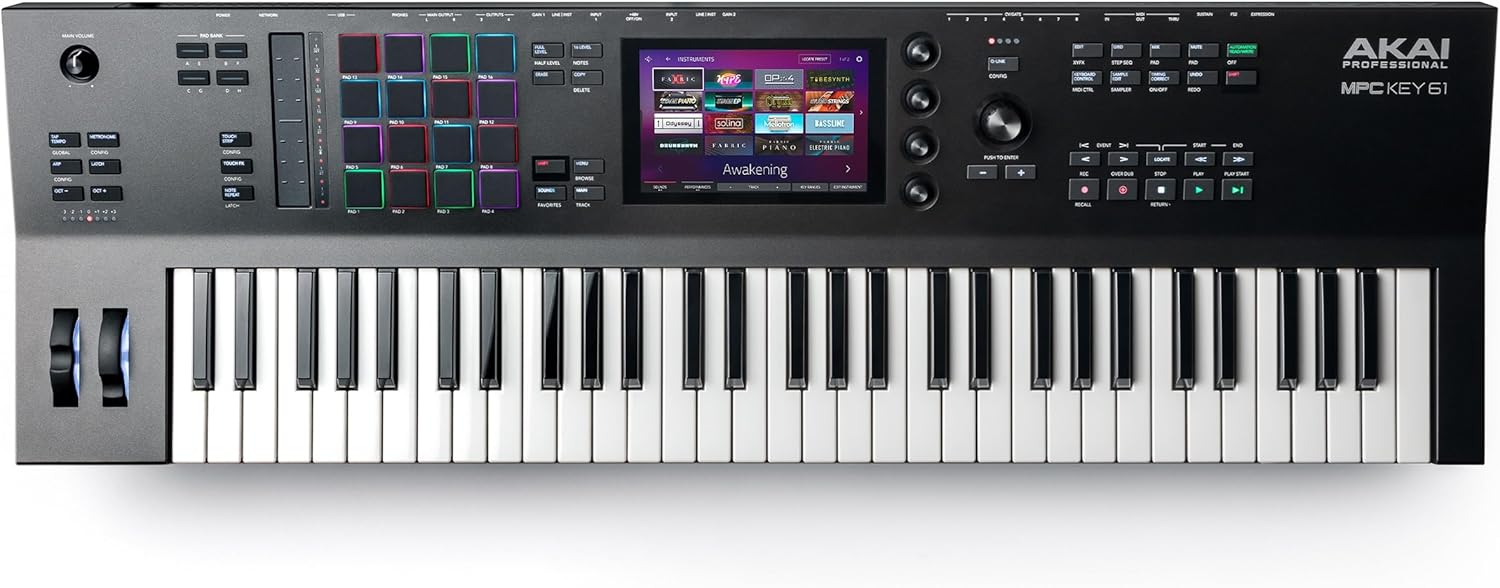
The MPC Key 61 is a powerful music keyboard that lets you make songs without needing a computer. It has 61 smooth keys you can play, colorful drum pads for making beats, and over 6,000 awesome sounds built in. You can change sounds with cool effects, twist and shape them using special controls, and even record your voice with a microphone. It connects to other music gear, works with Bluetooth and Wi-Fi, and even comes with software if you want to use it on a computer too. It's like a full music studio in one keyboard!
Roland Verselab MV-1
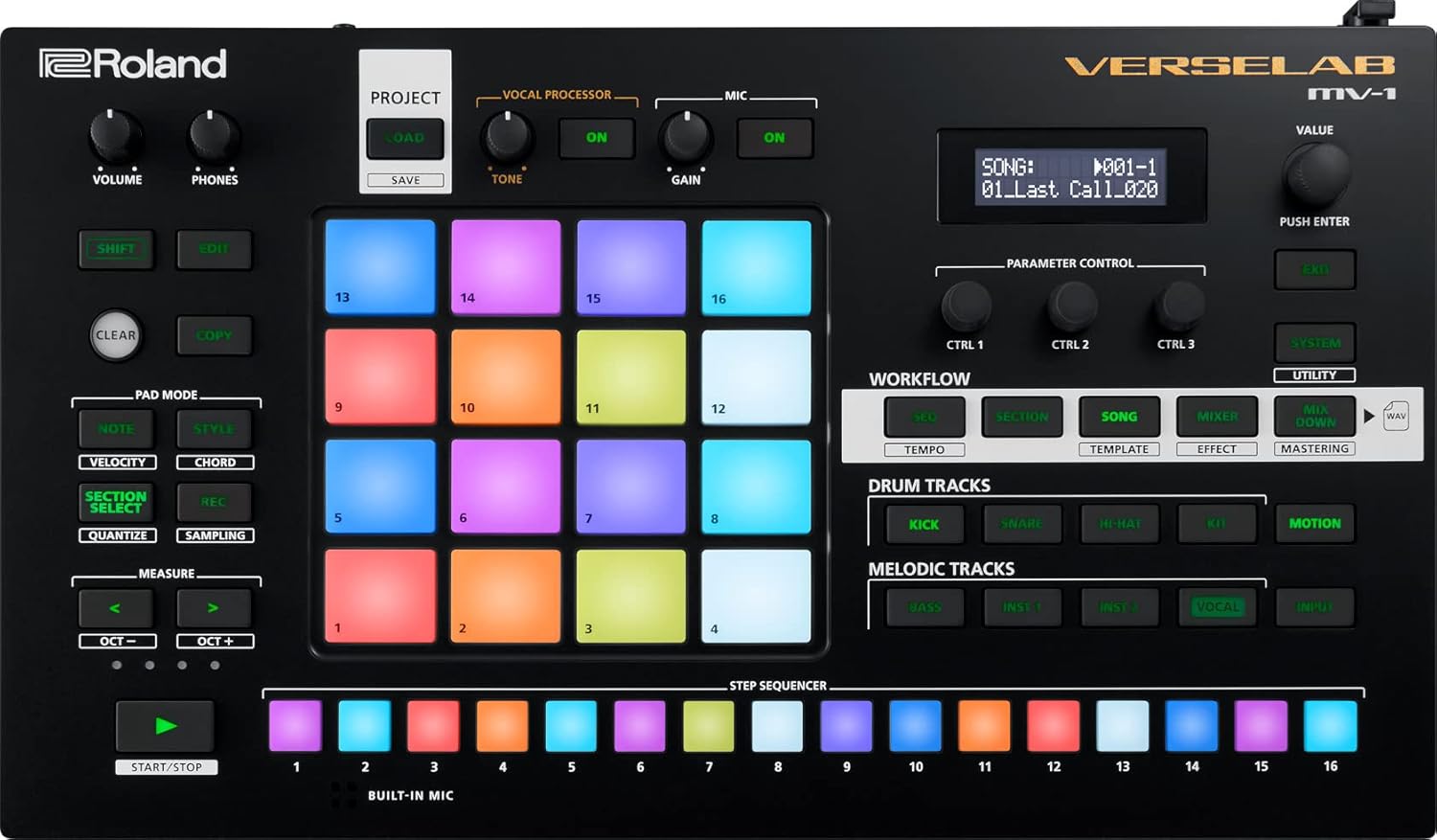
The VERSELAB MV-1 is a fun, all-in-one music studio that helps you make your own songs—from beats to vocals—right out of the box. It comes with over 3,000 cool sounds, easy-to-use tools for writing and recording music, and special effects like Auto-Pitch and harmonies. You can tap out beats with pads, record your voice, and even connect it to your phone, tablet, or computer. It's made to help anyone—beginner or pro—create awesome music without needing a bunch of extra stuff.
| Spec | Akai MPC Key 61 | Roland Verselab MV-1 |
|---|---|---|
| Manufacturer | Akai Professional | Roland |
| Year Released | 2022 | 2021 |
| Polyphony | 128 | 128 |
| Sample Rate | 44.1kHz | 44.1kHz |
| Storage | Internal SSD | SD card |
| Pads | 16 velocity-sensitive RGB pads | No pads |
| Sequencer | Yes | Yes |
| Effects | EQ, Reverb, Delay, Compression | EQ, Reverb, Delay |
| I/O | MIDI In/Out, USB, Audio In/Out | MIDI In/Out, USB, Audio In/Out |
| Screen | 7-inch multi-touch display | LCD display |
| Software Integration | MPC Software | Roland Software |
| Build | Keyboard controller with standalone capabilities | Groovebox |
| Price | $1600 | $500 |
| More about | Details | Details |
Buy the Akai MPC Key 61 on Amazon.com
Buy Now On AmazonBuy the Roland Verselab MV-1 on Amazon.com
Buy Now On AmazonSampler Showdown: Akai MPC Key 61 vs. Roland Verselab MV-1
In the world of music production, choosing the right gear can make all the difference. Two popular options for producers are the Akai MPC Key 61 and the Roland Verselab MV-1. Both offer unique features and capabilities, making them suitable for different types of musicians. Let’s dive into a detailed comparison to help you decide which one is right for you.
Introduction
Music production is like cooking; having the right tools can help you create something amazing. Whether you’re a seasoned producer or just starting out, choosing between the Akai MPC Key 61 and the Roland Verselab MV-1 can feel a bit overwhelming. Both of these samplers are powerful, but they offer different features that cater to various music-making needs. In this post, we’ll explore what makes each of these devices unique and help you choose the one that best suits your style.
Feature Comparisons
Build and Design
The Akai MPC Key 61 is a keyboard controller with standalone capabilities. It features a 61-key keyboard, making it ideal for musicians who enjoy playing melodies and chords. This device combines the classic MPC features with modern production tools, providing a comprehensive package for both production and performance. On the other hand, the Roland Verselab MV-1 is a groovebox, which means it’s designed for creating beats and sequences rather than playing melodies. Its compact design makes it highly portable, perfect for producers on the go.
Polyphony and Sound Quality
Both the Akai MPC Key 61 and the Roland Verselab MV-1 offer 128-note polyphony, which means they can play up to 128 different notes simultaneously. This is great for complex compositions and ensures that your music won’t be limited by voice count. They also share a sample rate of 44.1kHz, providing high-quality sound production suitable for professional use.
Storage and Memory
When it comes to storage, the Akai MPC Key 61 has an internal SSD, which means you’ll have plenty of space for your sounds and samples. This is particularly beneficial for producers who work with a lot of audio files. In contrast, the Roland Verselab MV-1 uses an SD card for storage. While this makes it more affordable, it might require you to swap out cards if you need more space.
Pads and Controls
A standout feature of the Akai MPC Key 61 is its 16 velocity-sensitive RGB pads. These pads are great for finger drumming and triggering samples, offering a tactile experience that’s both fun and functional. The Roland Verselab MV-1, however, does not come with any pads. This might be a downside if you’re used to the hands-on experience that pads provide, but it also means the MV-1 is less cluttered and more streamlined.
Sequencer and Effects
Both devices are equipped with a sequencer, allowing you to arrange your music easily. However, when it comes to effects, the Akai MPC Key 61 has a slight edge. It features EQ, reverb, delay, and compression, offering a more extensive range of sound-shaping tools. The Roland Verselab MV-1, while still versatile, offers EQ, reverb, and delay, which might be sufficient for most producers but less comprehensive than the Key 61.
Screen and Interface
The Akai MPC Key 61 boasts a 7-inch multi-touch display, providing an intuitive and interactive user experience. This large screen is ideal for navigating through menus and making precise adjustments. The Roland Verselab MV-1, meanwhile, has an LCD display. While it’s not as large or touch-sensitive, it still provides all the necessary information for music production, though navigating might require a bit more patience.
Software Integration
Software integration is crucial for producers who work with digital audio workstations (DAWs). The Akai MPC Key 61 integrates seamlessly with MPC Software, offering a familiar interface for those who are already used to the MPC ecosystem. The Roland Verselab MV-1, on the other hand, integrates with Roland’s own software, providing a different workflow that might appeal to users of other Roland products.
Pros and Cons
Akai MPC Key 61
Pros:
- 61-key keyboard for versatile music-making
- 16 velocity-sensitive RGB pads for a tactile experience
- Wide range of effects, including compression
- Large 7-inch multi-touch display for easy navigation
- Internal SSD for ample storage
Cons:
- Higher price point at $1600
- Larger and less portable than a groovebox
Roland Verselab MV-1
Pros:
- Compact and portable groovebox design
- Affordable price at $500
- Sufficient effects for most production needs
- Seamless integration with Roland software
Cons:
- No pads, limiting hands-on control
- Smaller LCD display might be less intuitive
- SD card storage could be limiting for some users
Final Verdict
Both the Akai MPC Key 61 and the Roland Verselab MV-1 are excellent tools for music production, but they cater to different needs. The Akai MPC Key 61 is perfect for musicians who want a comprehensive production and performance tool with a focus on melody and sound design. It’s best for those who don’t mind investing a little more for a feature-rich device.
In contrast, the Roland Verselab MV-1 is ideal for producers who are looking for a portable, affordable groovebox that’s great for beat-making on the go. It’s a fantastic choice for those who prioritize portability and ease of use.
Ultimately, the best sampler for you will depend on your specific needs, workflow, and budget. Whether you choose the Akai MPC Key 61 or the Roland Verselab MV-1, you’ll be equipped with a powerful tool to bring your musical ideas to life.