Akai MPC Live II — VS — Akai MPC1000
Akai MPC Live II
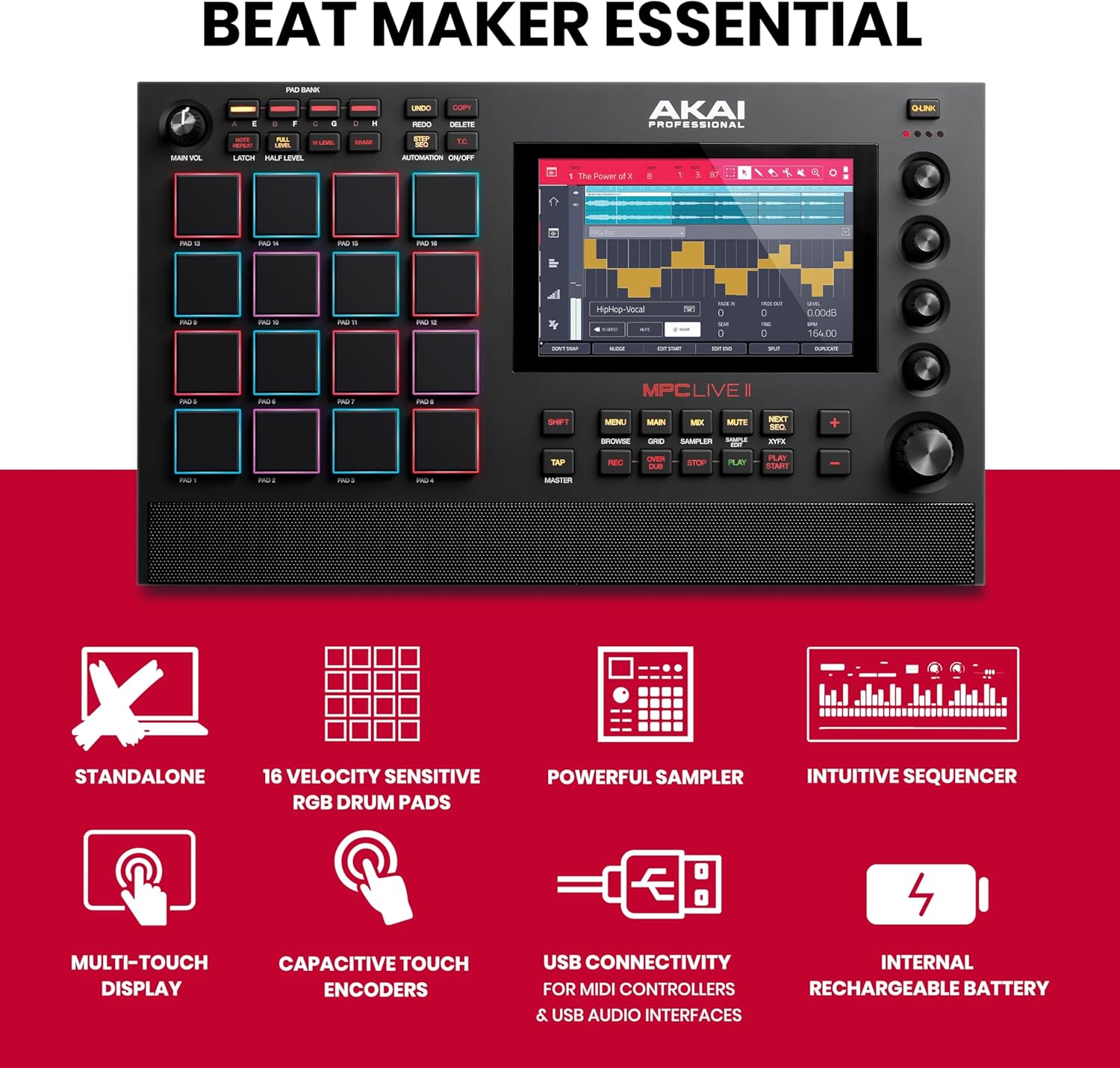
The MPC Live II is a portable, all-in-one music maker with built-in speakers and a rechargeable battery. You can make music anywhere, hear your beats clearly, and connect to Wi-Fi to grab samples or control Ableton Live. It's powerful, easy to use, and ready whenever inspiration strikes.
Akai MPC1000
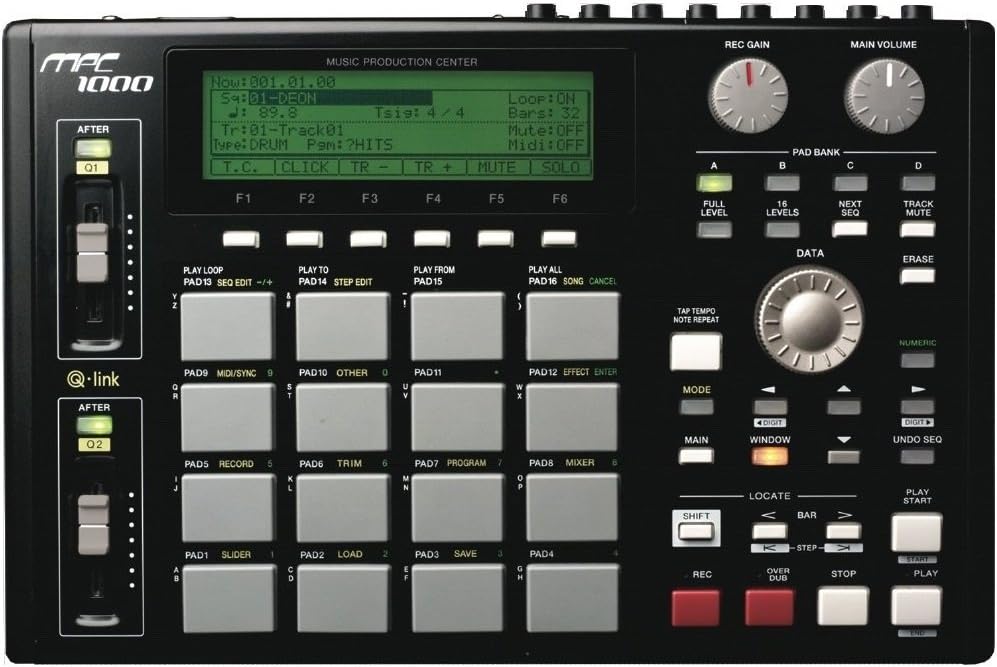
The Akai MPC1000 packs powerful music-making tools into a small, affordable machine. It features 32-voice stereo sampling, a 64-track sequencer, and 16 responsive pads for real-time playing and recording. With 16MB of built-in memory (expandable to 128MB) and the ability to save projects on a Compact Flash card, it’s easy to keep your sounds handy. Plus, you can connect it to a computer via USB to drag and drop your work quickly. Compact and rugged, the MPC1000 is perfect for producers on the go.
| Spec | Akai MPC Live II | Akai MPC1000 |
|---|---|---|
| Manufacturer | Akai Professional | Akai Professional |
| Year Released | 2020 | 2003 |
| Polyphony | 128 | 64 |
| Sample Rate | 44.1kHz | 44.1kHz |
| Storage | Internal SSD | CompactFlash |
| Pads | 16 velocity-sensitive RGB pads | 16 velocity-sensitive pads |
| Sequencer | Yes | Yes |
| Effects | EQ, Reverb, Delay, Compression | EQ, Compression, Reverb |
| I/O | MIDI In/Out, USB, Audio In/Out | MIDI In/Out, Audio In/Out |
| Screen | 7-inch multi-touch display | LCD |
| Software Integration | MPC Software | MPC Software |
| Build | Standalone | Standalone |
| Price | $1,299 | $700 used |
| More about | Details | Details |
Buy the Akai MPC Live II on Amazon.com
Buy Now On AmazonAkai MPC Live II vs. Akai MPC1000: Which Sampler Suits You Best?
Summary: In this blog post, we delve into the key differences between two popular samplers from Akai Professional: the modern Akai MPC Live II and the classic Akai MPC1000. Whether you’re a budding music producer or a seasoned beatmaker, understanding the strengths and weaknesses of each device can help you make an informed decision.
Introduction
If you’re into making music, you’ve probably heard about Akai’s MPC series. These samplers have been a staple in music production for years. Today, we are going to compare two famous models: the Akai MPC Live II and the Akai MPC1000. One is a modern powerhouse, while the other is a beloved classic. Whether you’re a beginner or a pro, choosing the right sampler can make all the difference. So, let’s dive in and see what each of these samplers has to offer!
Features: Old vs. New
Akai MPC Live II
Released in 2020, the Akai MPC Live II is like having a mini music studio in your hands. It has a whopping 128-note polyphony, which means you can play 128 different sounds at once. Its sample rate is 44.1 kHz, the same as a CD, ensuring high-quality sound. It comes with an internal SSD for storage, so you can save lots of music. The 16 velocity-sensitive RGB pads are colorful and responsive, making it fun to create beats. Plus, it has built-in speakers and a long battery life, which means you can make music anywhere!
The MPC Live II also has a big, 7-inch multi-touch screen, making it easy to navigate through settings and sounds. With effects like EQ, reverb, delay, and compression, you can tweak your music just the way you like it. It connects to other devices using MIDI In/Out, USB, and Audio In/Out. It also integrates smoothly with MPC Software, making it a versatile tool for any music project.
Akai MPC1000
The Akai MPC1000, launched in 2003, is a classic that many music producers still love. It has a 64-note polyphony, which is less than the MPC Live II, but still enough for most projects. It uses a 44.1 kHz sample rate, ensuring your sounds are clear and crisp. Storage is via CompactFlash cards, which may seem old school, but they are reliable and easy to swap out. The 16 velocity-sensitive pads are durable and have been a favorite feature for years.
The MPC1000 comes with a good selection of effects, including EQ, compression, and reverb. It also has MIDI In/Out and Audio In/Out, but lacks USB connectivity, which can limit its integration with modern devices. The screen is a basic LCD, not as fancy as the MPC Live II’s touch screen, but it gets the job done. Like the Live II, it works with MPC Software, so you can bring your projects to your computer for further editing.
Pros and Cons
Akai MPC Live II
Pros:
- Built-in Speakers: Make music on the go without extra gear.
- High Polyphony: Play more sounds at once.
- Colorful Pads: Easy to use and visually appealing.
- Touch Screen: Simple navigation and editing.
- Modern Connectivity: USB and MIDI for better integration with other devices.
Cons:
- Price: At $1400, it’s quite an investment.
- Complexity: With so many features, it might be overwhelming for beginners.
Akai MPC1000
Pros:
- Affordable: You can find it for around $700 used.
- Durable Design: Built to last with reliable pads.
- Classic Sound: Loved by many for its iconic sound and feel.
- Portable: Compact size makes it easy to take anywhere.
Cons:
- Limited Polyphony: Less capacity for simultaneous sounds.
- Older Technology: Lacks USB and modern screen capabilities.
- Storage: CompactFlash cards are harder to find today.
Which Sampler is Right for You?
The Akai MPC Live II is perfect for music producers who want the latest technology and are willing to pay for it. It’s great for creating complex projects, thanks to its high polyphony and modern features. If you love using the latest gear and making music on the go, the MPC Live II could be your best friend.
On the other hand, the Akai MPC1000 is ideal for those who appreciate classic gear and want something tried and true. It’s more affordable and has a reputation for reliability. If you’re starting out or enjoy the tactile feel of vintage gear, the MPC1000 is a solid choice.
Final Verdict
If you’re seeking cutting-edge features and don’t mind spending more, the Akai MPC Live II is a fantastic option. But if you’re looking for a budget-friendly, reliable, and classic experience, the Akai MPC1000 might be just what you need. Both samplers have a lot to offer, so think about what features matter most to you and the kind of music you want to create. Happy music-making!