Akai MPC Live II — VS — Elektron Octatrack MKI
Akai MPC Live II
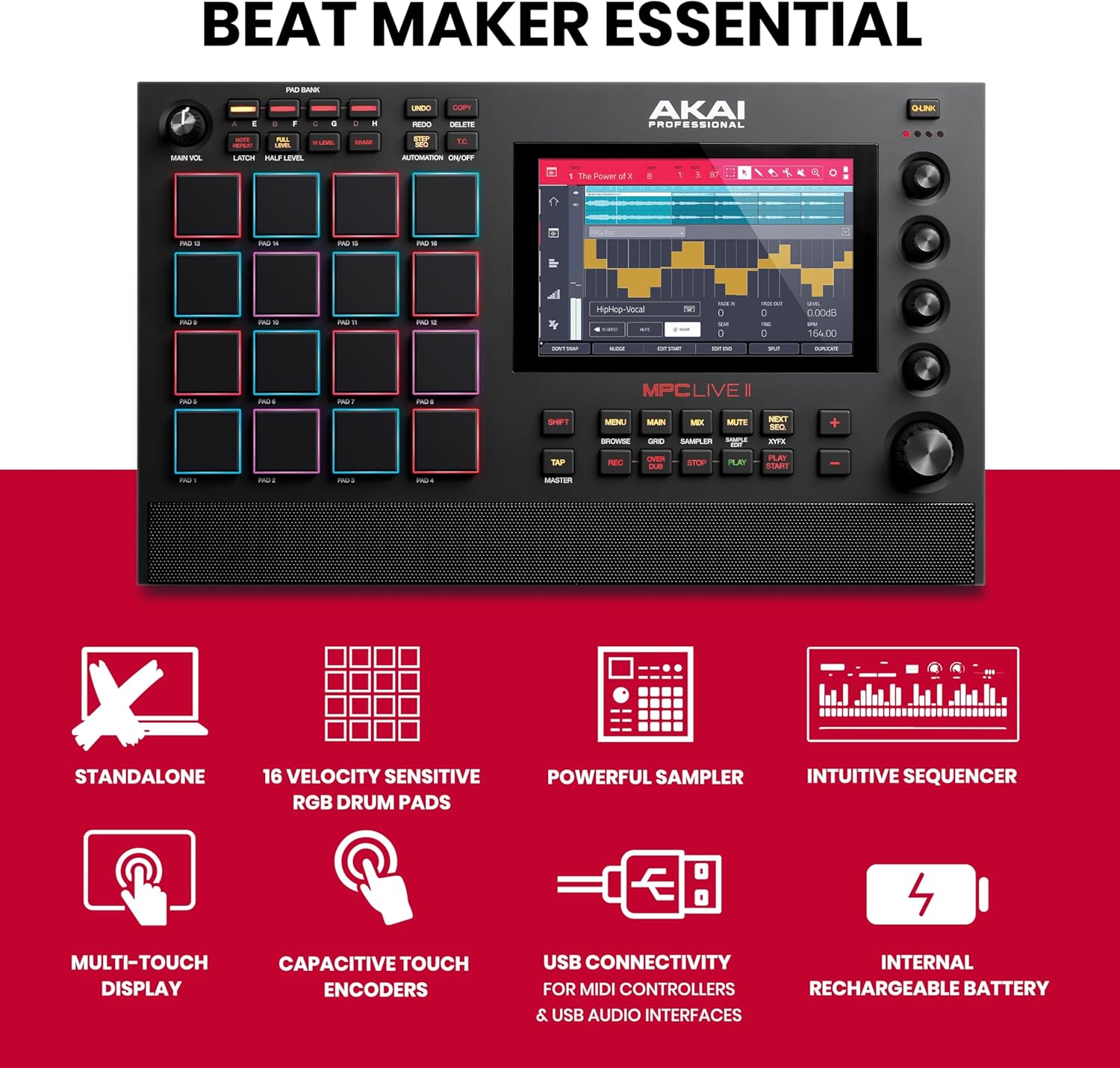
The MPC Live II is a portable, all-in-one music maker with built-in speakers and a rechargeable battery. You can make music anywhere, hear your beats clearly, and connect to Wi-Fi to grab samples or control Ableton Live. It's powerful, easy to use, and ready whenever inspiration strikes.
Elektron Octatrack MKI
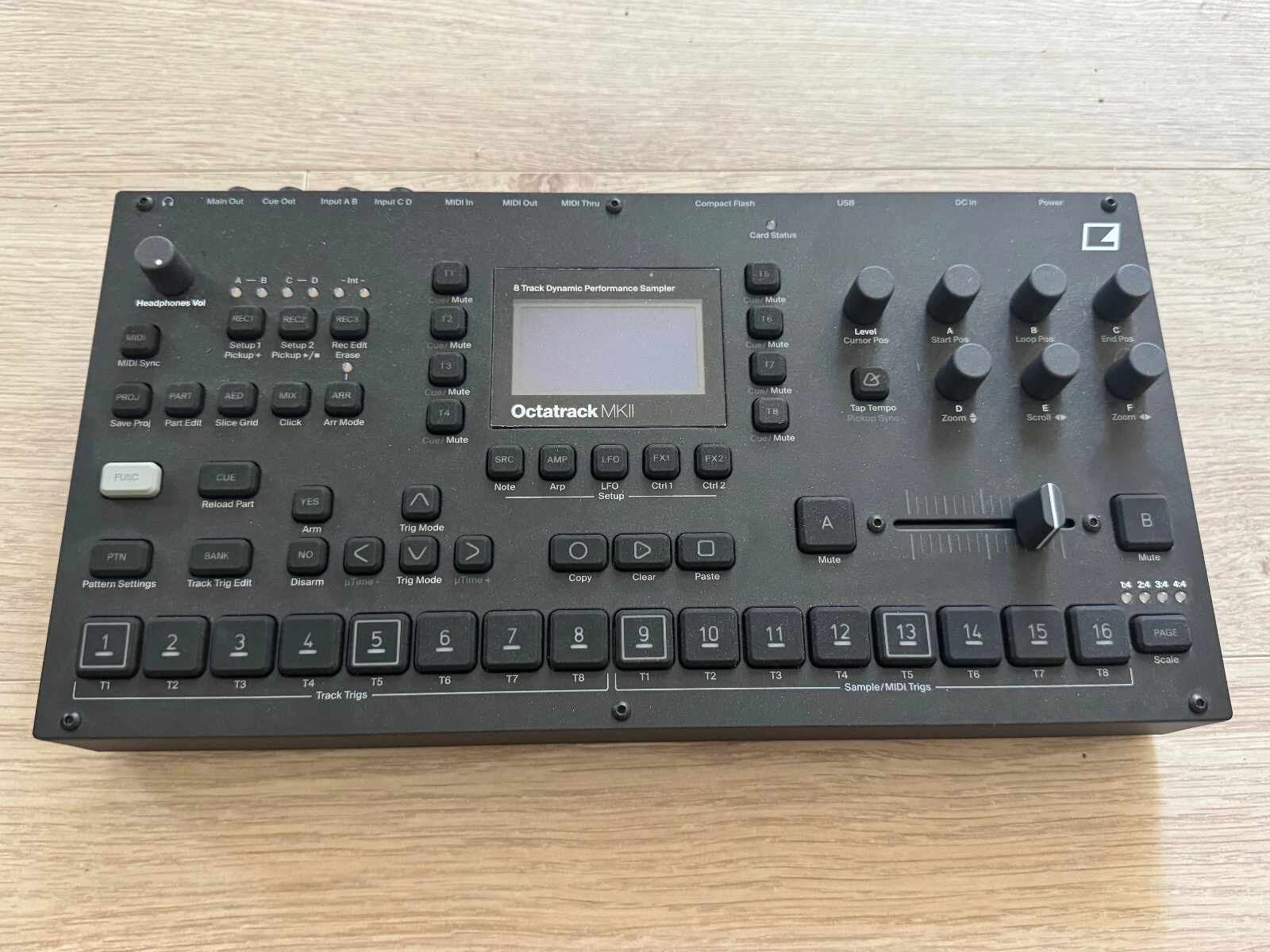
The Elektron Octatrack is a powerful music tool that lets you sample, loop, and remix sounds in real time. It has 8 tracks for playing and twisting audio, plus 8 more for controlling other gear with MIDI. You can load sounds from a memory card or record them live, then use built-in effects, a crossfader, and a step sequencer to create unique tracks. Whether you're performing live or making music in the studio, the Octatrack MK1 gives you deep control over your sound in a hands-on, creative way.
| Spec | Akai MPC Live II | Elektron Octatrack MKI |
|---|---|---|
| Manufacturer | Akai Professional | Elektron |
| Year Released | 2020 | 2010 |
| Polyphony | 128 | 8 |
| Sample Rate | 44.1kHz | 48kHz |
| Storage | Internal SSD | Compact Flash |
| Pads | 16 velocity-sensitive RGB pads | No pads, uses buttons and encoders |
| Sequencer | Yes | Yes |
| Effects | EQ, Reverb, Delay, Compression | Filters, Delay, Reverb |
| I/O | MIDI In/Out, USB, Audio In/Out | MIDI In/Out/Thru, Audio In/Out |
| Screen | 7-inch multi-touch display | OLED display |
| Software Integration | MPC Software | Elektron Transfer |
| Build | Standalone | Desktop |
| Price | $1,299 | |
| More about | Details | Details |
Buy the Akai MPC Live II on Amazon.com
Buy Now On AmazonSummary
The Akai MPC Live II and the Elektron Octatrack MKI are two incredible samplers that music producers and enthusiasts love. While the Akai MPC Live II boasts modern features and portability, the Elektron Octatrack MKI offers a unique approach to sampling and sequencing. In this article, we’ll explore their differences and discover which one might be best for you.
Introduction
Welcome to the world of samplers, where creativity meets technology to create amazing music. Today, we’ll be diving into a comparison between two iconic devices: the Akai MPC Live II and the Elektron Octatrack MKI. Whether you’re a beginner or a seasoned producer, choosing the right sampler can make a big difference in your music-making journey. Let’s explore what makes each of these devices special and how they can help you create some fantastic sounds.
Meet the Akai MPC Live II
Features and Capabilities
The Akai MPC Live II is like a spaceship for music producers. Released in 2020, it comes packed with a ton of features that make it a powerhouse in the music world. The MPC Live II runs on a polyphony of 128, which means it can play 128 notes at the same time! This is great for creating rich, layered sounds. It uses a sample rate of 44.1kHz, which is the standard for professional audio quality.
One of the standout features of the MPC Live II is its 16 velocity-sensitive RGB pads. These colorful pads not only look cool, but they also respond to how hard you hit them, allowing for expressive drumming and sample triggering. The device includes a robust sequencer, making it easy to arrange your beats and melodies.
On the effects side, the MPC Live II doesn’t disappoint. It offers EQ, Reverb, Delay, and Compression, allowing you to shape your sounds with precision. Connectivity is also a breeze with MIDI In/Out, USB, and Audio In/Out options, making it easy to integrate with other gear.
Another big plus is the 7-inch multi-touch display that feels just like a tablet, allowing you to control everything with a swipe of your finger. The MPC Live II is a standalone unit, which means you don’t need a computer to make music. This is perfect for those who want to produce music anywhere, anytime. Plus, it comes with internal SSD storage, so you can keep all your sounds right on the device.
Pros and Cons
Pros:
- High polyphony of 128 notes
- Built-in speakers for easy monitoring
- Large multi-touch display
- Standalone functionality
- Extensive connectivity options
Cons:
- Pricey at $1400
- Can be overwhelming for beginners due to its many features
Meet the Elektron Octatrack MKI
Features and Capabilities
The Elektron Octatrack MKI, released in 2010, is like a Swiss Army knife for musicians. This unique sampler is known for its powerful sampling and sequencing capabilities. While it only has a polyphony of 8, the Octatrack MKI makes up for it with its deep sound design possibilities. It runs at a sample rate of 48kHz, providing slightly higher audio quality than the MPC Live II.
Unlike the MPC Live II, the Octatrack MKI doesn’t have pads. Instead, it uses buttons and encoders for input, giving it a different feel and workflow. The sequencer is powerful, allowing for complex patterns and arrangements.
The Octatrack MKI comes equipped with Filters, Delay, and Reverb effects, which can transform your sounds in creative ways. It also has comprehensive connectivity options, including MIDI In/Out/Thru and Audio In/Out, making it a versatile tool in any studio setup.
The OLED display, while smaller than the MPC Live II’s screen, provides clear visual feedback. The device uses Compact Flash storage, which might feel a bit old-school but is reliable for storing your projects. The Octatrack MKI integrates with Elektron Transfer software, enabling easy file management on your computer.
Pros and Cons
Pros:
- Unique approach to sampling and sequencing
- High-quality 48kHz sample rate
- Robust sound design capabilities
- Versatile connectivity options
Cons:
- Only 8-note polyphony
- No pads, which might not suit everyone’s workflow
- Uses older Compact Flash storage
Feature Comparisons
Polyphony and Sample Rate
When comparing polyphony, the Akai MPC Live II clearly has the upper hand with its 128-note polyphony, making it ideal for complex compositions. In contrast, the Octatrack MKI has an 8-note polyphony, which might limit some users but is still sufficient for many types of music.
In terms of sample rate, the Octatrack MKI offers a slight edge with 48kHz compared to the MPC Live II’s 44.1kHz. This means the Octatrack can capture slightly more audio detail, though the difference might not be noticeable to everyone.
Controls and User Experience
The MPC Live II’s 16 velocity-sensitive RGB pads are a significant advantage for those who enjoy finger drumming and expressive performance. Its 7-inch multi-touch display also provides a modern, intuitive interface that’s easy to navigate.
On the other hand, the Octatrack MKI’s button and encoder setup may appeal to those who prefer a more tactile, hands-on approach. While it lacks pads, its unique workflow can inspire creativity in different ways.
Effects and Sound Design
Both devices offer a range of effects, but the MPC Live II includes Compression in addition to its EQ, Reverb, and Delay, providing more options for shaping your sound. The Octatrack MKI excels in sound design, thanks to its powerful Filters and real-time manipulation capabilities, making it a favorite among experimental producers.
Connectivity and Integration
In terms of connectivity, both devices are well-equipped with MIDI and audio inputs and outputs. The MPC Live II has USB connectivity, which might be more convenient for some users. The Octatrack MKI’s use of Compact Flash storage is a bit dated, but it remains a reliable option.
Build and Portability
The MPC Live II is a standalone unit with built-in speakers and extended battery life, making it perfect for mobile music production. The Octatrack MKI is a desktop unit, which is great for studio setups but less portable.
Final Verdict
Choosing between the Akai MPC Live II and the Elektron Octatrack MKI depends on your specific needs and preferences. The MPC Live II is perfect for those who want a modern, versatile, and portable sampler with an easy-to-use interface. It’s ideal for live performances and on-the-go production.
The Octatrack MKI, with its unique workflow and powerful sound design capabilities, is best suited for experimental producers who enjoy deep sound manipulation and don’t mind a steeper learning curve. It’s a great choice for studio-based producers who want to dive into complex arrangements and explore new sonic territories.
In conclusion, both samplers have their strengths and can be great additions to your music gear collection. Consider what features are most important to you and how you plan to use the device in your music-making journey. Happy producing!