Akai MPC Live II — VS — Elektron Octatrack MKII
Akai MPC Live II
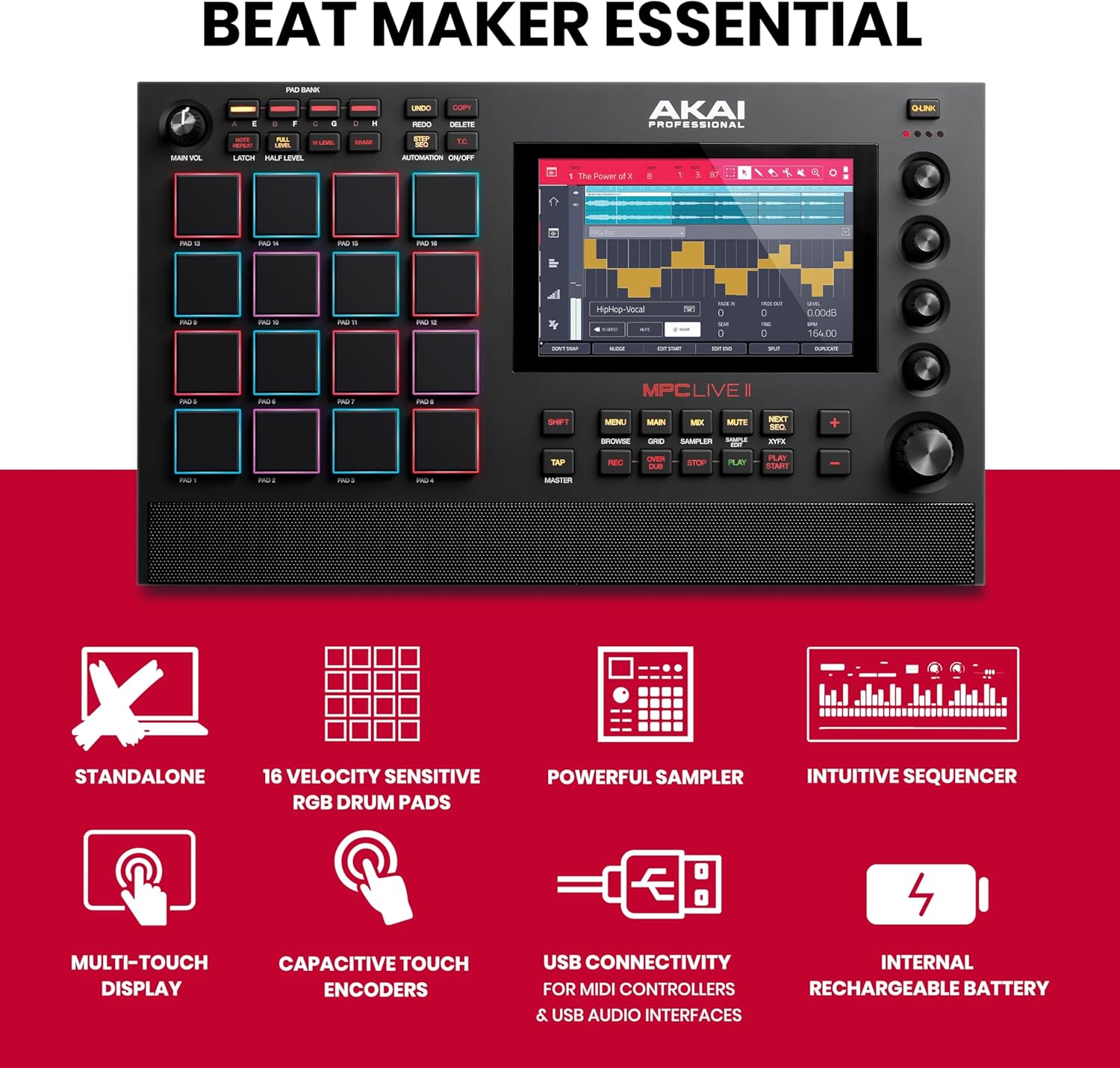
The MPC Live II is a portable, all-in-one music maker with built-in speakers and a rechargeable battery. You can make music anywhere, hear your beats clearly, and connect to Wi-Fi to grab samples or control Ableton Live. It's powerful, easy to use, and ready whenever inspiration strikes.
Elektron Octatrack MKII
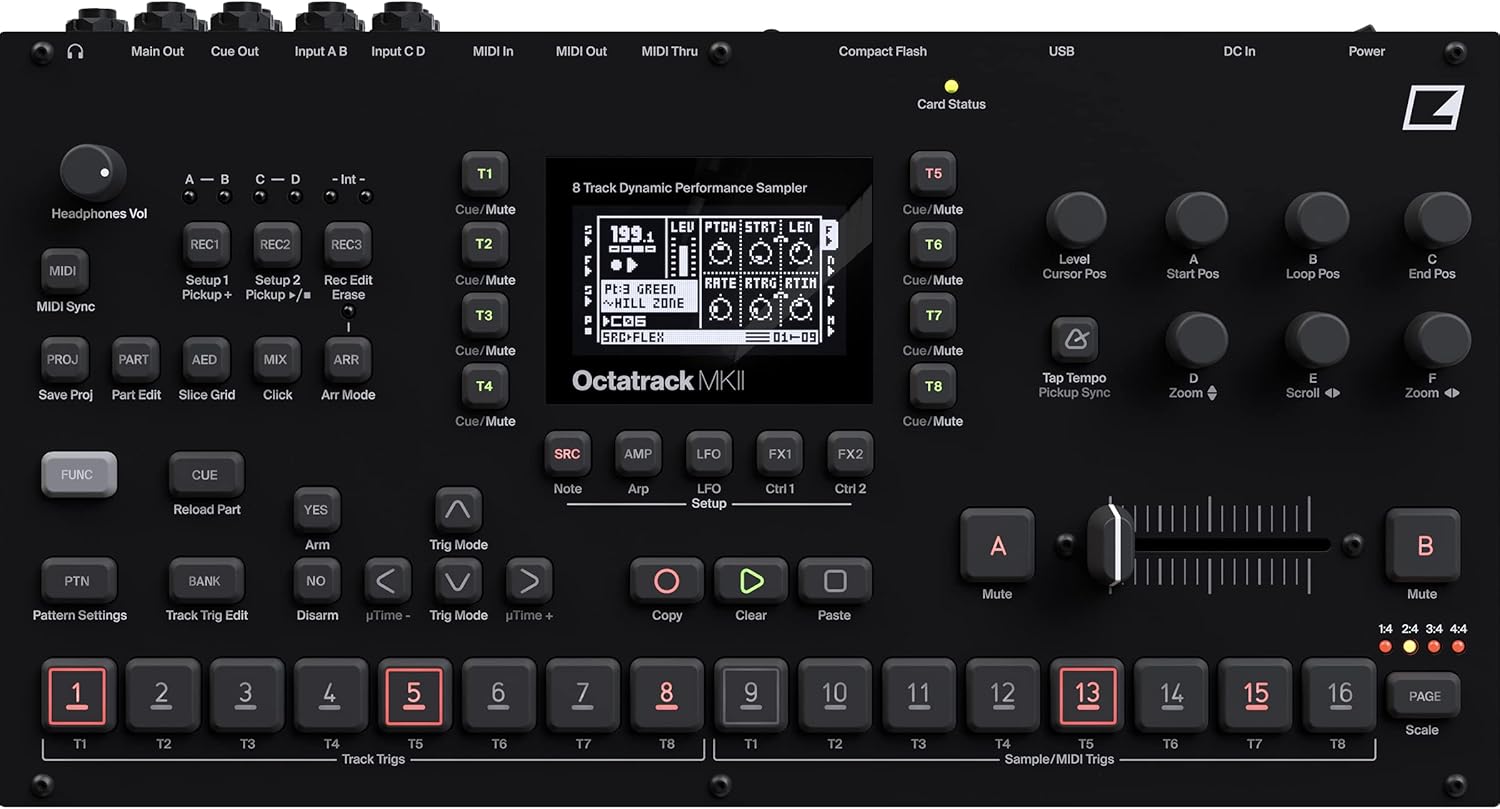
The Octatrack MKII is a powerful music machine that helps you record, change, and mix sounds in fun and creative ways. It has 8 tracks for samples, 8 tracks to control other music gear, and lots of buttons and features to shape your sound. You can twist and stretch sounds, connect microphones or instruments, and even control other music machines with it. Whether you're making a song, performing live, or just having fun, the Octatrack MKII gives you tons of ways to play with sound and make music your own.
| Spec | Akai MPC Live II | Elektron Octatrack MKII |
|---|---|---|
| Manufacturer | Akai Professional | Elektron |
| Year Released | 2020 | 2017 |
| Polyphony | 128 | 8 |
| Sample Rate | 44.1kHz | 48kHz |
| Storage | Internal SSD | SD card |
| Pads | 16 velocity-sensitive RGB pads | No pads, uses encoders and buttons |
| Sequencer | Yes | Yes |
| Effects | EQ, Reverb, Delay, Compression | Filters, Delay, Reverb |
| I/O | MIDI In/Out, USB, Audio In/Out | MIDI In/Out/Thru, USB, Audio In/Out |
| Screen | 7-inch multi-touch display | OLED display |
| Software Integration | MPC Software | Elektron Transfer |
| Build | Standalone | Desktop |
| Price | $1,299 | $1799 |
| More about | Details | Details |
Buy the Akai MPC Live II on Amazon.com
Buy Now On AmazonBuy the Elektron Octatrack MKII on Amazon.com
Buy Now On AmazonAkai MPC Live II vs. Elektron Octatrack MKII: Which Sampler Should You Choose?
Summary: In this post, we’ll take a closer look at two popular samplers, the Akai MPC Live II and the Elektron Octatrack MKII. Both are fantastic tools for music producers, but they offer different features and experiences. Let’s explore their unique qualities to help you decide which one fits your needs best.
Introduction
When it comes to making music, having the right tools is super important. Samplers are special devices that help artists create and manipulate sounds. Today, we’re comparing two amazing samplers: the Akai MPC Live II and the Elektron Octatrack MKII. They are both loved by musicians for their powerful abilities, but each one has its own strengths and weaknesses. If you’re a music gear enthusiast or just curious about these devices, you’re in the right place!
Feature Comparisons
Year and Build
The Akai MPC Live II was introduced in 2020, making it a more recent entry compared to the Elektron Octatrack MKII, which came out in 2017. The MPC Live II is a standalone device, meaning it doesn’t need to be connected to a computer to work. This makes it super portable and convenient for on-the-go music creation. It even has built-in speakers and extended battery life, so you can make music anywhere!
On the other hand, the Octatrack MKII is a desktop device. While it isn’t standalone like the MPC Live II, it offers a different kind of power and flexibility, especially for those who prefer using it in a studio setting.
Polyphony and Sample Rate
When it comes to polyphony, or the number of sounds a device can play at once, the Akai MPC Live II is a clear winner. It supports up to 128 voices, which means you can layer many sounds together without running out of voices. The Octatrack MKII, with 8 voices of polyphony, is more limited in this regard but is designed for users who prefer precise control over fewer sounds.
In terms of sample rate, the Octatrack MKII records and plays back samples at 48kHz, which is slightly higher than the 44.1kHz offered by the MPC Live II. This can result in slightly better audio quality, though the difference might not be noticeable to everyone.
Storage and Pads
For storage, the MPC Live II comes with an internal SSD, making it easy to store lots of samples right on the device. The Octatrack MKII uses an SD card for storage, which is a bit more old-school but still effective for managing your sample library.
When it comes to user interaction, the MPC Live II has 16 velocity-sensitive RGB pads that are great for finger drumming and triggering samples. In contrast, the Octatrack MKII doesn’t have pads; instead, it uses encoders and buttons to control its functions. This might appeal more to users who like tweaking parameters in real-time and creating complex performances.
Sequencer and Effects
Both samplers have built-in sequencers, which allow you to create and arrange patterns and songs. However, the way they handle effects is a bit different. The MPC Live II offers a range of effects, including EQ, reverb, delay, and compression. This variety gives you plenty of options to shape your sound.
The Octatrack MKII, while offering fewer types of effects, provides powerful filters, delay, and reverb. Its strength lies in its ability to manipulate sounds in real-time, making it a favorite among electronic music producers who love to experiment with sound design.
I/O and Software Integration
In terms of inputs and outputs, both devices offer MIDI In/Out and USB connections. The Octatrack MKII also includes MIDI Thru, which can be useful if you’re integrating it into a larger setup. Both devices have audio inputs and outputs, allowing you to connect them to other gear easily.
Software integration is another aspect to consider. The MPC Live II works seamlessly with MPC Software, providing a familiar environment for those used to Akai’s ecosystem. The Octatrack MKII, though not as heavily reliant on software, offers Elektron Transfer for managing samples.
Screens
The screen is where you’ll spend a lot of time navigating and creating. The MPC Live II features a 7-inch multi-touch display, which is intuitive and easy to use. It’s like having a tablet built into your sampler! The Octatrack MKII has a smaller OLED display, which is clear and functional but not touch-sensitive. This might be a consideration for users who prefer a more tactile experience.
Pros and Cons
Akai MPC Live II
Pros:
- Standalone Operation: No need for a computer, making it highly portable.
- Built-in Speakers: Enjoy music creation anytime, anywhere.
- High Polyphony: Great for complex layering of sounds.
- User-Friendly Display: Big, touch-sensitive screen for easy navigation.
Cons:
- Price: At $1400, it might be a bit pricey for beginners.
- Bulkier: Slightly larger size due to built-in speakers.
Elektron Octatrack MKII
Pros:
- Real-Time Manipulation: Excellent for live performance and sound design.
- Durable Build: Sturdy and reliable for studio use.
- Advanced Sequencing: Ideal for intricate pattern creation.
Cons:
- Limited Polyphony: Only 8 voices, which might be restricting for some.
- Learning Curve: Can be challenging for beginners to master.
Final Verdict
Both the Akai MPC Live II and the Elektron Octatrack MKII are fantastic samplers, but they cater to different types of musicians. The Akai MPC Live II is perfect for those who want a standalone, portable device with a user-friendly interface. It’s great for beginners and seasoned producers alike, especially those who enjoy finger drumming and a high degree of portability.
The Elektron Octatrack MKII is best suited for users who love real-time sound manipulation and intricate sequencing. It’s ideal for electronic music producers who value creativity and experimentation over simplicity. While it has a steeper learning curve, the rewards in terms of creative possibilities are immense.
In conclusion, your choice between these two samplers should depend on your music production needs and personal preferences. Whether you prioritize portability and ease of use or advanced sound design capabilities, there’s a perfect sampler out there for you!