Akai MPC Live II — VS — Polyend Play
Akai MPC Live II
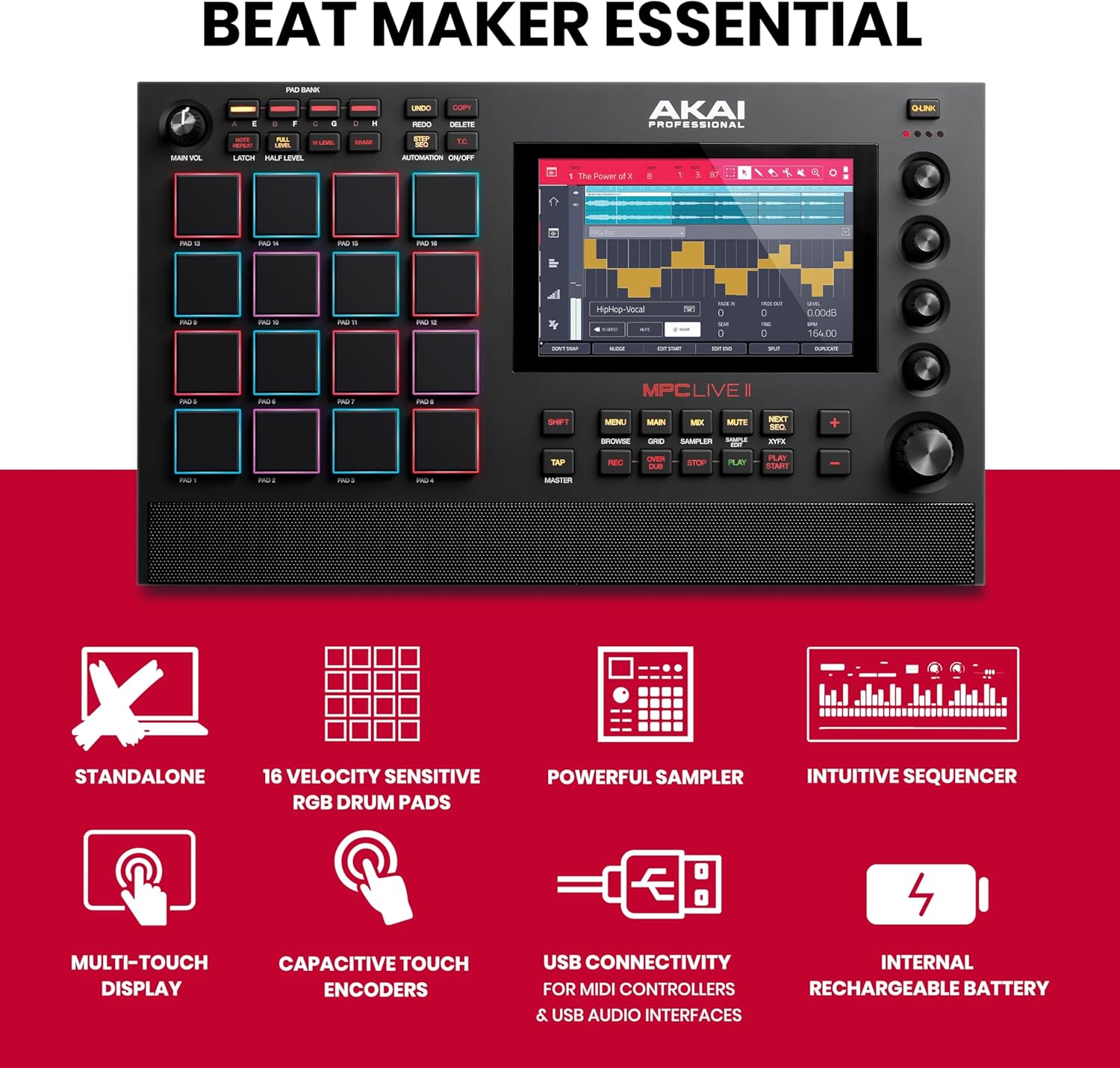
The MPC Live II is a portable, all-in-one music maker with built-in speakers and a rechargeable battery. You can make music anywhere, hear your beats clearly, and connect to Wi-Fi to grab samples or control Ableton Live. It's powerful, easy to use, and ready whenever inspiration strikes.
Polyend Play
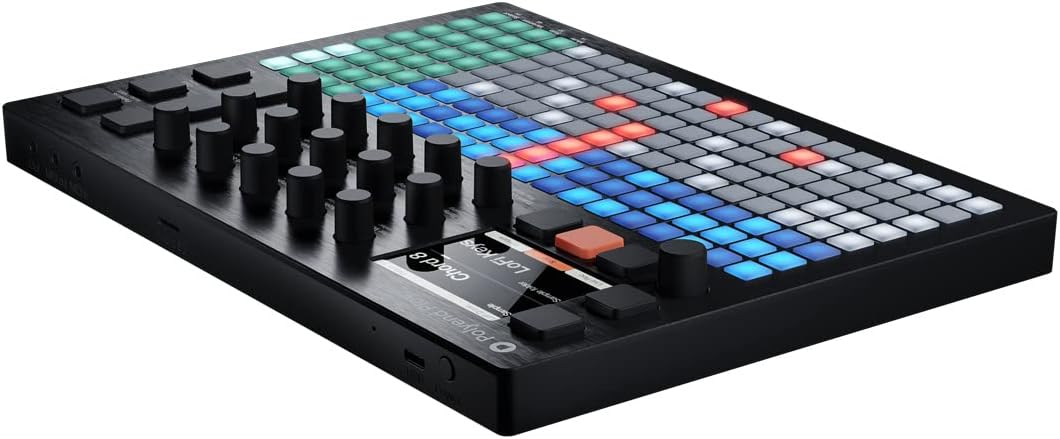
The Polyend Play is a powerful and intuitive sampler and groovebox designed for creative freedom without the complexity. It features over 30 ready-to-use sample kits, eight audio tracks, and eight polyphonic MIDI tracks, all accessible through a user-friendly interface tailored for both studio production and live performance. With 35 unique playback modes, randomizer and step repeater functions, a flexible 64-step sequencer, customizable pattern placement, onboard effects, and deep MIDI integration, the Play invites hands-on experimentation and effortless arrangement—whether you're jamming or building complete tracks from scratch.
| Spec | Akai MPC Live II | Polyend Play |
|---|---|---|
| Manufacturer | Akai Professional | Polyend |
| Year Released | 2020 | 2022 |
| Polyphony | 128 | 64 |
| Sample Rate | 44.1kHz | 44.1kHz |
| Storage | Internal SSD | MicroSD card |
| Pads | 16 velocity-sensitive RGB pads | 16 velocity-sensitive pads |
| Sequencer | Yes | Yes |
| Effects | EQ, Reverb, Delay, Compression | Multiple effects |
| I/O | MIDI In/Out, USB, Audio In/Out | MIDI In/Out, USB, Audio In/Out |
| Screen | 7-inch multi-touch display | LCD display |
| Software Integration | MPC Software | No |
| Build | Standalone | Groovebox |
| Price | $1,299 | $1100 |
| More about | Details | Details |
Buy the Akai MPC Live II on Amazon.com
Buy Now On AmazonBuy the Polyend Play on Amazon.com
Buy Now On AmazonAkai MPC Live II vs Polyend Play: Which Sampler Should You Choose?
Summary: Discover the differences between the Akai MPC Live II and the Polyend Play. Both are powerful music-making devices, but they cater to different needs. Read on to find out which one suits your musical style best.
Introduction
Welcome, music lovers! Are you ready to dive into the world of samplers? Today, we’re going to explore two exciting devices: the Akai MPC Live II and the Polyend Play. Both are incredible machines that help musicians create amazing beats and melodies. But which one is right for you? Let’s take a closer look at their features, strengths, and weaknesses to help you decide.
Features Comparison
Design and Build
When it comes to design, both samplers have their own unique charm. The Akai MPC Live II is a standalone unit, meaning you don’t need a computer to use it. It’s built with a sleek design and even has built-in speakers, making it perfect for on-the-go music making. Its 7-inch multi-touch display is like having a mini computer screen at your fingertips, letting you control everything with ease.
On the other hand, the Polyend Play is a groovebox with a modern workflow. It’s a bit lighter and comes with a handy LCD display. While it doesn’t have built-in speakers, it’s compact and easy to carry around. This makes it perfect for musicians who love taking their music projects everywhere they go.
Pads and Polyphony
Pads are essential for any sampler, as they’re the main tools for creating beats. The Akai MPC Live II features 16 velocity-sensitive RGB pads. This means they light up and respond to how hard you hit them, giving you a dynamic and colorful music-making experience. With a polyphony of 128, you can play many notes at once, making it great for complex compositions.
The Polyend Play also includes 16 velocity-sensitive pads, but they don’t light up like the Akai’s. It offers a polyphony of 64, which is still plenty for most projects. Its pads are responsive and fun to play with, making it a great choice for those who enjoy a straightforward approach to beat-making.
Storage and Memory
Storage is crucial for saving all your musical masterpieces. The Akai MPC Live II comes with an internal SSD, providing ample space for your sounds and samples. This built-in storage makes it easy to keep all your projects in one place.
Conversely, the Polyend Play uses a MicroSD card for storage. This might not be as convenient as an internal SSD, but it allows for flexibility. You can swap cards to access different sets of samples and projects, which can be a fun way to organize your music library.
Effects and Sound Quality
Both samplers offer a range of effects to spice up your tracks. The Akai MPC Live II includes EQ, Reverb, Delay, and Compression. These effects are perfect for shaping your sound and adding depth to your music. With a sample rate of 44.1kHz, you can expect clear and high-quality audio output.
The Polyend Play, on the other hand, boasts multiple effects, though it doesn’t specify which ones. Its sample rate is also 44.1kHz, ensuring good sound quality. The effects are intuitive and easy to use, making it a great tool for experimenting with different sounds and textures.
Connectivity and Integration
In terms of connectivity, both devices come equipped with MIDI In/Out, USB, and Audio In/Out. This means you can connect them to other instruments and devices, expanding your music-making possibilities.
One major difference is software integration. The Akai MPC Live II integrates with MPC Software, providing additional features and options for those who like to work with a computer. This integration can enhance your workflow and give you more tools to play with.
The Polyend Play, however, doesn’t offer software integration. It’s designed to be a standalone groovebox, focusing on simplicity and ease of use. This might be ideal for musicians who prefer a straightforward approach without the need for additional software.
Pros and Cons
Akai MPC Live II
Pros:
- Built-in speakers for on-the-go music making
- 7-inch multi-touch display for easy control
- High polyphony (128) for complex compositions
- Internal SSD for ample storage
- Integration with MPC Software
Cons:
- Higher price ($1400)
- Larger and heavier than the Polyend Play
Polyend Play
Pros:
- Compact and lightweight design
- Modern groovebox workflow
- Affordable price ($1100)
- Multiple effects for sound experimentation
Cons:
- No built-in speakers
- Lower polyphony (64)
- No software integration
Who Should Choose Which?
In summary, both the Akai MPC Live II and the Polyend Play offer incredible features for music enthusiasts. However, they cater to different needs and styles.
The Akai MPC Live II is perfect for musicians who want a powerful, standalone device with a wide range of features. Its high polyphony, built-in speakers, and software integration make it ideal for complex projects and studio use. If you’re looking for a comprehensive music-making machine and don’t mind spending a bit more, the Akai MPC Live II is the way to go.
On the other hand, the Polyend Play is great for those who prefer a simple, portable, and affordable option. Its compact design and modern workflow make it perfect for beginners and musicians who enjoy creating music on the move. If you’re looking for an easy-to-use groovebox without the need for additional software, the Polyend Play is an excellent choice.
Final Verdict
Choosing between the Akai MPC Live II and the Polyend Play depends on what you value most in a sampler. Whether you’re a seasoned producer or just starting out, both devices have something unique to offer. Consider your musical needs and budget, and you’ll find the perfect companion for your creative journey. Happy music-making!