Akai MPC Live II — VS — Polyend Play+
Akai MPC Live II
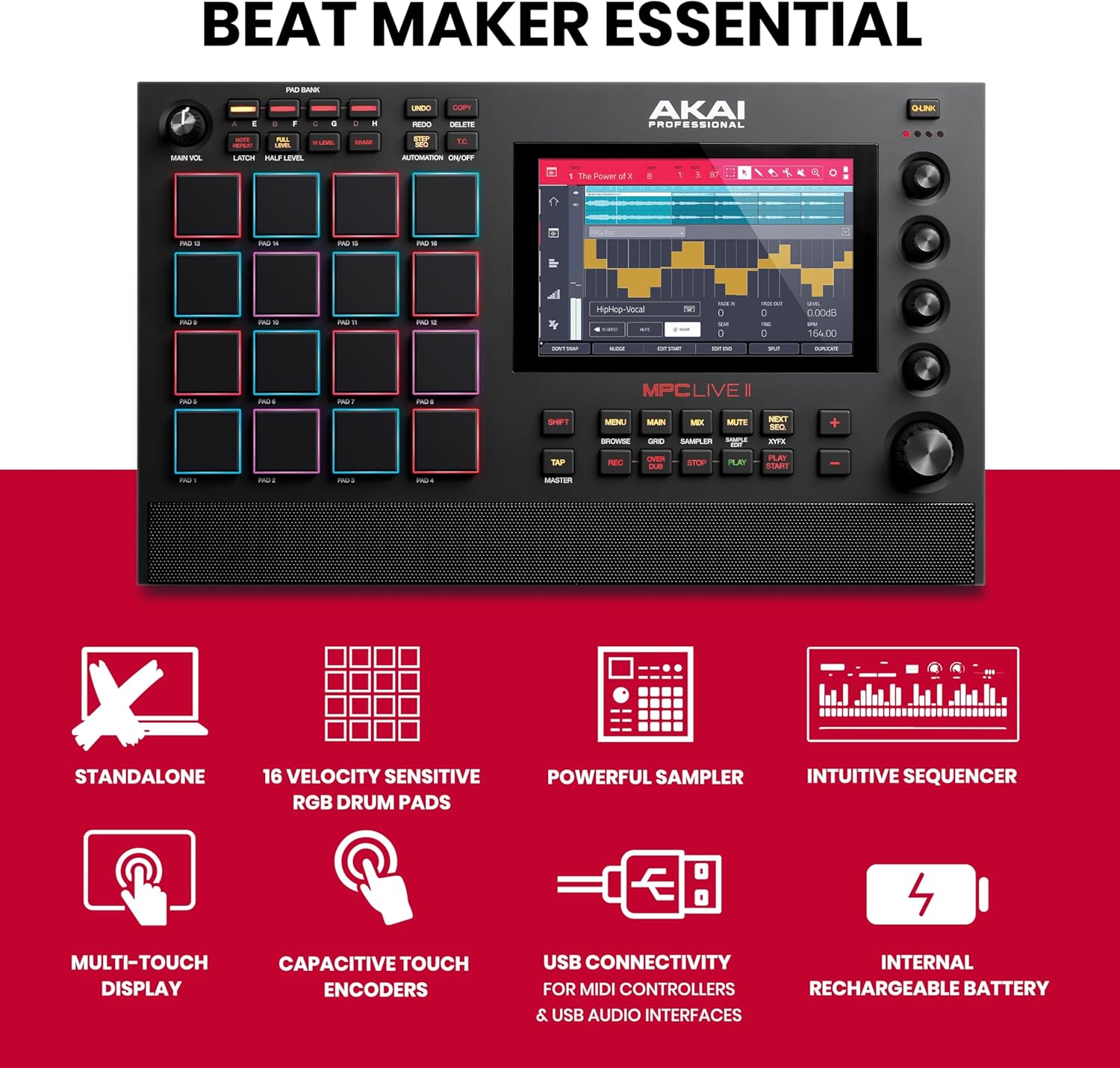
The MPC Live II is a portable, all-in-one music maker with built-in speakers and a rechargeable battery. You can make music anywhere, hear your beats clearly, and connect to Wi-Fi to grab samples or control Ableton Live. It's powerful, easy to use, and ready whenever inspiration strikes.
Polyend Play+
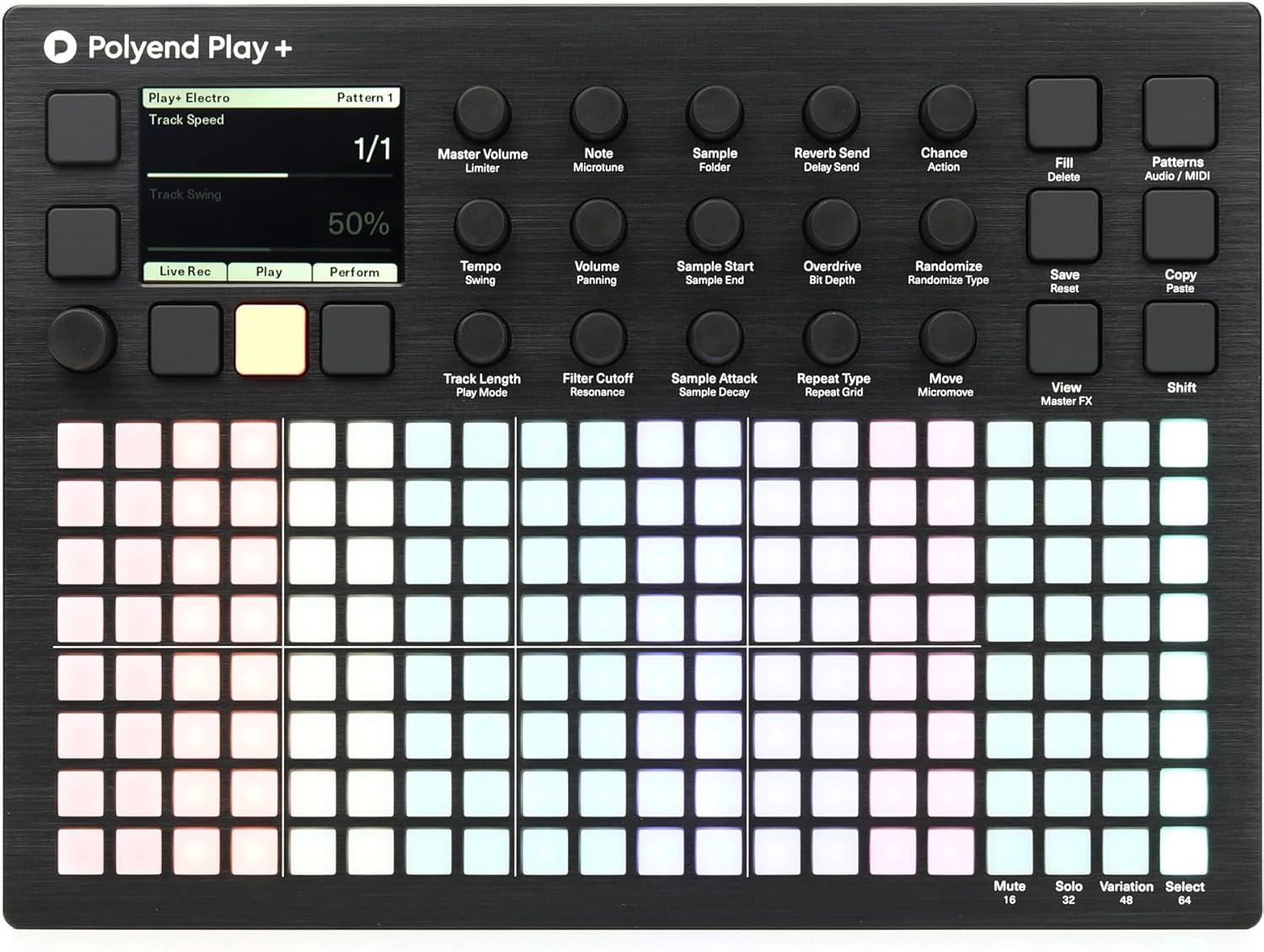
The Polyend Play+ builds on the original Polyend Play by adding upgraded internals and expanded features for creative sequencing, sample playback, and live performance. It supports stereo sample playback, powerful track-based sequencing, per-step automation, and advanced MIDI sequencing—all with a large 8x8 grid and deep performance tools. Ideal for electronic producers and live performers looking for a portable yet capable music workstation.
| Spec | Akai MPC Live II | Polyend Play+ |
|---|---|---|
| Manufacturer | Akai Professional | Polyend |
| Year Released | 2020 | 2023 |
| Polyphony | 128 | 8 |
| Sample Rate | 44.1kHz | 44.1kHz / 16-bit |
| Storage | Internal SSD | MicroSD card |
| Pads | 16 velocity-sensitive RGB pads | 8x8 velocity-sensitive pad grid |
| Sequencer | Yes | Yes, 16-track pattern-based |
| Effects | EQ, Reverb, Delay, Compression | Reverb, Delay, Overdrive, EQ, Master FX |
| I/O | MIDI In/Out, USB, Audio In/Out | Stereo In, Stereo Out, MIDI In/Out/Thru, USB-C |
| Screen | 7-inch multi-touch display | High-res color display |
| Software Integration | MPC Software | Drag-and-drop sample management via USB |
| Build | Standalone | Modern standalone groovebox sampler |
| Price | $1,299 | $799 |
| More about | Details | Details |
Buy the Akai MPC Live II on Amazon.com
Buy Now On AmazonBuy the Polyend Play+ on Amazon.com
Buy Now On AmazonSampler Showdown: Akai MPC Live II vs. Polyend Play+
Summary: In this blog post, we’ll dive into a head-to-head comparison of two popular samplers: the Akai MPC Live II and the Polyend Play+. We’ll explore their features, pros, and cons to help you decide which one suits your music production needs best.
Introduction
Hey there, music makers! Are you on a quest to find the perfect sampler to take your beats to the next level? Today, we’re exploring two incredible options: the Akai MPC Live II and the Polyend Play+. These devices are game-changers in the world of music production, each bringing their unique flair to the table. So, grab your headphones and let’s get started on this epic sampler showdown!
Meet the Contenders
Before we dive into the details, let’s get to know our contenders a bit better. The Akai MPC Live II, released in 2020 by Akai Professional, is a powerhouse that combines portability with performance. With built-in speakers and a rechargeable battery, it’s perfect for music-making on the go. On the other hand, the Polyend Play+, launched in 2023 by Polyend, is a modern groovebox designed for those who love creative sequencing and live performance.
Feature Comparison
Sound and Polyphony
When it comes to sound, both samplers offer a sample rate of 44.1kHz. However, the Akai MPC Live II boasts a whopping 128-voice polyphony, giving you the ability to layer and stack sounds without any hiccups. In contrast, the Polyend Play+ offers 8-voice polyphony. While this might seem like a disadvantage, it’s important to remember that the Play+ is designed with a focus on creative sequencing rather than sheer polyphonic power.
Storage and Connectivity
Storage is another area where these samplers differ significantly. The Akai MPC Live II comes with an internal SSD, providing ample space for your samples and projects. Meanwhile, the Polyend Play+ uses a MicroSD card for storage, making it easy to swap and manage samples on the fly.
When it comes to connectivity, the Akai MPC Live II is equipped with MIDI In/Out, USB, and Audio In/Out, allowing seamless integration with other gear. The Polyend Play+ features Stereo In, Stereo Out, MIDI In/Out/Thru, and USB-C, offering a modern take on connectivity with USB-C support.
Pads and Sequencing
Pads are where the magic happens, and both samplers shine in this department. The Akai MPC Live II features 16 velocity-sensitive RGB pads that are a delight to play. Conversely, the Polyend Play+ boasts an 8x8 velocity-sensitive pad grid, offering more pads for intricate sequencing and performance.
Sequencing capabilities are strong in both devices. The MPC Live II includes a traditional sequencer, while the Polyend Play+ offers a 16-track pattern-based sequencer, perfect for those who love experimenting with patterns and per-step automation.
Effects and Software Integration
Both samplers come loaded with effects to enhance your sound. The Akai MPC Live II offers EQ, Reverb, Delay, and Compression, providing a solid foundation for polished tracks. The Polyend Play+ extends this with Reverb, Delay, Overdrive, EQ, and Master FX, giving you more creative options to explore.
In terms of software integration, the Akai MPC Live II stands out with its MPC Software, allowing for a seamless workflow between hardware and software. The Polyend Play+ focuses on drag-and-drop sample management via USB, making it simple to organize your sounds.
Pros and Cons
Akai MPC Live II
Pros:
- High polyphony (128 voices)
- Built-in speakers and rechargeable battery for portability
- Powerful MPC Software integration
- Ample storage with internal SSD
Cons:
- Higher price point ($1,299)
- Larger and heavier, less convenient for travel
Polyend Play+
Pros:
- Modern design with an 8x8 pad grid
- Excellent for creative sequencing and live performance
- Affordable price ($799)
- USB-C connectivity for faster data transfer
Cons:
- Lower polyphony (8 voices)
- Requires external MicroSD for storage
Final Verdict
Both the Akai MPC Live II and the Polyend Play+ are excellent choices, but they cater to different needs. The Akai MPC Live II is perfect for producers who need extensive polyphony and seamless software integration. It’s a solid investment if you’re looking for a comprehensive all-in-one solution.
On the other hand, the Polyend Play+ is ideal for electronic producers and live performers who value creative sequencing and portability. Its modern design and affordable price make it a fantastic choice for those who want a powerful tool without breaking the bank.
Ultimately, the right sampler for you depends on your specific needs and preferences. Whether you’re crafting beats in the studio or performing live on stage, both of these samplers are sure to inspire your musical journey. Happy music-making!