Akai MPC Live II — VS — Roland SP-404A
Akai MPC Live II
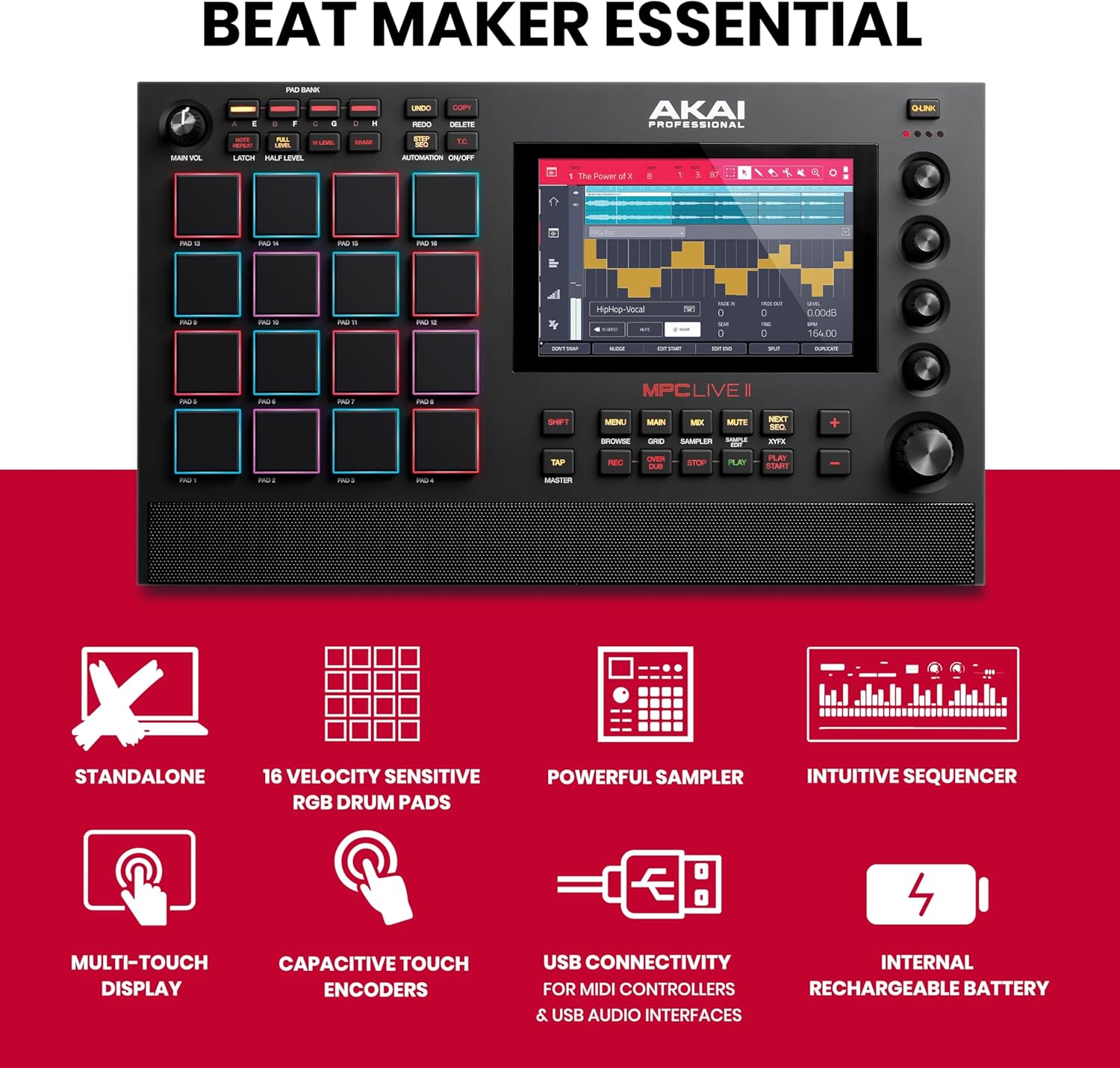
The MPC Live II is a portable, all-in-one music maker with built-in speakers and a rechargeable battery. You can make music anywhere, hear your beats clearly, and connect to Wi-Fi to grab samples or control Ableton Live. It's powerful, easy to use, and ready whenever inspiration strikes.
Roland SP-404A
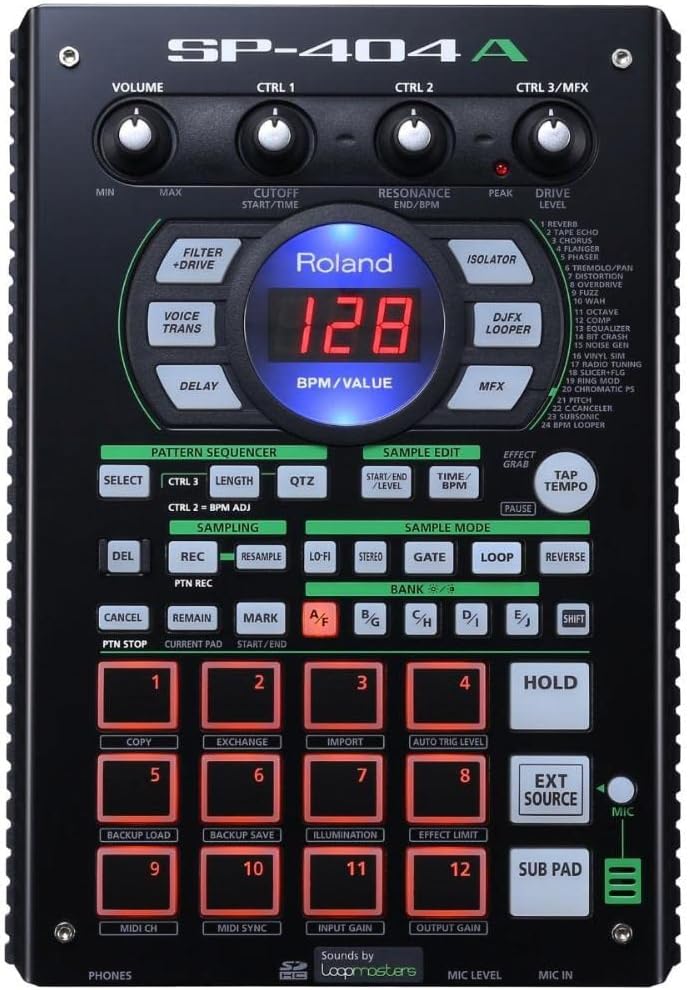
The SP-404A is a fun music machine made for live shows. You can use it to play cool sounds, beats, and effects. It works really well with another music tool called the Roland TR-8, but you can also use it by itself. It has 12 big buttons you can press to play sounds, plus lots of awesome effects to change how your music feels. It even comes with a card full of great sounds to get you started. Whether you're a DJ, a musician, or just love making beats, the SP-404A helps you create music in a fun and easy way.
| Spec | Akai MPC Live II | Roland SP-404A |
|---|---|---|
| Manufacturer | Akai Professional | Roland |
| Year Released | 2020 | 2017 |
| Polyphony | 128 | 128 |
| Sample Rate | 44.1kHz | 44.1kHz |
| Storage | Internal SSD | SD card |
| Pads | 16 velocity-sensitive RGB pads | 12 velocity-sensitive pads |
| Sequencer | Yes | No |
| Effects | EQ, Reverb, Delay, Compression | Vintage effects, Reverb, Delay |
| I/O | MIDI In/Out, USB, Audio In/Out | MIDI In/Out, USB, Audio In/Out |
| Screen | 7-inch multi-touch display | OLED display |
| Software Integration | MPC Software | Roland Software |
| Build | Standalone | Portable |
| Price | $1,299 | $600 |
| More about | Details | Details |
Buy the Akai MPC Live II on Amazon.com
Buy Now On AmazonBuy the Roland SP-404A on Amazon.com
Buy Now On AmazonSampler Showdown: Akai MPC Live II vs. Roland SP-404A
Summary: If you’re on the hunt for a music sampler, you’re in for a treat! Today, we’re comparing two popular devices: the Akai MPC Live II and the Roland SP-404A. Both have fantastic features, but which one is the right fit for you? Let’s dive in and find out!
Introduction
Music producers and beatmakers, lend me your ears! Whether you’re a budding bedroom producer or an experienced beat wizard, having a quality sampler can elevate your music game. Today, we’re comparing two big names in the world of samplers: the Akai MPC Live II and the Roland SP-404A. These devices are like the superheroes of music production, each with their own unique powers. We’re going to explore their features, weigh their pros and cons, and decide which one might be right for you.
Features Face-Off
Akai MPC Live II: The All-in-One Powerhouse
The Akai MPC Live II is a feature-packed powerhouse that hit the market in 2020. It’s like having a complete studio in a box, making it perfect for musicians who want to create anywhere. With 128-note polyphony, you can have multiple sounds playing together without any hiccups. The sample rate of 44.1kHz ensures high-quality sound, making your beats crisp and clear.
One of the standout features of the Akai MPC Live II is its internal SSD storage, providing ample space for your projects. The 16 velocity-sensitive RGB pads are a joy to play, lighting up in different colors as you tap away. The built-in sequencer allows you to arrange your music easily, and the extensive effects like EQ, Reverb, Delay, and Compression give you the tools to shape your sound just the way you want.
The Akai MPC Live II also boasts a 7-inch multi-touch display, making it easy to navigate through your projects. Its standalone build means you don’t need a computer to use it, which is great for musicians on the go. And with software integration via MPC Software, you can seamlessly connect it with your computer when needed.
Roland SP-404A: The Portable Performer
The Roland SP-404A is a compact and portable sampler that’s been a favorite among beatmakers since its release in 2017. Like the Akai, it also offers 128-note polyphony and a 44.1kHz sample rate, ensuring high-quality sound. However, its storage relies on SD cards, which means you can easily swap out cards to access different projects.
The Roland SP-404A features 12 velocity-sensitive pads, which are slightly fewer than the Akai but still offer a responsive and satisfying playing experience. Unlike the Akai, it doesn’t have a built-in sequencer, which might be a downside for those who want to arrange their tracks on the device.
But don’t let that deter you! The SP-404A shines with its vintage effects. You can add character and warmth to your sounds with ease. Its OLED display provides essential information without being overwhelming, and its portable build allows you to take it anywhere.
Pros and Cons
Akai MPC Live II
Pros:
- Standalone Operation: No need for a computer, making it perfect for on-the-go production.
- Large Multi-Touch Display: Easy navigation and control over your projects.
- Built-in Speakers: Allows you to listen to your creations without external speakers.
- Extensive Effects and Sequencer: Offers a wide range of tools to shape your sound.
- Internal SSD Storage: Plenty of space for your projects.
Cons:
- Higher Price: At $1400, it’s a bigger investment.
- Bulkier Size: Not as portable as some other options.
Roland SP-404A
Pros:
- Portable Design: Easy to carry around for spontaneous music-making.
- Affordable Price: At $600, it’s more budget-friendly.
- Vintage Effects: Unique sound-shaping options for creative producers.
- Simple Interface: Easy to use, especially for beginners.
Cons:
- Lack of Built-in Sequencer: Limits arranging capabilities on the device.
- Fewer Pads: Only 12 pads compared to Akai’s 16.
- SD Card Storage: Can be less convenient than internal storage.
The Verdict
So, who are these samplers best for?
The Akai MPC Live II is ideal for musicians who want a comprehensive, standalone device with plenty of features. It’s perfect for those who need powerful tools and a large display for complex projects. If you’re a professional producer or someone who wants an all-in-one studio experience, the Akai MPC Live II could be your perfect match.
On the other hand, the Roland SP-404A is great for artists looking for portability and ease of use. It’s a fantastic choice for beginners or those who want to create music on the go without breaking the bank. Its vintage effects add a unique touch to your sounds, making it a favorite among creative producers.
In conclusion, both samplers have their strengths and cater to different needs. Consider what features are most important to you and choose the one that fits your music-making style. Happy producing!