Akai MPC Live II — VS — Sonicware SmplTrek
Akai MPC Live II
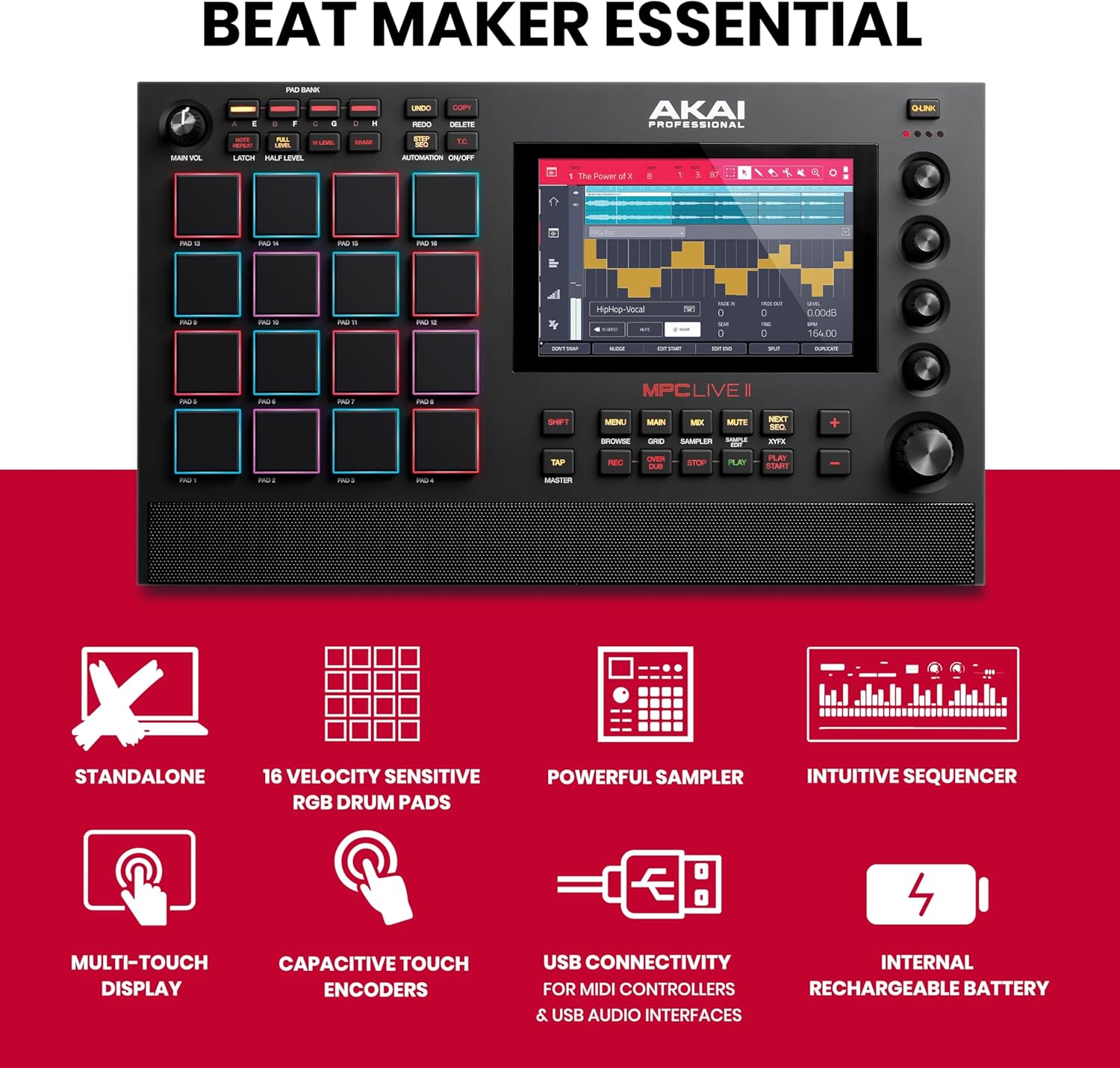
The MPC Live II is a portable, all-in-one music maker with built-in speakers and a rechargeable battery. You can make music anywhere, hear your beats clearly, and connect to Wi-Fi to grab samples or control Ableton Live. It's powerful, easy to use, and ready whenever inspiration strikes.
Sonicware SmplTrek
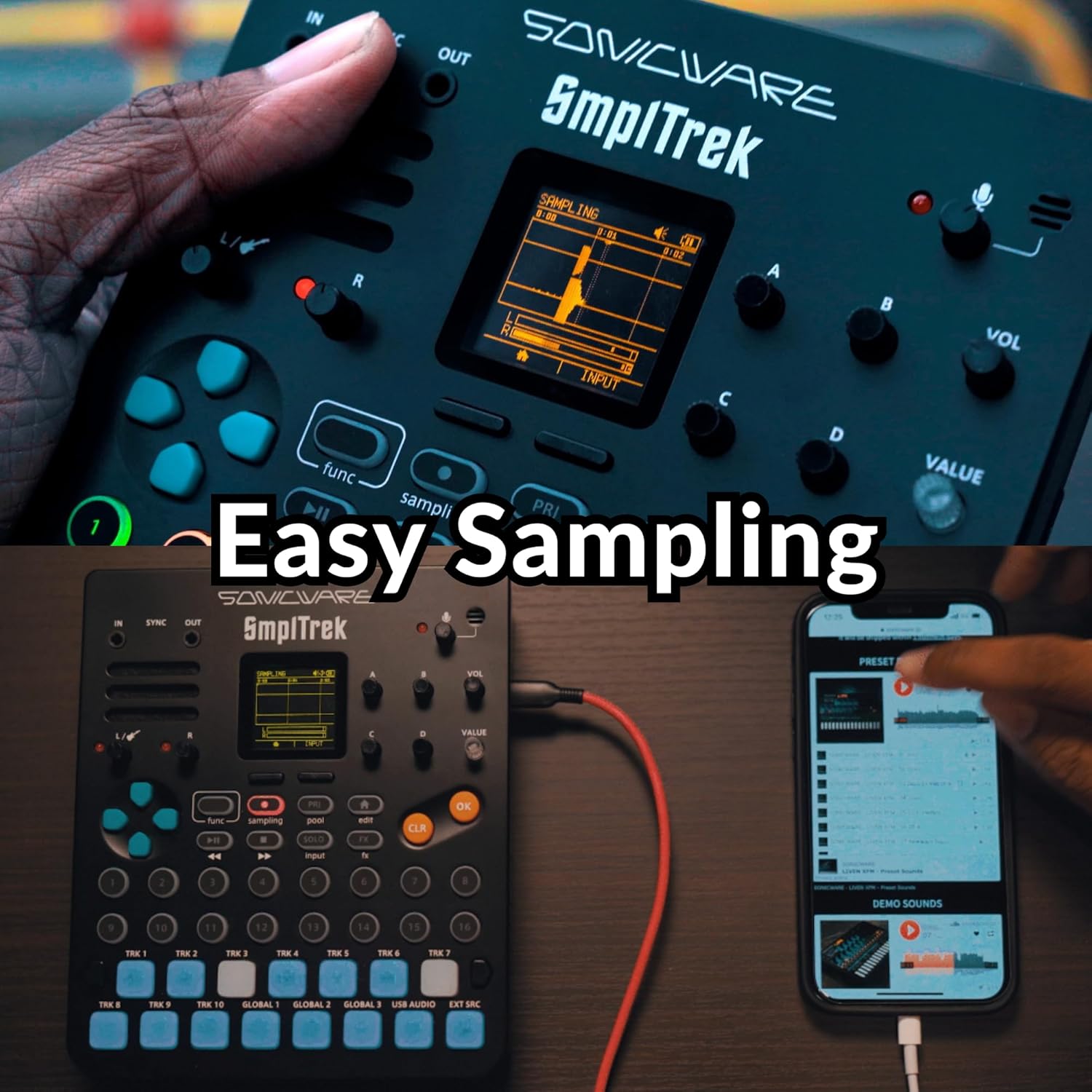
The Sonicware SmplTrek is a fully portable production station that allows you to sample, arrange, and perform tracks without a computer. It features onboard recording, mic and line inputs, and an intuitive workflow for traveling musicians and live beatmakers.
| Spec | Akai MPC Live II | Sonicware SmplTrek |
|---|---|---|
| Manufacturer | Akai Professional | Sonicware |
| Year Released | 2020 | 2023 |
| Polyphony | 128 | 10 |
| Sample Rate | 44.1kHz | 16-bit / 44.1kHz |
| Storage | Internal SSD | Internal memory + microSD |
| Pads | 16 velocity-sensitive RGB pads | 10 buttons (performance and transport) |
| Sequencer | Yes | Yes, song-based + pattern |
| Effects | EQ, Reverb, Delay, Compression | EQ, Delay, Reverb, Master FX |
| I/O | MIDI In/Out, USB, Audio In/Out | Line In/Out, USB-C, MIDI In/Out, Mic In |
| Screen | 7-inch multi-touch display | Color screen |
| Software Integration | MPC Software | USB file transfer |
| Build | Standalone | Compact all-in-one sampler workstation |
| Price | $1,299 | $429 |
| More about | Details | Details |
Buy the Akai MPC Live II on Amazon.com
Buy Now On AmazonBuy the Sonicware SmplTrek on Amazon.com
Buy Now On AmazonAkai MPC Live II vs. Sonicware SmplTrek: Which Sampler Suits You Best?
Summary: The Akai MPC Live II and Sonicware SmplTrek are two popular music production devices perfect for creating beats on the go. This blog dives into their features, pros, and cons to help you decide which one fits your needs best.
Introduction
Music is a universal language, and creating it should be as exciting as listening to it. Whether you’re a seasoned producer or a budding musician, having the right gear can make all the difference. Enter the Akai MPC Live II and the Sonicware SmplTrek, two powerful devices designed to help you craft your music wherever you are. But which one is right for you? Let’s dig into their features, compare their strengths and weaknesses, and help you make an informed choice.
Feature Comparisons
Design and Build
The Akai MPC Live II is a sleek, standalone music maker that packs a punch with its 7-inch multi-touch display and 16 velocity-sensitive RGB pads. It’s a bit larger and heavier, designed with built-in speakers and a rechargeable battery. This makes it perfect for those who want to create music without needing external speakers or a power source.
On the other hand, the Sonicware SmplTrek is a more compact unit, fitting snugly into the category of portable production stations. With its 10 performance and transport buttons, it’s a lightweight option for musicians on the move. It might lack the big screen of the MPC Live II, but its color screen and straightforward design ensure you won’t miss a beat.
Sound and Performance
When it comes to sound, polyphony plays a crucial role. The MPC Live II offers an impressive 128 voices of polyphony, allowing for complex compositions and layering. It also supports a 44.1kHz sample rate, ensuring your tracks sound professional and crisp.
In contrast, the SmplTrek provides 10 voices of polyphony, which might seem limited but is often ample for simpler arrangements. It supports a 16-bit / 44.1kHz sample rate, offering a decent quality for its price range. This makes it ideal for those who prioritize portability and ease of use over extensive sound complexity.
Storage and Connectivity
Storage is another critical factor to consider. The MPC Live II boasts an internal SSD, providing ample space for storing samples and projects. Its connectivity options include MIDI In/Out, USB, and Audio In/Out, making it highly versatile.
The SmplTrek comes with internal memory and a microSD slot for expandable storage. It’s equipped with Line In/Out, USB-C, MIDI In/Out, and Mic In, offering a good variety of connectivity options for its size.
Sequencing and Effects
Both samplers offer sequencing capabilities, but they differ in their approach. The MPC Live II includes a robust sequencer with software integration, allowing you to connect to a computer and use MPC Software for advanced editing.
The SmplTrek features a song-based and pattern sequencer, which is intuitive and perfect for quick arrangements. While it might not have the software integration of the MPC, its onboard recording and easy workflow make it a joy to use.
In terms of effects, both devices offer EQ, Reverb, and Delay. The MPC Live II adds Compression to its effects suite, while the SmplTrek includes Master FX, enhancing its live performance capabilities.
Pros and Cons
Akai MPC Live II
Pros:
- High polyphony (128 voices) for complex compositions
- Large multi-touch display for intuitive control
- Built-in speakers and rechargeable battery for true portability
- Extensive connectivity options
- Integrated MPC Software for advanced editing
Cons:
- Higher price point ($1,299)
- Bulkier design compared to the SmplTrek
Sonicware SmplTrek
Pros:
- Affordable price ($429)
- Compact and lightweight design
- Intuitive workflow for quick music creation
- Flexible storage with microSD support
- Master FX for enhancing live performances
Cons:
- Limited polyphony (10 voices)
- Smaller screen compared to the MPC Live II
Final Verdict
In summary, both the Akai MPC Live II and Sonicware SmplTrek excel in their respective areas. The MPC Live II is best for those who need a powerful, all-in-one music production solution with advanced features and don’t mind the higher price. It’s perfect for producers who want to create complex tracks and have the budget to invest in a premium device.
The Sonicware SmplTrek, on the other hand, is ideal for musicians who prioritize portability and affordability. It’s a great choice for beginners or those who want a straightforward device for casual music-making, live performances, or travel.
No matter which sampler you choose, both will help you turn your musical ideas into reality. Happy music-making!