Akai MPC Live II — VS — Teenage Engineering OP-1 Field
Akai MPC Live II
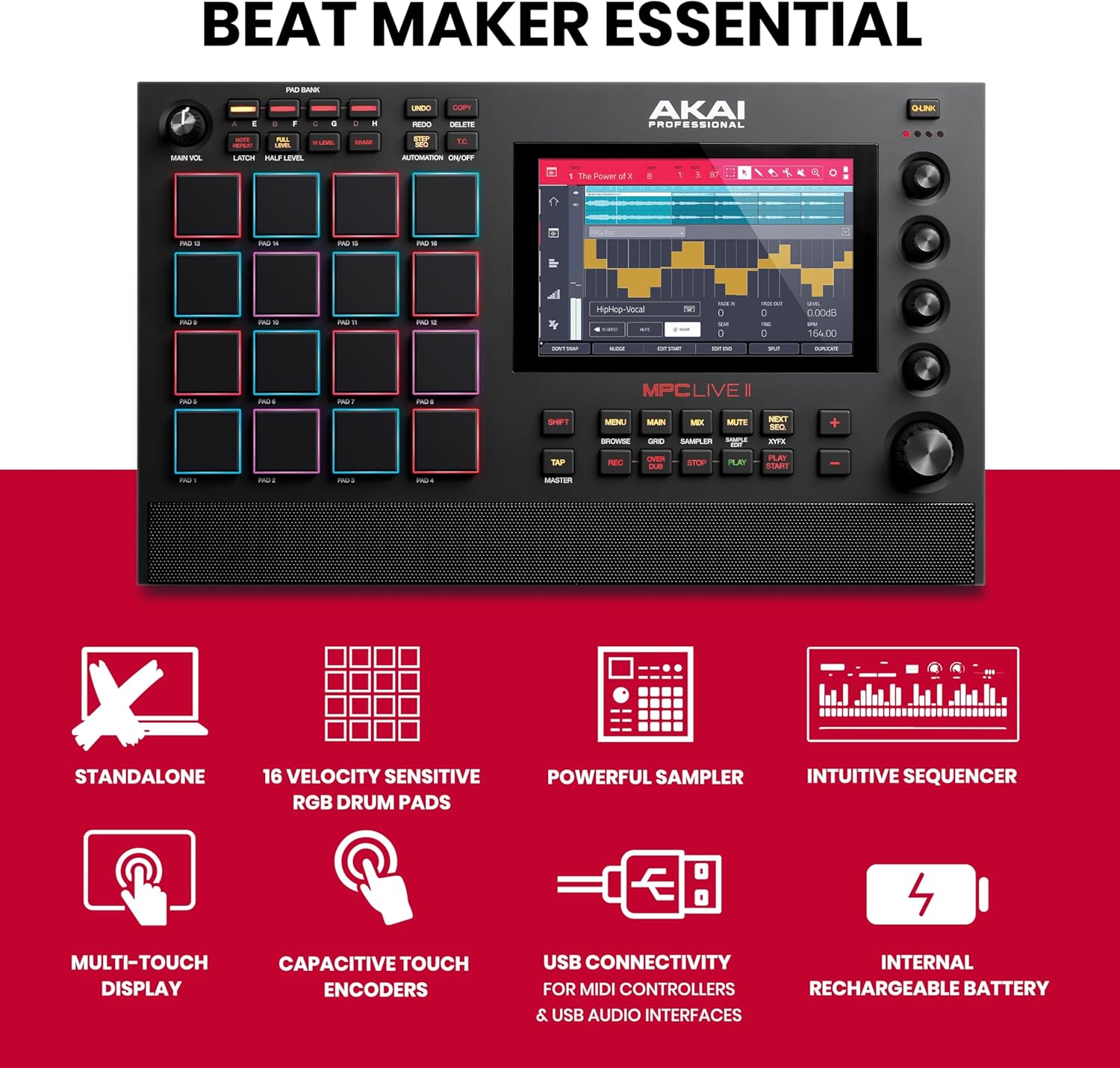
The MPC Live II is a portable, all-in-one music maker with built-in speakers and a rechargeable battery. You can make music anywhere, hear your beats clearly, and connect to Wi-Fi to grab samples or control Ableton Live. It's powerful, easy to use, and ready whenever inspiration strikes.
Teenage Engineering OP-1 Field
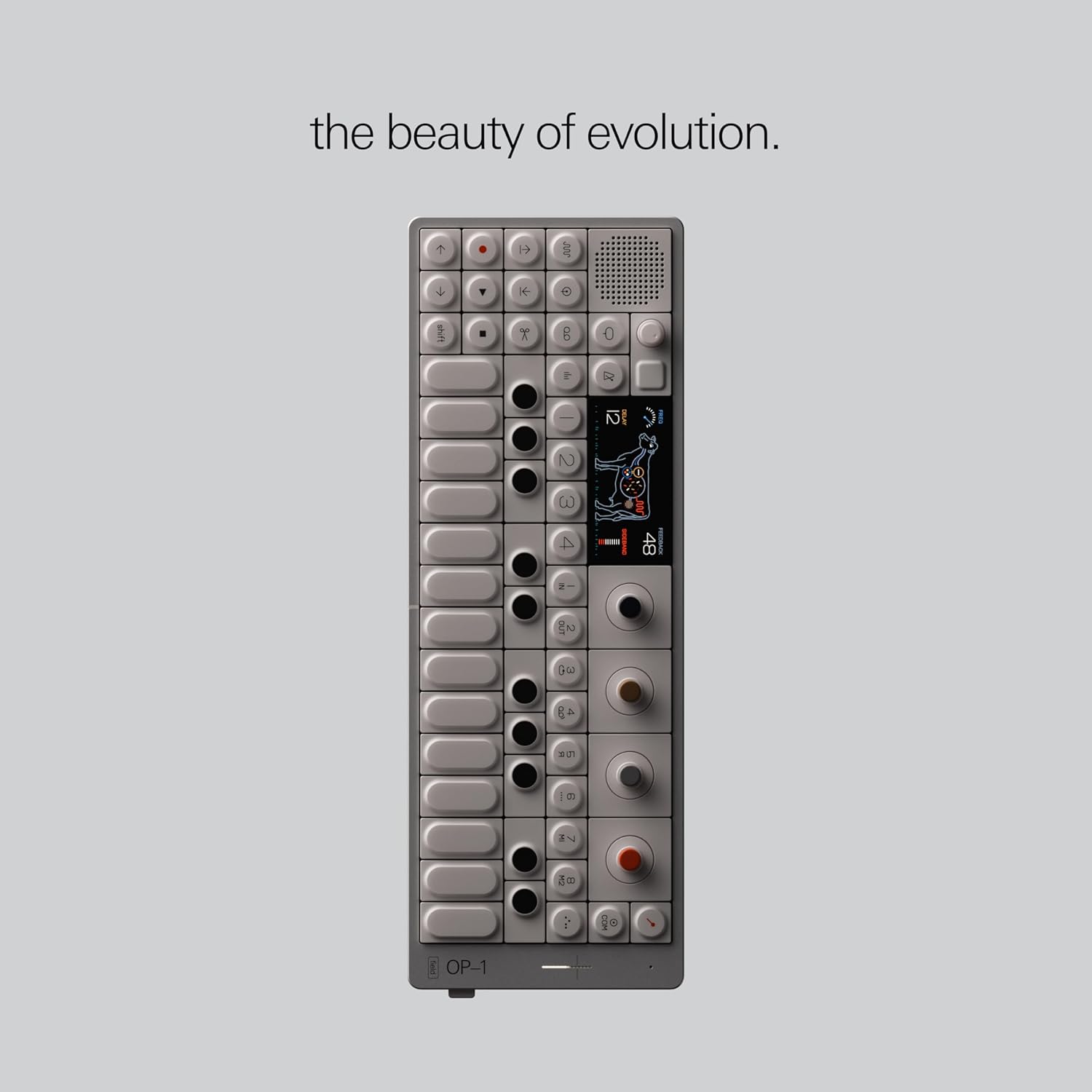
The OP-1 Field is a super cool, all-in-one music maker you can take anywhere. It's small, strong, and sounds amazing. You can play music, record sounds, and mix it all together right on the device. It has a bright screen, loud speakers, and even velcro on the back to add fun stuff. You can connect it to your phone or computer, and it works great with other music gear too. Whether you're at home or outside, it's ready to help you create awesome music.
| Spec | Akai MPC Live II | Teenage Engineering OP-1 Field |
|---|---|---|
| Manufacturer | Akai Professional | Teenage Engineering |
| Year Released | 2020 | 2022 |
| Polyphony | 128 | 8 |
| Sample Rate | 44.1kHz | 44.1kHz |
| Storage | Internal SSD | Internal storage |
| Pads | 16 velocity-sensitive RGB pads | No pads, uses buttons |
| Sequencer | Yes | Yes |
| Effects | EQ, Reverb, Delay, Compression | Multiple effects |
| I/O | MIDI In/Out, USB, Audio In/Out | USB Audio, MIDI |
| Screen | 7-inch multi-touch display | OLED display |
| Software Integration | MPC Software | No |
| Build | Standalone | Portable synth/sampler/sequencer |
| Price | $1,299 | $1999 |
| More about | Details | Details |
Buy the Akai MPC Live II on Amazon.com
Buy Now On AmazonBuy the Teenage Engineering OP-1 Field on Amazon.com
Buy Now On AmazonAkai MPC Live II vs. Teenage Engineering OP-1 Field: Which One is Right for You?
In the world of music creation, picking the right gear can be challenging. Today, we’re comparing two exciting samplers: the Akai MPC Live II and the Teenage Engineering OP-1 Field. Each has its own unique features, strengths, and weaknesses. By the end of this article, you’ll have a better idea of which sampler might be the perfect fit for your musical journey.
Introduction
For music lovers and creators, samplers are amazing tools. They let you record, play, and manipulate sounds in incredible ways. The Akai MPC Live II and Teenage Engineering OP-1 Field are two popular choices. But they’re quite different from each other. Let’s dive into the details and see what makes each one special.
Features and Comparison
Design and Build
Akai MPC Live II: This is a standalone device from Akai Professional, introduced in 2020. It has a solid build with 16 velocity-sensitive RGB pads. It’s designed for those who like to have everything in one place without needing a computer. The large 7-inch multi-touch display is great for controlling and editing your music. It also has built-in speakers and an extended battery life, making it versatile for both studio and live performances.
Teenage Engineering OP-1 Field: Released in 2022, the OP-1 Field is a portable synth, sampler, and sequencer. Its design stands out with a unique and compact form. Instead of pads, it uses buttons, which might be a bit different for those used to traditional samplers. The OLED display provides clear visuals, and its portable nature makes it perfect for creating music on the go.
Sound and Polyphony
Akai MPC Live II: With a polyphony of 128, it allows you to layer many sounds without cutting any off. This is perfect for complex compositions. The sample rate of 44.1kHz ensures high-quality sound, and the built-in effects like EQ, Reverb, Delay, and Compression give you a lot of creative options.
Teenage Engineering OP-1 Field: It offers a polyphony of 8, which is lower than the MPC Live II. This might limit the number of simultaneous sounds you can use. However, the OP-1 Field makes up for it with its unique effects and sound design capabilities. The sample rate is also 44.1kHz, providing clear audio quality.
Storage and Connectivity
Akai MPC Live II: It comes with an internal SSD, giving you plenty of space to store your projects and samples. Connectivity options include MIDI In/Out, USB, and Audio In/Out, which makes it very versatile for different setups.
Teenage Engineering OP-1 Field: The internal storage is less than the MPC Live II, but it’s enough for its portable nature. It offers USB Audio and MIDI connections, which are simpler but effective for its design.
Software and Integration
Akai MPC Live II: It integrates smoothly with MPC Software, providing a seamless experience for those who want to work both on the device and with a computer.
Teenage Engineering OP-1 Field: It does not offer software integration, focusing more on standalone functionality. This might appeal to those who prefer a more hands-on and unique workflow without computer dependency.
Pros and Cons
Akai MPC Live II
Pros:
- High polyphony (128) for complex compositions
- Large 7-inch multi-touch display
- Extensive connectivity options
- Built-in speakers and extended battery life
- Seamless software integration
Cons:
- Higher price point at $1400
- Heavier and less portable
Teenage Engineering OP-1 Field
Pros:
- Compact and portable design
- Unique workflow and design
- Multiple creative effects
- Clear OLED display
- Slightly cheaper at $1300
Cons:
- Lower polyphony (8)
- Limited storage compared to MPC Live II
- No software integration
Summary
Both the Akai MPC Live II and Teenage Engineering OP-1 Field are standout devices in the world of music gear. The MPC Live II is for those who prefer an all-in-one solution with lots of power and features. The OP-1 Field is perfect for creative minds who love portability and unique sound design.
Final Verdict
For those who need a powerful, standalone music production center, the Akai MPC Live II is the way to go. It’s best for musicians who want to create complex tracks with many layers and need robust connectivity options.
On the other hand, if you’re looking for a portable, innovative device with a unique approach to music making, the Teenage Engineering OP-1 Field might be your best friend. It’s ideal for artists who are always on the move and enjoy experimenting with sound.
Whichever you choose, both samplers offer incredible possibilities for creating music. Happy music making!