Akai MPC Live — VS — Elektron Analog Rytm MKII
Akai MPC Live
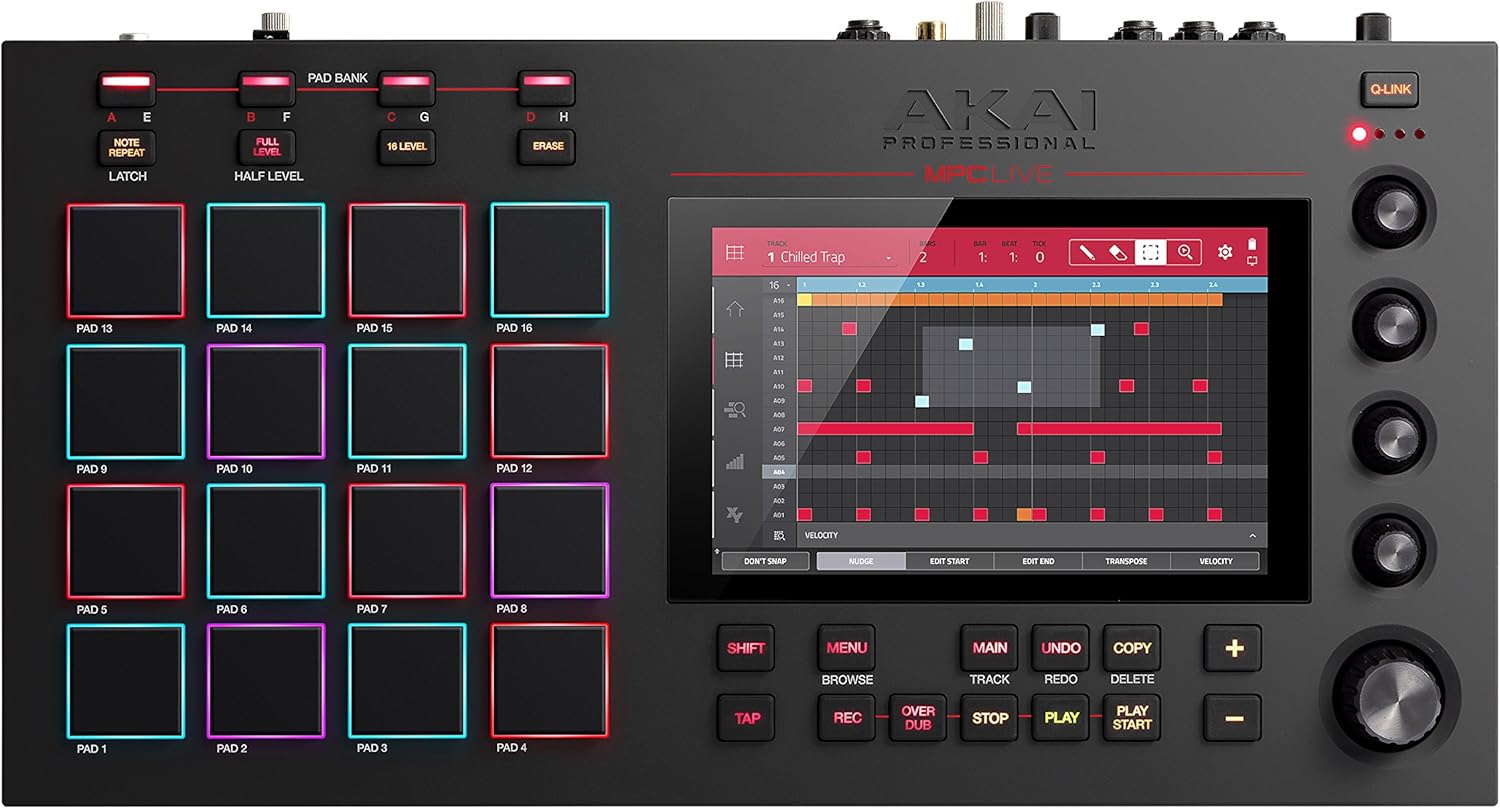
The MPC Live is a powerful, portable music-making machine you can use anywhere. It runs on a built-in battery, has tons of pro features, and works without a computer. You can plug in speakers, instruments, turntables, and more. With its bright screen, easy-to-use pads, and lots of ways to connect, the MPC Live is perfect for making music at home, in the studio, or on stage.
Elektron Analog Rytm MKII
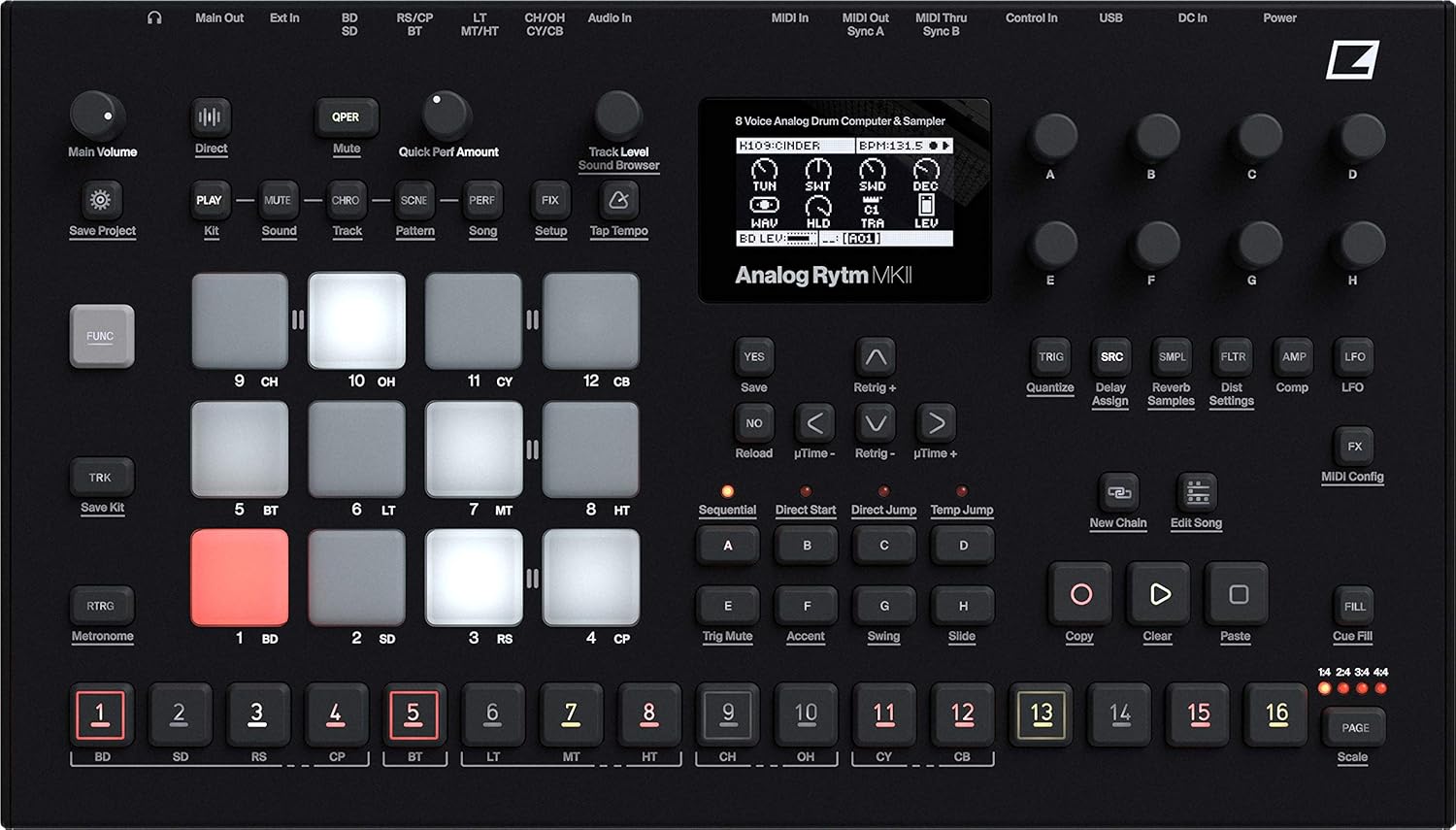
The Analog Rytm MKII is a powerful drum machine and sampler that helps you make awesome beats. It has 8 different drum sounds you can shape with real analog power and digital samples. You can tap on big, fun pads to play your sounds, or use the step sequencer to build cool rhythms. It lets you record sounds, change them up, and mix them however you like. Whether you're making music at home or performing on stage, this beat machine is ready to help you create something amazing.
| Spec | Akai MPC Live | Elektron Analog Rytm MKII |
|---|---|---|
| Manufacturer | Akai Professional | Elektron |
| Year Released | 2017 | 2018 |
| Polyphony | 128 | 12 |
| Sample Rate | 44.1kHz | 48kHz |
| Storage | Internal SSD | SD card |
| Pads | 16 velocity-sensitive RGB pads | 8 velocity-sensitive pads |
| Sequencer | Yes | Yes |
| Effects | EQ, Reverb, Delay, Compression | Analog and digital effects |
| I/O | MIDI In/Out, USB, Audio In/Out | MIDI In/Out/Thru, USB, Audio In/Out |
| Screen | 7-inch multi-touch display | OLED display |
| Software Integration | MPC Software | Elektron Transfer |
| Build | Standalone | Desktop |
| Price | $1299 | $2299 |
| More about | Details | Details |
Buy the Akai MPC Live on Amazon.com
Buy Now On AmazonBuy the Elektron Analog Rytm MKII on Amazon.com
Buy Now On AmazonAkai MPC Live vs. Elektron Analog Rytm MKII: A Music Gear Showdown
Summary: In the world of music production, the Akai MPC Live and the Elektron Analog Rytm MKII are two powerful samplers that stand out. This article explores their features, pros and cons, and helps you decide which one might be the best fit for your musical needs.
Introduction
If you’re into making music, you probably know how important it is to have the right tools. Two of the coolest gadgets out there for music creation are the Akai MPC Live and the Elektron Analog Rytm MKII. These samplers are like magic boxes that help you create beats and sounds in amazing ways. But which one should you choose? Let’s dive in and compare these two giants of the music world!
Features Face-Off
Akai MPC Live
The Akai MPC Live is a nifty gadget that came out in 2017. It’s made by Akai Professional, a name that many music makers trust. This sampler is standalone, which means you can use it without needing a computer. That’s pretty cool, right?
One of the best things about the MPC Live is its 7-inch multi-touch display. It’s almost like having a tablet screen where you can see everything you’re doing. You get 16 velocity-sensitive RGB pads, which light up and make it super fun to tap out beats. The MPC Live also has a lot of space to store your sounds with its internal SSD storage. Plus, it can play up to 128 notes at the same time, thanks to its high polyphony. That’s a lot!
This device comes with a full suite of effects like EQ, reverb, delay, and compression. You can connect it to other devices using MIDI, USB, or audio inputs and outputs. And if you like using software, the MPC Live works smoothly with the MPC Software for even more options.
Elektron Analog Rytm MKII
The Elektron Analog Rytm MKII is another fantastic sampler, released in 2018 by Elektron. Unlike the MPC Live, it’s a desktop device, meaning it usually stays in one place rather than being moved around a lot.
This sampler has 8 velocity-sensitive pads, which are great for playing beats. It also features both analog and digital effects, giving you a wide range of sounds to work with. The OLED display, while smaller than the MPC Live’s screen, is clear and easy to read.
For storage, the Rytm MKII uses an SD card. While it doesn’t have as much polyphony as the MPC Live, with 12 voices, it still packs a punch with its powerful sound engine. It integrates with Elektron Transfer software, making it easy to move your sounds between devices.
Pros and Cons
Akai MPC Live
Pros:
- Standalone Use: No computer needed, which is great for making music anywhere.
- Large Touch Screen: The 7-inch display makes it easy to see and control everything.
- High Polyphony: With 128 notes, you can layer lots of sounds.
- Internal Storage: Plenty of space for your samples with the internal SSD.
Cons:
- Price: At $1200, it might be a bit pricey for beginners.
- Complexity: With so many features, it could be overwhelming for new users.
Elektron Analog Rytm MKII
Pros:
- Rich Sound Options: Combines analog and digital effects for unique sounds.
- Durable Build: Designed for desktop use, it’s sturdy and reliable.
- Software Integration: Easy to transfer sounds with Elektron Transfer.
Cons:
- Price: Even more expensive at $1800, which might be a hurdle for many.
- Lower Polyphony: With only 12 voices, it might be limiting for complex compositions.
- Limited Pads: Fewer pads than the MPC Live, which might not suit all musicians.
Who Should Choose Which?
If you’re someone who likes to make music on the go, the Akai MPC Live is a fantastic choice. Its portability, large touch screen, and high polyphony make it ideal for musicians who need flexibility and ease of use. It’s perfect for those who want a standalone device that can do it all.
On the other hand, the Elektron Analog Rytm MKII is great for users who love rich, analog sounds and don’t mind a stationary setup. If you’re into creating complex rhythms and enjoy having both analog and digital effects at your fingertips, the Rytm MKII could be your best friend.
Conclusion
Both the Akai MPC Live and Elektron Analog Rytm MKII are powerful tools for music creation. They each have their strengths and weaknesses, so the best choice depends on your personal needs and preferences. Whether you’re a beat-making enthusiast or a professional producer, one of these samplers is sure to inspire your next musical adventure. Happy music-making!