Akai MPC Live — VS — Elektron Digitakt
Akai MPC Live
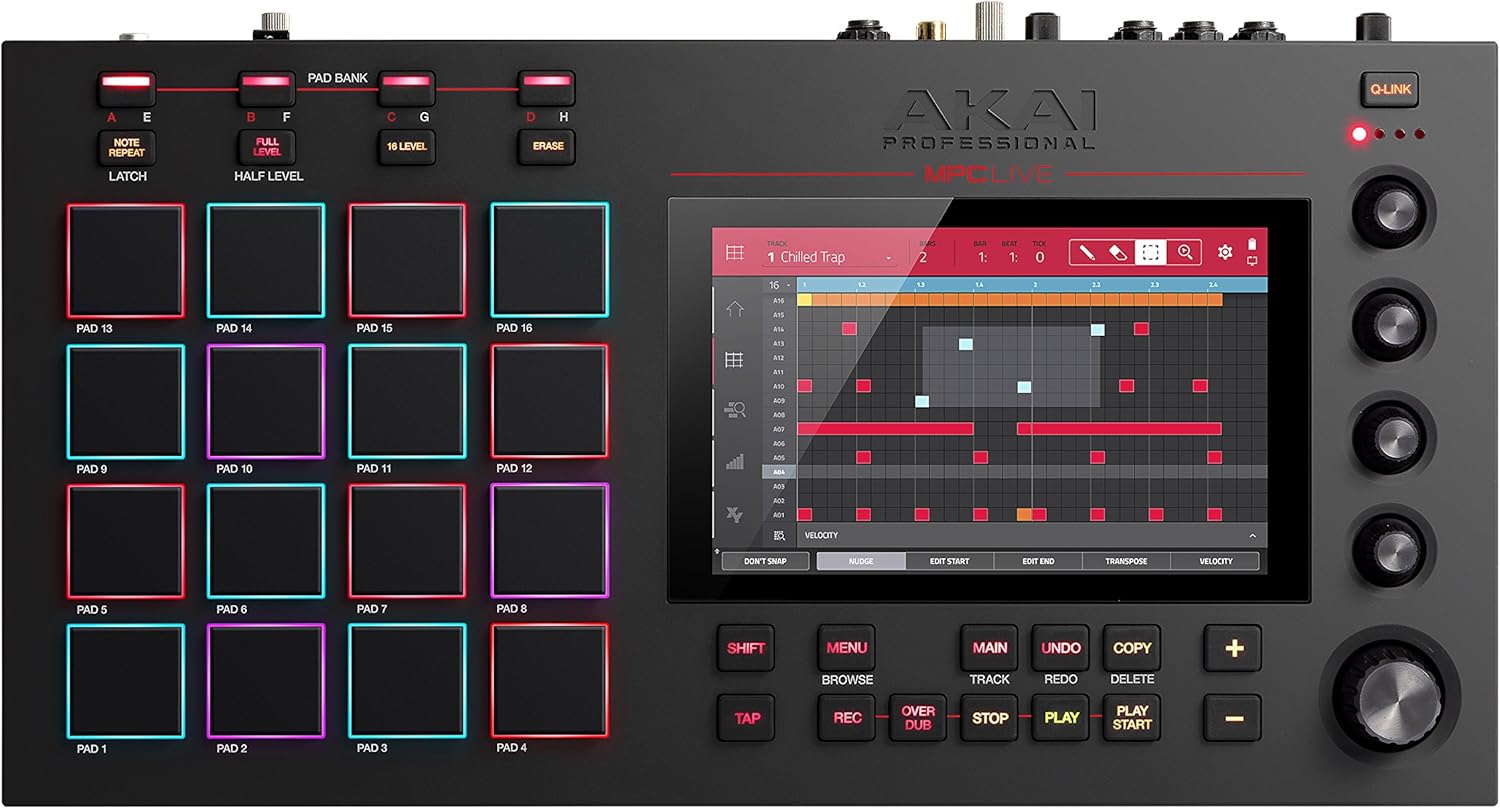
The MPC Live is a powerful, portable music-making machine you can use anywhere. It runs on a built-in battery, has tons of pro features, and works without a computer. You can plug in speakers, instruments, turntables, and more. With its bright screen, easy-to-use pads, and lots of ways to connect, the MPC Live is perfect for making music at home, in the studio, or on stage.
Elektron Digitakt
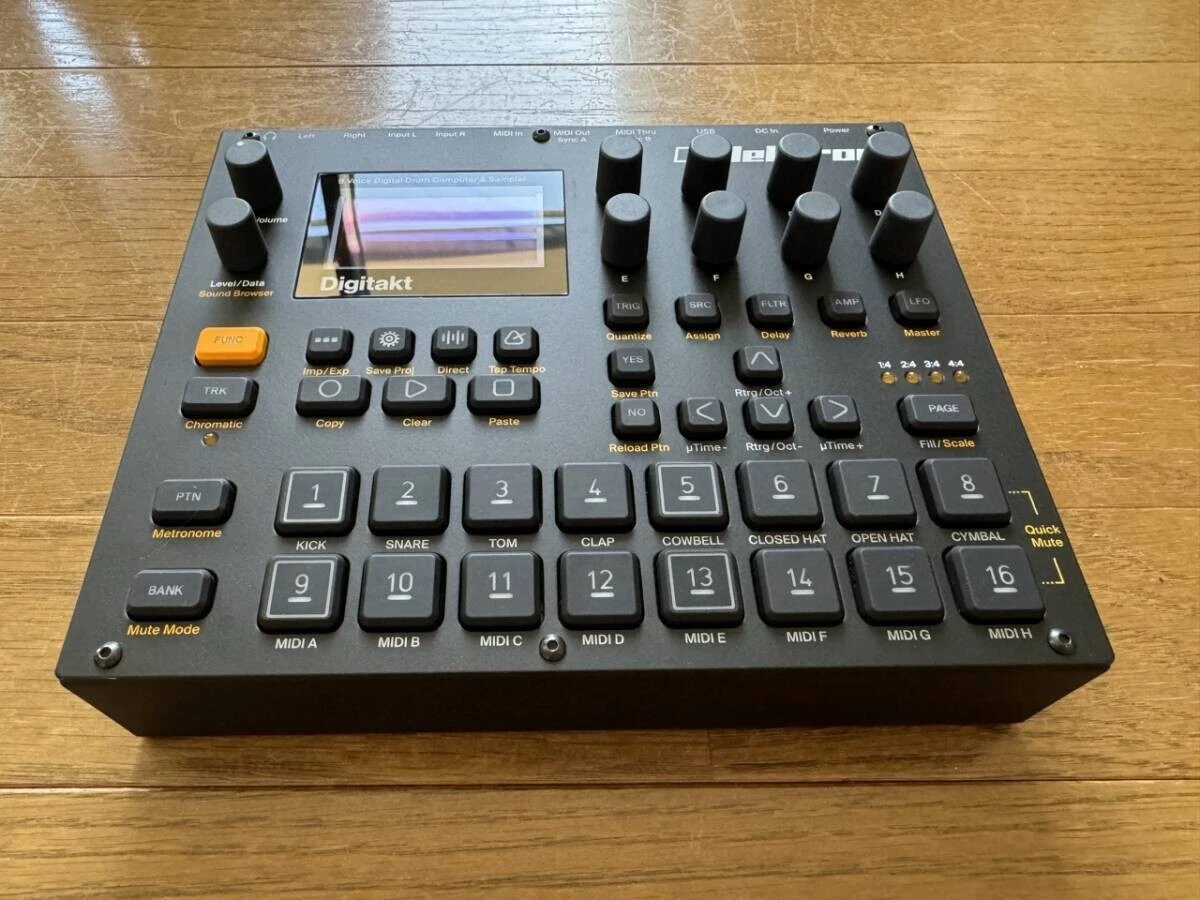
Digitakt is a super cool music machine that helps you make beats and mix sounds. It's small, tough, and built to last. You can record sounds, play them back, and create your own songs using 8 sound tracks and 8 more tracks to control other music gear. It also has awesome buttons and a bright screen to help you see what you're doing. Whether you're just starting or already making music, Digitakt gives you all the tools you need to have fun and make people dance!
| Spec | Akai MPC Live | Elektron Digitakt |
|---|---|---|
| Manufacturer | Akai Professional | Elektron |
| Year Released | 2017 | 2017 |
| Polyphony | 128 | 8 |
| Sample Rate | 44.1kHz | 48kHz |
| Storage | Internal SSD | Internal storage |
| Pads | 16 velocity-sensitive RGB pads | No pads, uses buttons |
| Sequencer | Yes | Yes |
| Effects | EQ, Reverb, Delay, Compression | Reverb, Delay |
| I/O | MIDI In/Out, USB, Audio In/Out | MIDI In/Out/Thru, USB, Audio Out |
| Screen | 7-inch multi-touch display | OLED display |
| Software Integration | MPC Software | Elektron Transfer |
| Build | Standalone | Desktop |
| Price | $1299 | $700 |
| More about | Details | Details |
Buy the Akai MPC Live on Amazon.com
Buy Now On AmazonAkai MPC Live vs. Elektron Digitakt: Which Sampler Is Right for You?
Summary: This article compares the Akai MPC Live and the Elektron Digitakt, two popular samplers for music production. We’ll explore their features, pros and cons, and help you decide which one suits your needs best.
Introduction
Hello, music makers! Are you ready to dive into the world of samplers? Today, we’re looking at two exciting devices: the Akai MPC Live and the Elektron Digitakt. Both of these samplers are fantastic tools for creating music, but they have different strengths. Whether you’re new to music production or a seasoned pro, this guide will help you understand which sampler is the best fit for your creative journey.
Feature Comparisons
Design and Build
The Akai MPC Live is like a mini music studio that you can carry with you. It’s a standalone device, which means you don’t need a computer to make music. It has a big 7-inch multi-touch screen that makes it easy to see everything you’re working on. Plus, it has 16 colorful pads that are sensitive to how hard you hit them, just like real drums!
On the other hand, the Elektron Digitakt is a compact desktop device. It’s not as portable as the MPC Live, but it’s still easy to move around. Instead of pads, it uses buttons to control the music. Its OLED screen is smaller than the MPC’s, but it’s clear and bright, making it easy to read even in low light.
Polyphony and Sound Quality
Polyphony is a fancy word that means how many sounds a device can play at once. The Akai MPC Live can play up to 128 sounds at the same time! This makes it great for complex music projects. It has a sample rate of 44.1kHz, which is the standard for most music production.
The Elektron Digitakt has less polyphony, with just 8 sounds playing at once. However, it has a higher sample rate of 48kHz, which means it can capture more details in each sound. This can make your music sound crisp and clear.
Storage and Software
The MPC Live comes with an internal SSD, which is like a big storage box for all your sounds and projects. You won’t run out of space quickly! It also integrates with MPC Software, which lets you work on your music on a computer if you want.
The Digitakt has internal storage too, but it’s more limited than the MPC Live. It uses Elektron Transfer software, which helps you move sounds and projects between your computer and the device.
Effects and Connectivity
Both devices have effects to make your music sound even better. The MPC Live offers EQ, Reverb, Delay, and Compression, giving you lots of options to shape your sound. It also has plenty of ways to connect to other devices, with MIDI In/Out, USB, and Audio In/Out.
The Digitakt has Reverb and Delay effects, which are great for adding depth and space to your music. It has MIDI In/Out/Thru, USB, and Audio Out, making it easy to connect to other gear.
Pros and Cons
Akai MPC Live Pros and Cons
Pros:
- Standalone design for portable music production
- Large 7-inch multi-touch screen
- 16 velocity-sensitive RGB pads
- High polyphony of 128 voices
- Comprehensive effects suite
- Extensive connectivity options
Cons:
- Higher price point at $1200
- Larger size may not fit smaller workspaces
Elektron Digitakt Pros and Cons
Pros:
- Compact and desktop-friendly design
- Affordable price at $700
- High sample rate of 48kHz for excellent sound quality
- Deep sequencing and performance features
Cons:
- Limited to 8 voices of polyphony
- Smaller screen and no dedicated pads
Final Verdict: Who Is Each Sampler Best For?
The Akai MPC Live is perfect for those who want a standalone music-making machine. It’s great for producers who love working on the go and need a device that can handle complex projects with lots of layers. If you want a device that feels like a mini studio with lots of features, the MPC Live is for you.
The Elektron Digitakt, meanwhile, is ideal for those who are looking for a powerful but affordable device. It’s perfect for electronic music producers who appreciate deep sequencing capabilities and aren’t afraid of a little complexity. If you’re a fan of hands-on music creation and want something that fits snugly on your desk, the Digitakt is a great choice.
In the end, both the Akai MPC Live and the Elektron Digitakt are fantastic tools for making music. Your choice will depend on how you like to work and what features are most important to you. Happy music-making!