Akai MPC Live — VS — Elektron Octatrack MKI
Akai MPC Live
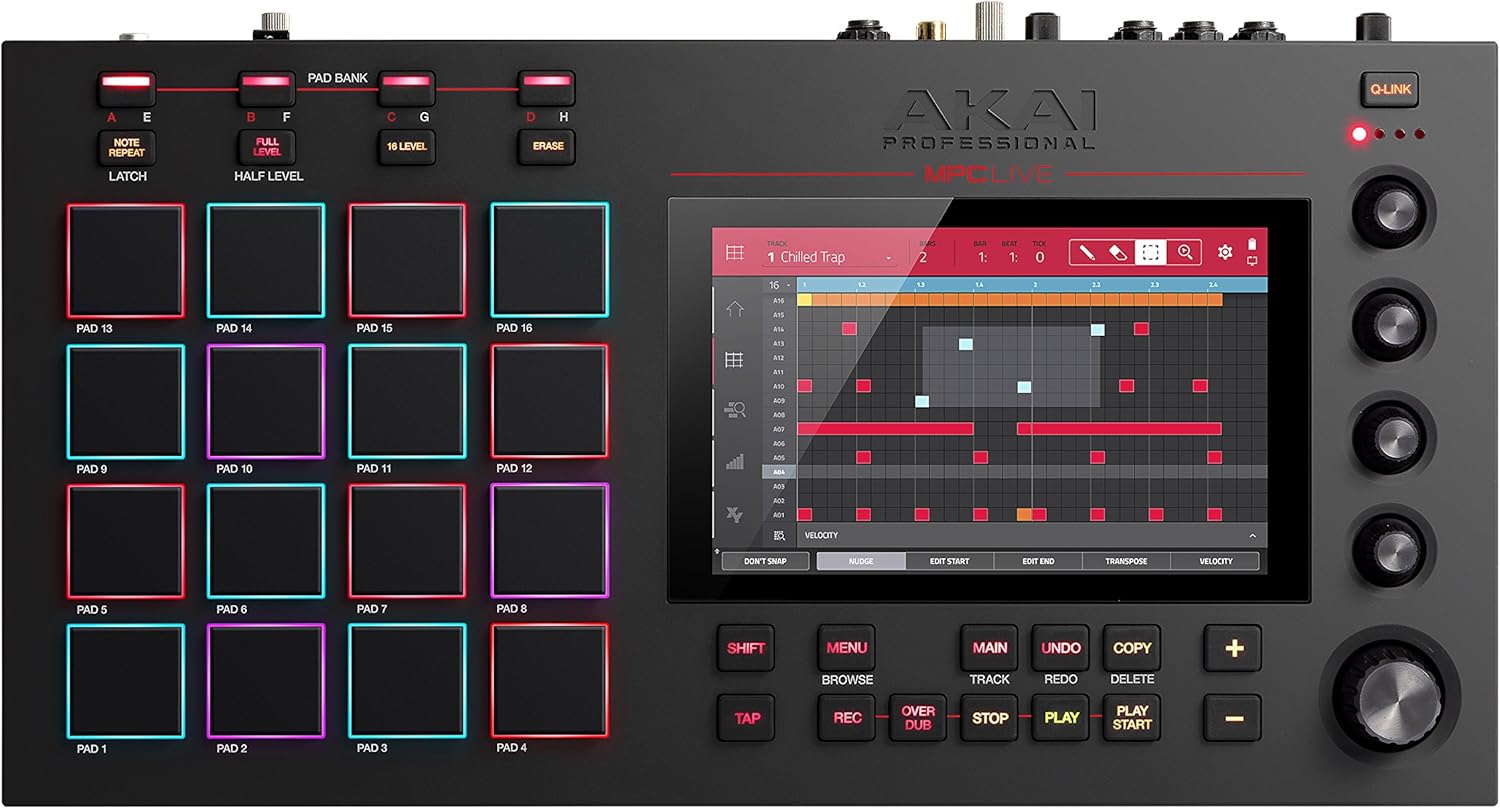
The MPC Live is a powerful, portable music-making machine you can use anywhere. It runs on a built-in battery, has tons of pro features, and works without a computer. You can plug in speakers, instruments, turntables, and more. With its bright screen, easy-to-use pads, and lots of ways to connect, the MPC Live is perfect for making music at home, in the studio, or on stage.
Elektron Octatrack MKI
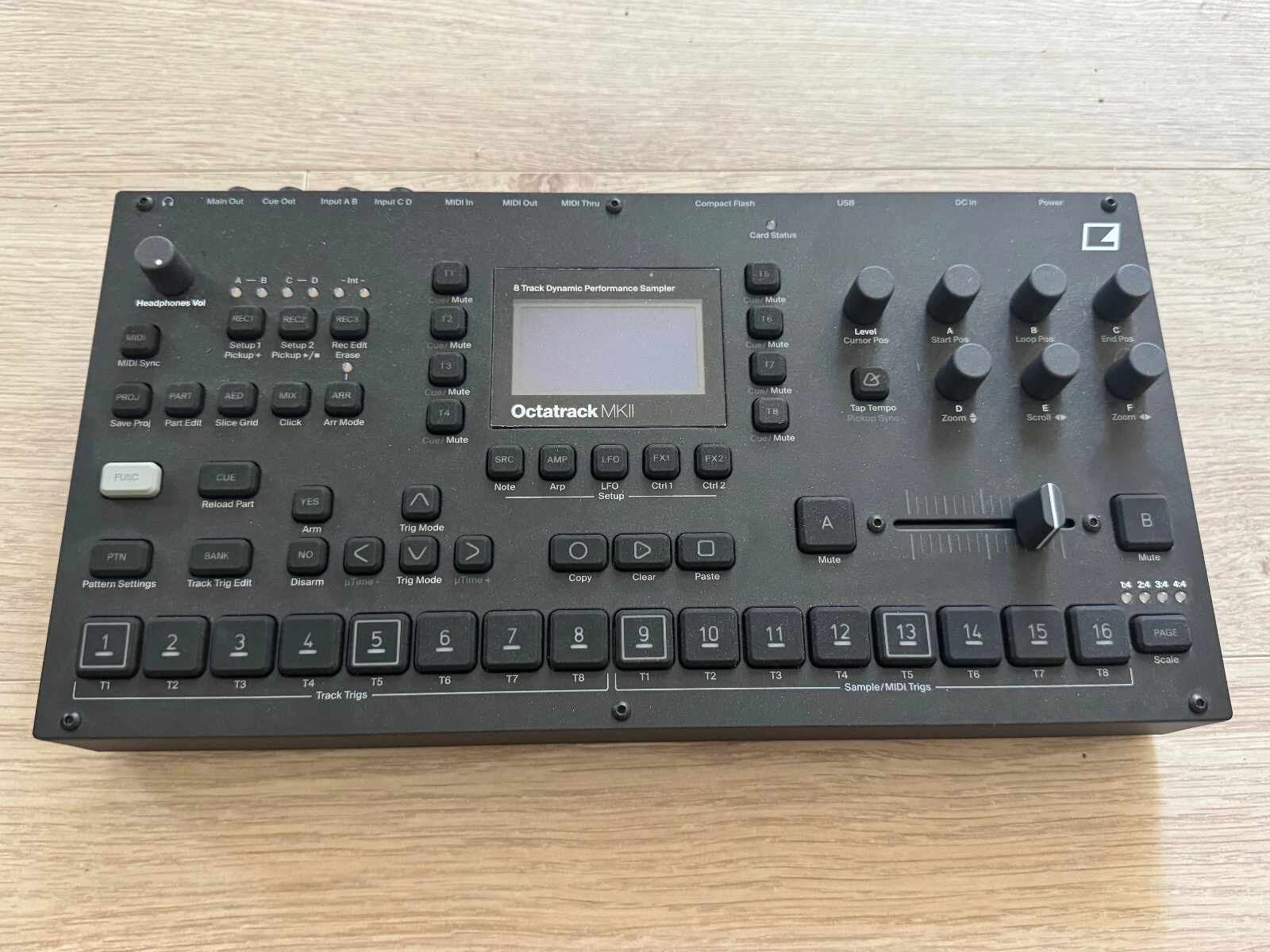
The Elektron Octatrack is a powerful music tool that lets you sample, loop, and remix sounds in real time. It has 8 tracks for playing and twisting audio, plus 8 more for controlling other gear with MIDI. You can load sounds from a memory card or record them live, then use built-in effects, a crossfader, and a step sequencer to create unique tracks. Whether you're performing live or making music in the studio, the Octatrack MK1 gives you deep control over your sound in a hands-on, creative way.
| Spec | Akai MPC Live | Elektron Octatrack MKI |
|---|---|---|
| Manufacturer | Akai Professional | Elektron |
| Year Released | 2017 | 2010 |
| Polyphony | 128 | 8 |
| Sample Rate | 44.1kHz | 48kHz |
| Storage | Internal SSD | Compact Flash |
| Pads | 16 velocity-sensitive RGB pads | No pads, uses buttons and encoders |
| Sequencer | Yes | Yes |
| Effects | EQ, Reverb, Delay, Compression | Filters, Delay, Reverb |
| I/O | MIDI In/Out, USB, Audio In/Out | MIDI In/Out/Thru, Audio In/Out |
| Screen | 7-inch multi-touch display | OLED display |
| Software Integration | MPC Software | Elektron Transfer |
| Build | Standalone | Desktop |
| Price | $1299 | |
| More about | Details | Details |
Buy the Akai MPC Live on Amazon.com
Buy Now On AmazonA Battle of Beats: Akai MPC Live vs Elektron Octatrack MKI
If you’re in the market for a sampler, the Akai MPC Live and the Elektron Octatrack MKI are two powerhouse devices that you might consider. These machines are like the superheroes of music production, each with unique abilities and features. In this comparison, we’ll explore what makes each of these samplers special, their pros and cons, and which one might be the perfect fit for your musical adventures.
Introduction
Welcome, music gear enthusiasts! Today, we’re diving into the world of samplers, where creativity and technology meet to create magic. Whether you’re a seasoned producer or a budding musician, choosing the right sampler can make all the difference in your music-making journey. In this blog post, we’ll compare the Akai MPC Live and the Elektron Octatrack MKI. These two devices are like musical wizards, each with their spells to cast. Let’s see what each has to offer!
Feature Comparisons
Year of Release and Build
The Akai MPC Live was released in 2017, while the Elektron Octatrack MKI made its debut in 2010. The MPC Live is a standalone device, which means it doesn’t rely on a computer. It has a sleek, modern design, and its build is like a portable studio. The Octatrack MKI, on the other hand, is a desktop unit. It’s a bit older but still holds its ground with solid construction and a proven track record among electronic musicians.
Polyphony and Sample Rate
Polyphony refers to the number of sounds a device can play at once. The MPC Live boasts a whopping 128 voices of polyphony, making it a beast for complex compositions. In contrast, the Octatrack MKI offers 8 voices, which might seem limiting, but it’s often enough for many sampling tasks. The sample rate of the MPC Live is 44.1kHz, while the Octatrack MKI operates at 48kHz, offering a slightly higher audio resolution.
Storage and Screen
Storage is crucial for saving all those amazing sounds and beats. The MPC Live comes with internal SSD storage, providing ample space for your projects. The Octatrack MKI uses a Compact Flash card for storage, which might feel a bit dated but gets the job done. When it comes to screens, the MPC Live shines with a 7-inch multi-touch display, making navigation a breeze. The Octatrack MKI features a smaller OLED display, which is functional but less intuitive.
Pads and Controls
The MPC Live features 16 velocity-sensitive RGB pads, perfect for finger drumming and triggering samples. These pads light up in different colors, adding a visual element to your performance. The Octatrack MKI doesn’t have pads; instead, it uses buttons and encoders. While this might seem less exciting, it offers precise control over parameters, especially for those who love tweaking sounds.
Sequencer and Effects
Both devices come with powerful sequencers, allowing you to arrange and manipulate your samples effortlessly. The MPC Live includes effects like EQ, Reverb, Delay, and Compression, providing a wide palette for sound shaping. The Octatrack MKI offers Filters, Delay, and Reverb, giving you essential tools for creating dynamic soundscapes.
Software Integration and Connectivity
The MPC Live integrates seamlessly with MPC Software, expanding its capabilities when connected to a computer. It also features MIDI In/Out, USB, and Audio In/Out, offering versatile connectivity options. The Octatrack MKI uses Elektron Transfer software for file management and includes MIDI In/Out/Thru and Audio In/Out, ensuring smooth integration into your setup.
Pros and Cons
Akai MPC Live
Pros:
- High Polyphony: With 128 voices, you can create complex arrangements with ease.
- Touchscreen Interface: The 7-inch multi-touch display makes navigation intuitive and user-friendly.
- Portable: Its standalone build and internal storage make it perfect for on-the-go production.
- Versatile Connectivity: Offers multiple input and output options for seamless integration.
Cons:
- Price: At $1200, it’s a significant investment.
- Learning Curve: Beginners might find it a bit challenging to master all its features.
Elektron Octatrack MKI
Pros:
- Solid Build: Known for its durability and reliability.
- Sound Quality: Operates at 48kHz, offering great audio resolution.
- Deep Sound Design: Ideal for those who love intricate sound manipulation.
Cons:
- Limited Polyphony: 8 voices can be restrictive for some compositions.
- No Pads: Lacks the tactile feel of playing on pads.
- Older Storage Medium: Uses Compact Flash, which feels dated compared to modern storage solutions.
Final Verdict
In summary, both the Akai MPC Live and the Elektron Octatrack MKI are exceptional samplers with their unique strengths. The MPC Live is a perfect choice for producers who value portability, ease of use, and a modern interface. It’s ideal for those who want a standalone device that can handle complex projects. On the other hand, the Octatrack MKI is suited for musicians who enjoy deep sound design and hands-on control. It’s a reliable choice for those who don’t mind a bit of a learning curve.
Ultimately, your decision should reflect your music style and workflow preferences. Happy sampling!
For more details, visit the Akai MPC Live and Elektron Octatrack MKI pages.