Akai MPC Live — VS — Synthstrom Deluge
Akai MPC Live
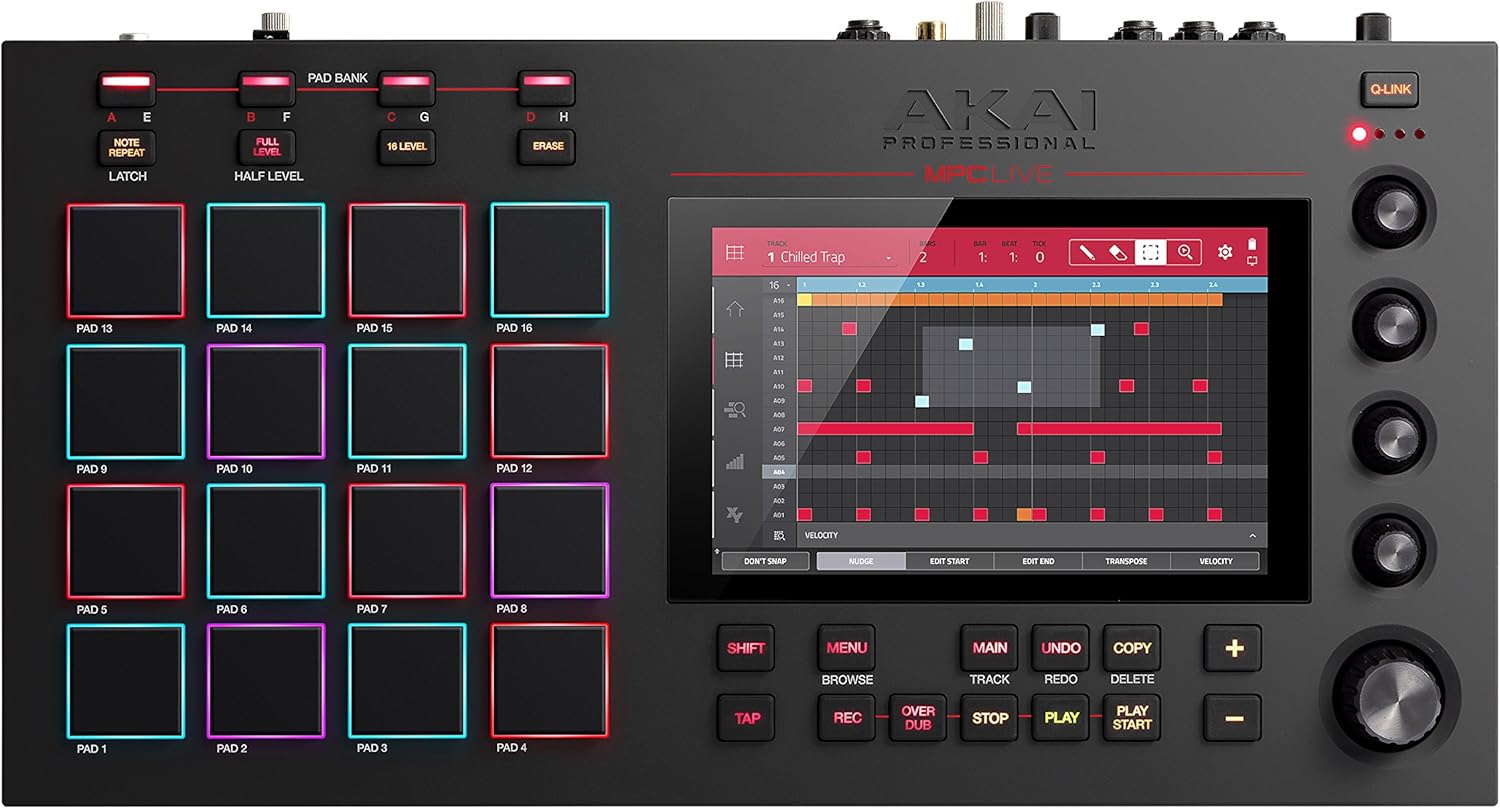
The MPC Live is a powerful, portable music-making machine you can use anywhere. It runs on a built-in battery, has tons of pro features, and works without a computer. You can plug in speakers, instruments, turntables, and more. With its bright screen, easy-to-use pads, and lots of ways to connect, the MPC Live is perfect for making music at home, in the studio, or on stage.
Synthstrom Deluge
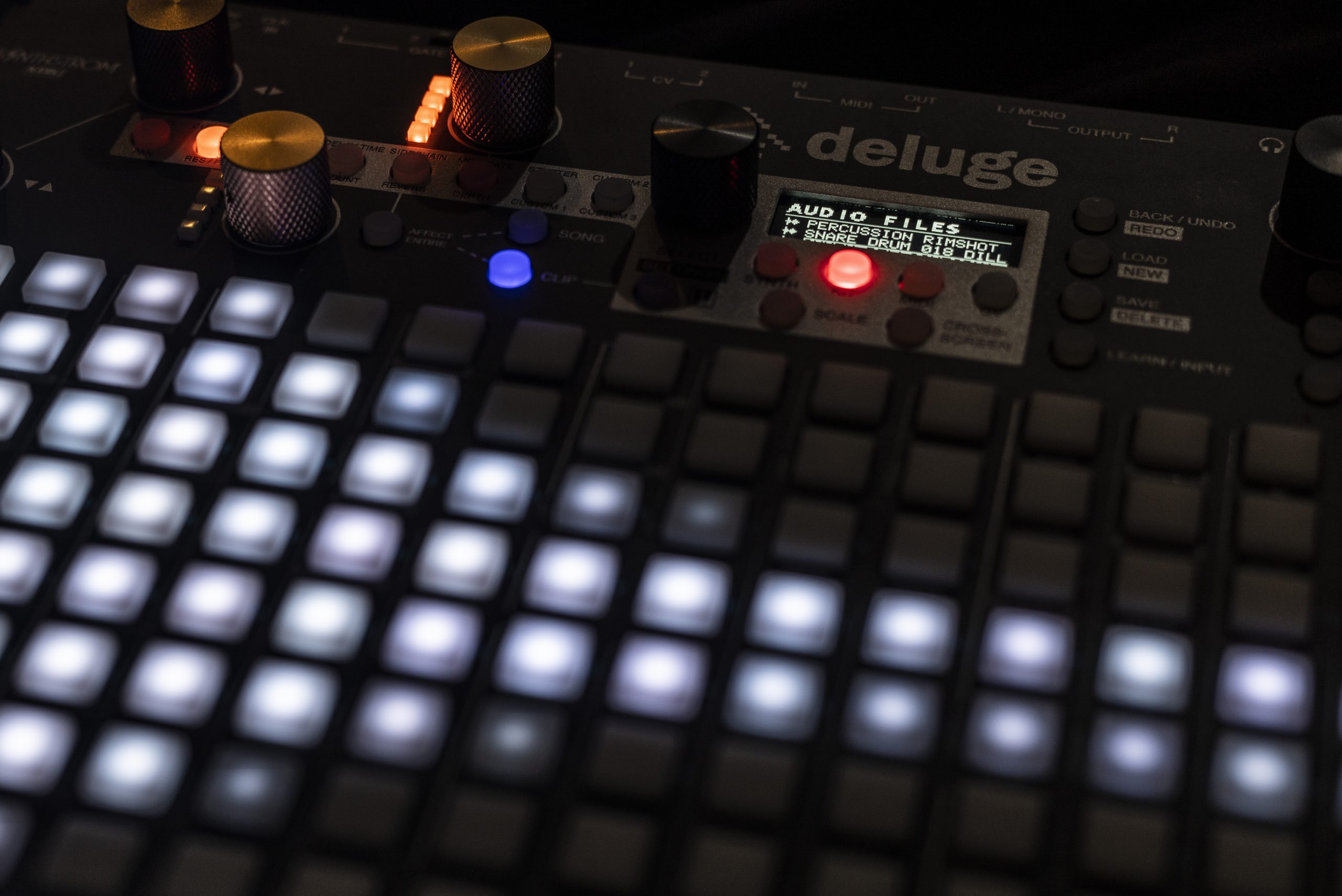
The Synthstrom Deluge is a powerful all-in-one music production workstation that combines a synthesizer, sampler, sequencer, and audio looper in a compact, portable design. Featuring a versatile internal synth engine (subtractive, wavetable, and FM), deep modulation capabilities, and MPE support, it allows for rich sound design and expressive control. Its 128-pad interface enables piano-roll-style sequencing, live performance, and arranging with features like Euclidean sequencing, probability, and advanced timing options. The Deluge streams samples directly from SD, supports multisampling and resampling, and includes robust live looping tools with seamless overdubbing. With extensive connectivity (CV/gate, MIDI, USB), a built-in mic and speaker, and a rechargeable battery for standalone operation, the Deluge is a fully self-contained music creation tool designed for both studio composition and live performance.
| Spec | Akai MPC Live | Synthstrom Deluge |
|---|---|---|
| Manufacturer | Akai Professional | Synthstrom Audible |
| Year Released | 2017 | 2017 |
| Polyphony | 128 | 128 |
| Sample Rate | 44.1kHz | 44.1kHz |
| Storage | Internal SSD | MicroSD card |
| Pads | 16 velocity-sensitive RGB pads | No pads, uses buttons and keyboard |
| Sequencer | Yes | Yes |
| Effects | EQ, Reverb, Delay, Compression | Multiple effects |
| I/O | MIDI In/Out, USB, Audio In/Out | MIDI In/Out, USB, Audio In/Out |
| Screen | 7-inch multi-touch display | LCD display |
| Software Integration | MPC Software | No |
| Build | Standalone | Standalone sampler/synth/sequencer |
| Price | $1299 | $1529 |
| More about | Details | Details |
Buy the Akai MPC Live on Amazon.com
Buy Now On AmazonBuy the Synthstrom Deluge on Amazon.com
Buy Now On AmazonAkai MPC Live vs. Synthstrom Deluge: A Sampler Showdown
Summary: The Akai MPC Live and the Synthstrom Deluge are two powerful music production tools that have captured the hearts of musicians. Both released in 2017, they offer unique features and functionalities. This article will explore their similarities and differences, helping you decide which one might be the best fit for your music-making needs.
Introduction
Welcome to the exciting world of music production! If you’re here, you’re probably curious about what makes the Akai MPC Live and the Synthstrom Deluge such popular choices among music enthusiasts. Both of these samplers, introduced in 2017, have made waves in the music industry, offering incredible features for creative music production. Whether you’re a seasoned musician or just starting your musical journey, understanding these tools can help you make the best choice for your creative needs. So, let’s dive in and explore how these two samplers stack up against each other!
The Battle of the Samplers
Akai MPC Live: A Classic Reimagined
The Akai MPC Live is a modern take on a classic device. Akai Professional is known for its high-quality music production gear, and the MPC Live is no exception. With its standalone build, this sampler doesn’t need a computer to function. This makes it ideal for on-the-go production, allowing musicians to create music wherever inspiration strikes.
One of the standout features of the Akai MPC Live is its 7-inch multi-touch display. This screen makes it easy to navigate through its features, giving users a seamless and intuitive experience. The sampler is equipped with 16 velocity-sensitive RGB pads, which are perfect for finger drumming and triggering samples. The internal SSD storage ensures that users have ample space for all their music projects.
In terms of sound, the MPC Live boasts a polyphony of 128 and a sample rate of 44.1kHz. It comes with a variety of effects, including EQ, reverb, delay, and compression, allowing users to add depth and texture to their tracks. With MIDI and USB connectivity, as well as audio inputs and outputs, this sampler integrates well with other music gear.
Synthstrom Deluge: The Powerhouse
On the other hand, we have the Synthstrom Deluge, a versatile powerhouse that combines a sampler, synth, and sequencer all in one. Unlike the MPC Live, the Deluge uses buttons and a keyboard instead of pads. Though it might take some getting used to, this setup offers a different kind of flexibility.
The Deluge also features a polyphony of 128 and a sample rate of 44.1kHz, ensuring high-quality sound. While it doesn’t have a multi-touch display like the MPC Live, it does have an LCD screen that provides essential information at a glance. This device uses a microSD card for storage, which means that expanding storage is as simple as inserting a new card.
One of the Deluge’s most impressive features is its extensive list of effects. While the specific effects aren’t listed, users have reported a wide range of options to shape their sound. Like the MPC Live, it includes MIDI and USB connectivity and audio inputs and outputs, making it a highly compatible device.
Feature Comparisons
User Interface and Usability
When it comes to user interface, the Akai MPC Live shines with its large 7-inch multi-touch display. This screen makes navigating through various features easy and intuitive, especially for users who are used to touchscreen devices. The 16 RGB pads are another highlight, offering a tactile and responsive experience for playing beats and triggering samples.
In contrast, the Synthstrom Deluge takes a different approach. It doesn’t have a touch screen or pads; instead, it relies on buttons and a keyboard for input. This might be more challenging for beginners who are unfamiliar with this layout. However, for those who enjoy a hands-on approach to music-making, the Deluge offers a unique and engaging experience.
Storage and Expandability
Storage is another important consideration. The MPC Live comes with an internal SSD, providing a significant amount of space for your projects. This is convenient for users who prefer not to worry about additional storage devices. On the other hand, the Deluge uses a microSD card, which can be easily swapped out. This offers flexibility for users who need more storage space or who like to organize their samples and projects on different cards.
Sound and Effects
Both samplers offer a polyphony of 128 and a sample rate of 44.1kHz, ensuring high-quality audio production. The MPC Live includes a range of built-in effects such as EQ, reverb, delay, and compression. These effects allow users to enhance their tracks and add depth to their music.
The Deluge, while not specifying its effects, is known for its extensive range of sound-shaping options. Users can experiment with various effects to create unique sounds, making it a versatile tool for creativity.
Connectivity and Integration
Connectivity is crucial for integrating samplers with other music equipment. Both the MPC Live and the Deluge include MIDI and USB connectivity, as well as audio inputs and outputs, ensuring compatibility with a wide range of devices. However, the MPC Live has an advantage when it comes to software integration, as it works seamlessly with MPC Software. This integration can streamline the workflow for those who use digital audio workstations (DAWs).
The Deluge, on the other hand, does not offer software integration. This might be a drawback for users who prefer to work within a DAW. However, its standalone nature makes it appealing for those who want a completely self-contained music-making experience.
Pros and Cons
Akai MPC Live
Pros:
- Intuitive User Interface: The 7-inch multi-touch display and RGB pads make it easy to use.
- Built-in Storage: The internal SSD provides ample space for projects.
- Software Integration: Works seamlessly with MPC Software.
- Standalone Build: Ideal for music production on the go.
Cons:
- Price: At $1200, it might be expensive for beginners.
- Size and Weight: May not be as portable as other options.
Synthstrom Deluge
Pros:
- Versatile Features: Combines a sampler, synth, and sequencer in one device.
- Extensive Effects: Offers a wide range of sound-shaping options.
- Storage Flexibility: Uses microSD cards for easy expandability.
- Standalone Build: Perfect for creating music without a computer.
Cons:
- Price: At $2000, it is significantly more expensive.
- User Interface: The lack of a touch screen might be challenging for some users.
- No Software Integration: Doesn’t work with DAWs, limiting its use in some setups.
Conclusion
In the battle between the Akai MPC Live and the Synthstrom Deluge, each device offers something unique for music enthusiasts. The MPC Live is perfect for those who want an intuitive, touch-based interface and seamless software integration. On the other hand, the Deluge is ideal for musicians who value versatility and don’t mind a steeper learning curve.
Final Verdict
- Best for Beginners and Touchscreen Lovers: The Akai MPC Live is an excellent choice for those who want a user-friendly interface and the ability to integrate with software.
- Best for Tinkerers and Versatile Creators: The Synthstrom Deluge is perfect for those who enjoy a hands-on approach and value flexibility in their music production.
No matter which sampler you choose, both the Akai MPC Live and the Synthstrom Deluge offer incredible tools to help you unleash your musical creativity. Happy music making!