Akai MPC One+ — VS — Elektron Analog Rytm MKII
Akai MPC One+
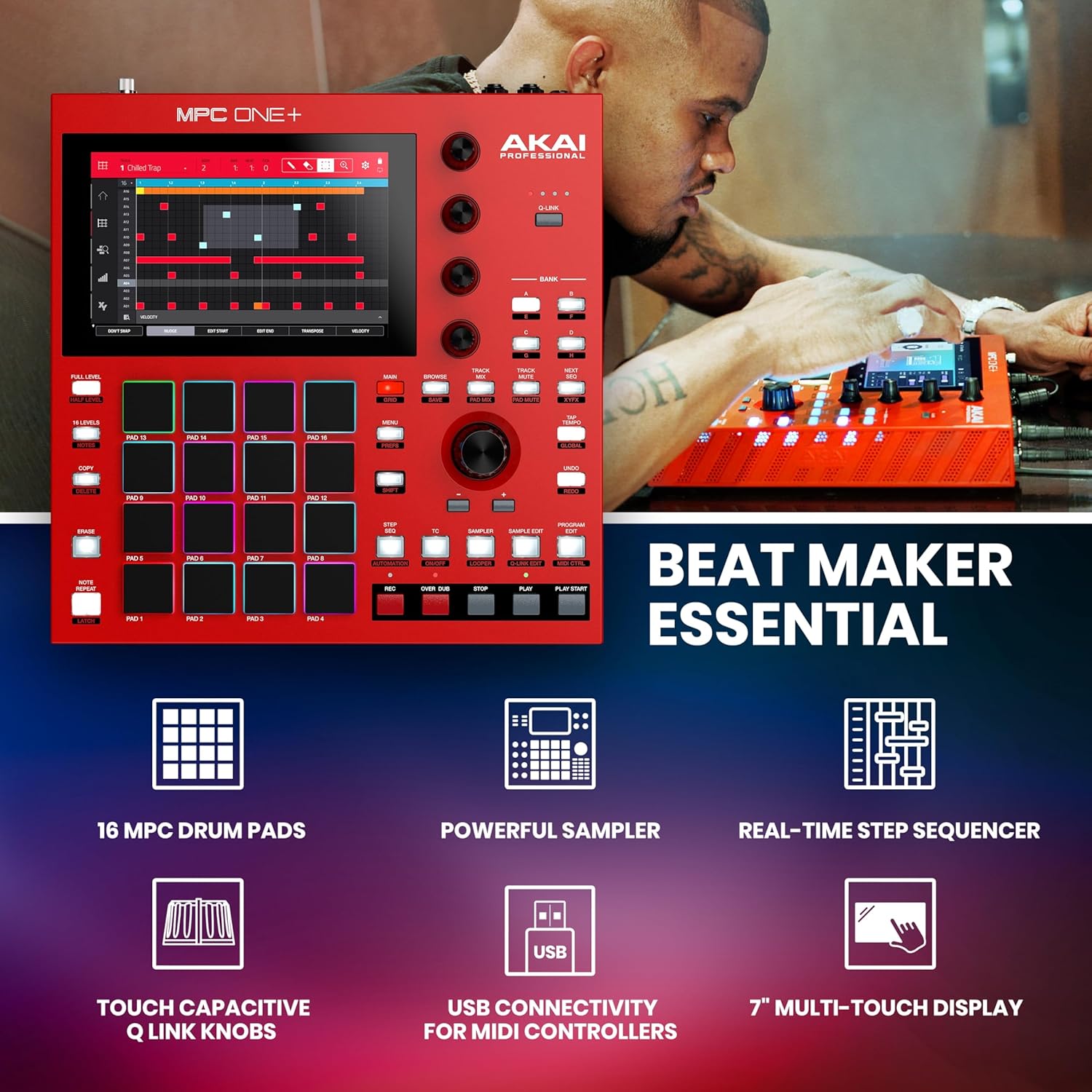
The MPC One+ is a fast, powerful music-making machine with Wi-Fi, Bluetooth, and 16GB of storage. It lets you connect your gear, play with thousands of sounds, and stay creative anywhere—no computer needed.
Elektron Analog Rytm MKII
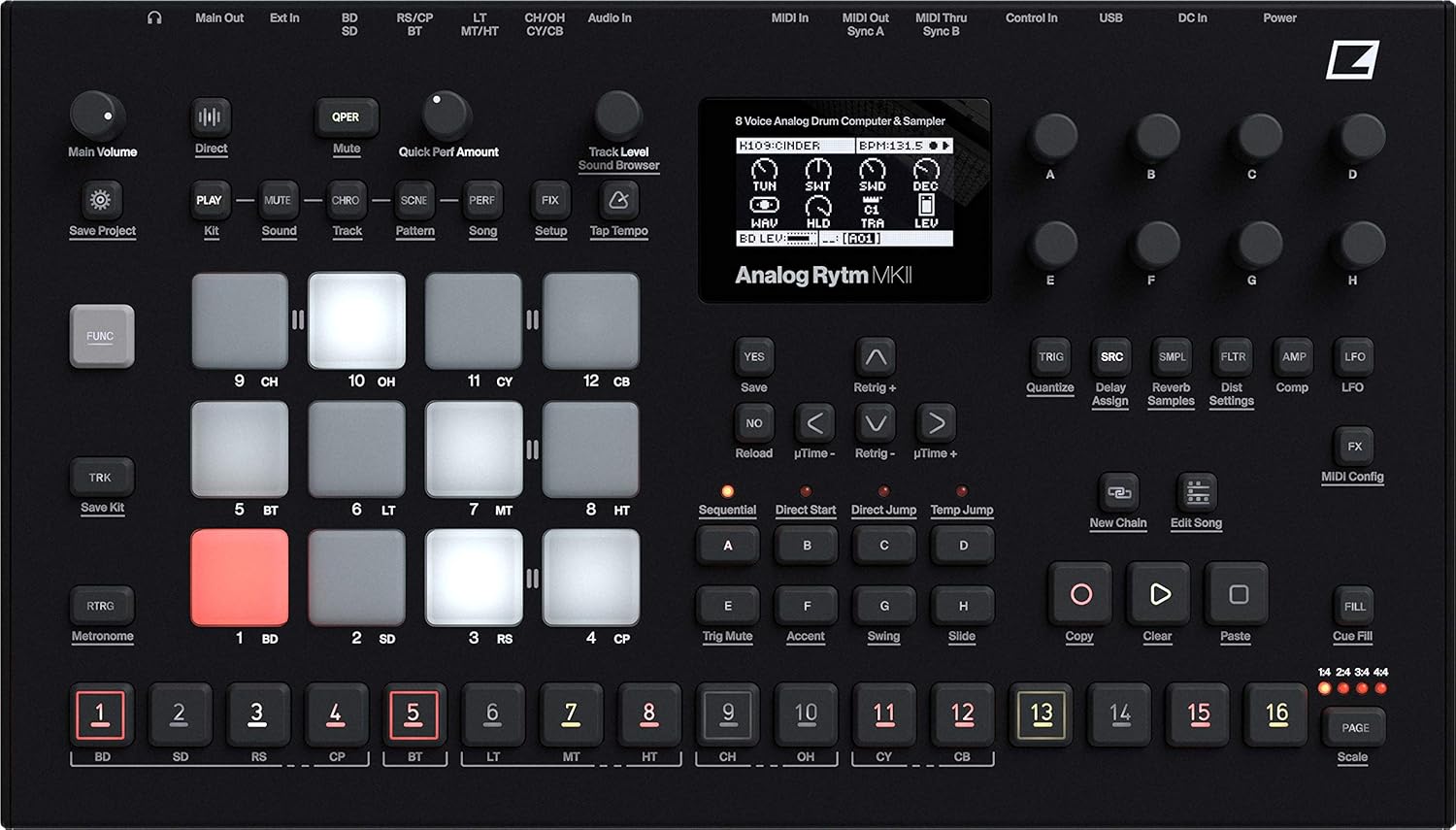
The Analog Rytm MKII is a powerful drum machine and sampler that helps you make awesome beats. It has 8 different drum sounds you can shape with real analog power and digital samples. You can tap on big, fun pads to play your sounds, or use the step sequencer to build cool rhythms. It lets you record sounds, change them up, and mix them however you like. Whether you're making music at home or performing on stage, this beat machine is ready to help you create something amazing.
| Spec | Akai MPC One+ | Elektron Analog Rytm MKII |
|---|---|---|
| Manufacturer | Akai Professional | Elektron |
| Year Released | 2023 | 2018 |
| Polyphony | 128 | 12 |
| Sample Rate | 44.1kHz | 48kHz |
| Storage | Internal SSD | SD card |
| Pads | 16 velocity-sensitive RGB pads | 8 velocity-sensitive pads |
| Sequencer | Yes | Yes |
| Effects | EQ, Reverb, Delay, Compression | Analog and digital effects |
| I/O | MIDI In/Out, USB, Audio In/Out | MIDI In/Out/Thru, USB, Audio In/Out |
| Screen | 7-inch multi-touch display | OLED display |
| Software Integration | MPC Software | Elektron Transfer |
| Build | Standalone | Desktop |
| Price | $750 | $2299 |
| More about | Details | Details |
Buy the Akai MPC One+ on Amazon.com
Buy Now On AmazonBuy the Elektron Analog Rytm MKII on Amazon.com
Buy Now On AmazonAkai MPC One+ vs. Elektron Analog Rytm MKII: A Head-to-Head Comparison
Summary: The Akai MPC One+ and the Elektron Analog Rytm MKII are both powerhouse samplers and drum machines, but they cater to different needs. This comparison will help you understand their features, pros, and cons to decide which one suits your music production style.
Introduction
Hello, music gear enthusiasts! If you’re on the lookout for a new sampler or drum machine, you’ve come to the right place. Today, we’re diving into a detailed comparison of two popular devices: the Akai MPC One+ and the Elektron Analog Rytm MKII. Both are fantastic tools for music production, but they offer different features and experiences. Let’s explore what makes each one unique!
Features: A Closer Look
Akai MPC One+: The Modern Classic
The Akai MPC One+ is the latest update to the beloved MPC line. Introduced in 2023, this machine brings a host of improvements in both software and hardware. It boasts 128-note polyphony, which means you can layer plenty of sounds without cutting any off. The sample rate is a standard 44.1kHz, ensuring high-quality audio.
One of its standout features is the 16 velocity-sensitive RGB pads. These pads are not just for playing beats; they light up in different colors, making it easier to organize your sounds visually. The MPC One+ also comes with a robust sequencer, allowing you to arrange your beats and melodies with precision.
Storage won’t be a problem with its internal SSD, and connectivity is broad with MIDI In/Out, USB, and Audio In/Out. The 7-inch multi-touch display is like having a tiny tablet on your device, making navigation and editing a breeze.
Integration with MPC Software means you can easily connect the MPC One+ to your computer for an even more powerful music-making setup. It’s a standalone device, so you can take it anywhere without needing a computer. At $750, the MPC One+ is quite affordable for what it offers.
Elektron Analog Rytm MKII: The Analog Beast
Introduced in 2018, the Elektron Analog Rytm MKII is a drum machine with sampling capabilities. This device is more focused on the tactile experience of music production. It offers 12-note polyphony, which is lower than the MPC One+ but sufficient for most drum and bass lines.
The sample rate is slightly higher at 48kHz, which can provide a bit more detail in the audio. It uses an SD card for storage, giving you flexibility in managing your samples. The 8 velocity-sensitive pads are designed for expressive performance, though they are fewer in number than the MPC One+.
What sets the Analog Rytm MKII apart is its combination of analog and digital effects, providing a rich palette of sounds. The OLED display is clear and concise, though not as large as the MPC One+’s screen. The device comes with a comprehensive sequencer, and the connectivity options include MIDI In/Out/Thru, USB, and Audio In/Out, offering more MIDI options than the MPC One+.
Integration with Elektron Transfer software allows for seamless sample management. It’s a desktop build, meaning it’s meant to be used in a studio setting rather than on the go. At $1800, it’s more expensive, reflecting its premium build and features.
Pros and Cons
Akai MPC One+: Pros and Cons
Pros:
- Affordable price point
- High polyphony (128 notes)
- Large, intuitive multi-touch display
- Standalone build for portable use
- Excellent software integration with MPC Software
Cons:
- Lower sample rate compared to Analog Rytm MKII
- Fewer MIDI options
Elektron Analog Rytm MKII: Pros and Cons
Pros:
- Rich combination of analog and digital effects
- Higher sample rate for detailed audio
- Extensive MIDI connectivity
- Tactile, expressive performance with velocity-sensitive pads
Cons:
- Higher price point
- Lower polyphony (12 notes)
- Smaller display
Conclusion
Both the Akai MPC One+ and the Elektron Analog Rytm MKII are excellent choices for music producers, but they cater to different needs. The MPC One+ is ideal for those looking for a versatile, standalone device with a modern interface. It’s perfect for producers who want to create and perform on the go. On the other hand, the Analog Rytm MKII is best for studio enthusiasts who crave the tactile feel of analog controls and a rich array of effects.
Final Verdict
Choose the Akai MPC One+ if you want an affordable, portable, and highly integrated sampler that offers a modern touch experience. It’s great for beginners and those who need a powerful device without breaking the bank.
Opt for the Elektron Analog Rytm MKII if you’re after a premium, studio-focused experience with a love for analog sounds and deep sound design capabilities. It’s perfect for experienced producers who value tactile controls and extensive connectivity.
Happy music-making!