Akai MPC One+ — VS — Polyend Play
Akai MPC One+
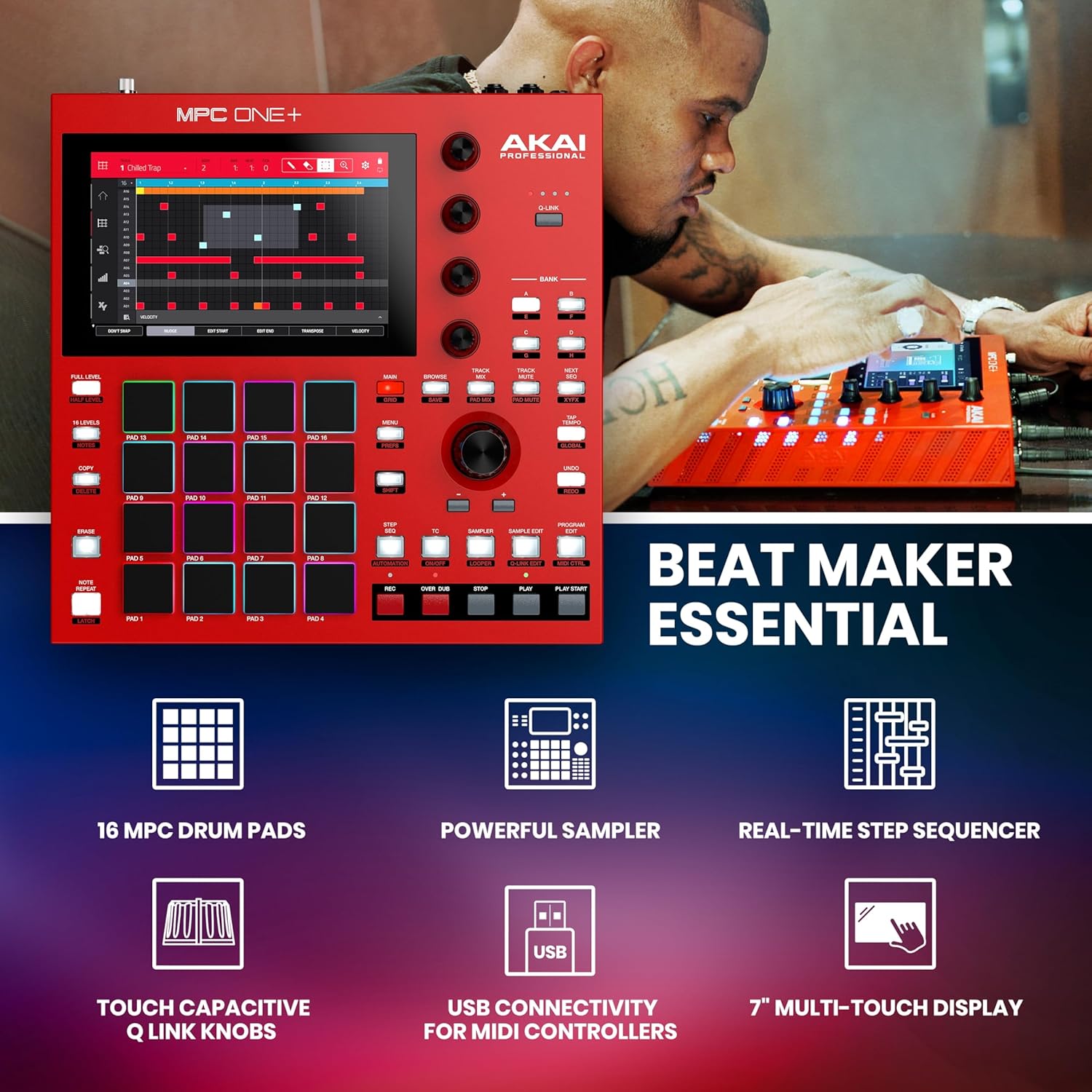
The MPC One+ is a fast, powerful music-making machine with Wi-Fi, Bluetooth, and 16GB of storage. It lets you connect your gear, play with thousands of sounds, and stay creative anywhere—no computer needed.
Polyend Play
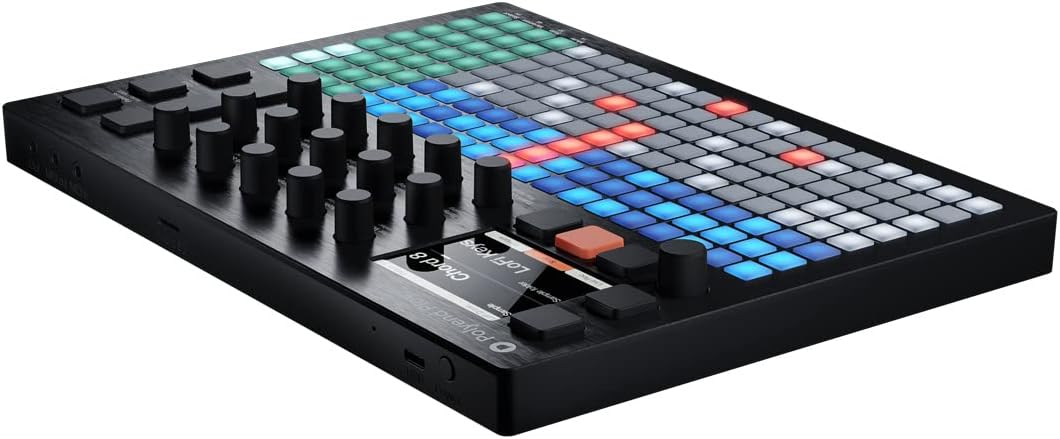
The Polyend Play is a powerful and intuitive sampler and groovebox designed for creative freedom without the complexity. It features over 30 ready-to-use sample kits, eight audio tracks, and eight polyphonic MIDI tracks, all accessible through a user-friendly interface tailored for both studio production and live performance. With 35 unique playback modes, randomizer and step repeater functions, a flexible 64-step sequencer, customizable pattern placement, onboard effects, and deep MIDI integration, the Play invites hands-on experimentation and effortless arrangement—whether you're jamming or building complete tracks from scratch.
| Spec | Akai MPC One+ | Polyend Play |
|---|---|---|
| Manufacturer | Akai Professional | Polyend |
| Year Released | 2023 | 2022 |
| Polyphony | 128 | 64 |
| Sample Rate | 44.1kHz | 44.1kHz |
| Storage | Internal SSD | MicroSD card |
| Pads | 16 velocity-sensitive RGB pads | 16 velocity-sensitive pads |
| Sequencer | Yes | Yes |
| Effects | EQ, Reverb, Delay, Compression | Multiple effects |
| I/O | MIDI In/Out, USB, Audio In/Out | MIDI In/Out, USB, Audio In/Out |
| Screen | 7-inch multi-touch display | LCD display |
| Software Integration | MPC Software | No |
| Build | Standalone | Groovebox |
| Price | $750 | $1100 |
| More about | Details | Details |
Buy the Akai MPC One+ on Amazon.com
Buy Now On AmazonBuy the Polyend Play on Amazon.com
Buy Now On AmazonAkai MPC One+ vs. Polyend Play: Which Sampler is Right for You?
Summary
In this blog post, we compare two popular samplers: the Akai MPC One+ and the Polyend Play. We delve into their features, pros, and cons, helping you decide which one fits your music production needs best.
Introduction
Welcome to the world of samplers! If you’re a music enthusiast looking to enhance your sound creation, you’ve probably come across the Akai MPC One+ and the Polyend Play. These two devices are quite popular among musicians and producers, but which one is right for you? Let’s explore their features and see how they stack up against each other.
Feature Comparisons
Build and Design
The Akai MPC One+ is a sleek standalone device. Its standout feature is the 7-inch multi-touch display, which makes navigating through menus and options a breeze. It also sports 16 velocity-sensitive RGB pads that light up beautifully, making it a joy to use in low-light settings.
On the other hand, the Polyend Play is a groovebox with a more compact design. It has 16 velocity-sensitive pads as well, but they are not RGB-lit like the MPC One+. Instead, it focuses on simplicity and functionality. Its LCD display isn’t as large or touch-sensitive as the MPC’s, but it gets the job done for its intended purpose.
Sound Capabilities
When it comes to sound, both devices are impressive. The Akai MPC One+ boasts a whopping 128-note polyphony, meaning it can handle a lot of sounds at once without breaking a sweat. It supports a 44.1kHz sample rate for crisp and clear audio.
The Polyend Play, while not as powerful in polyphony, offers 64-note polyphony, which is still substantial for many music creation needs. It also supports a 44.1kHz sample rate, ensuring high-quality sound.
Storage and Connectivity
For storage, the Akai MPC One+ comes with an internal SSD, providing ample space for your samples and projects. It offers various connectivity options, including MIDI In/Out, USB, and Audio In/Out, which makes it highly versatile.
In contrast, the Polyend Play uses a MicroSD card for storage. This makes it easy to swap out cards but might require more careful management of your storage space. It also offers MIDI In/Out, USB, and Audio In/Out connectivity, similar to the MPC One+.
Sequencer and Effects
Both samplers are equipped with sequencers, allowing you to program your beats and melodies with precision. The Akai MPC One+ integrates seamlessly with MPC Software, giving you access to a wide range of tools and effects like EQ, Reverb, Delay, and Compression.
The Polyend Play also includes multiple effects, though the specifics aren’t as detailed. It doesn’t offer the same level of software integration as the MPC One+, as it operates more independently as a groovebox.
Price
Price can often be the deciding factor. The Akai MPC One+ is priced at $750, making it a more budget-friendly option compared to the Polyend Play, which is priced at $1100.
Pros and Cons
Akai MPC One+
Pros:
- Large 7-inch multi-touch display for easy navigation
- 128-note polyphony for handling complex projects
- Internal SSD for ample storage
- Comprehensive effects and software integration with MPC Software
- More affordable price point
Cons:
- Larger size may not be as portable as other options
- Might be overwhelming for beginners with its extensive feature set
Polyend Play
Pros:
- Compact and portable design
- Simple and intuitive groovebox workflow
- Sufficient polyphony for most needs
- Easy storage management with MicroSD cards
Cons:
- Smaller, non-touch LCD display
- Higher price point
- Lack of detailed software integration
Final Verdict
Choosing between the Akai MPC One+ and the Polyend Play depends on your specific needs as a music creator. If you’re looking for a device with a robust feature set, high polyphony, and seamless software integration, the Akai MPC One+ is a fantastic choice. It’s especially suitable for those who want a powerful standalone device at a more accessible price point.
However, if portability and simplicity are high on your priority list, and you’re comfortable with a groovebox workflow, the Polyend Play might be the better fit. It’s a great option for live performances and musicians who prefer a straightforward approach to music creation, despite being on the pricier side.
Ultimately, both devices have their unique strengths, and the best choice will depend on your personal preferences and music production goals.