Akai MPC One+ — VS — Sonicware Lofi-12 XT
Akai MPC One+
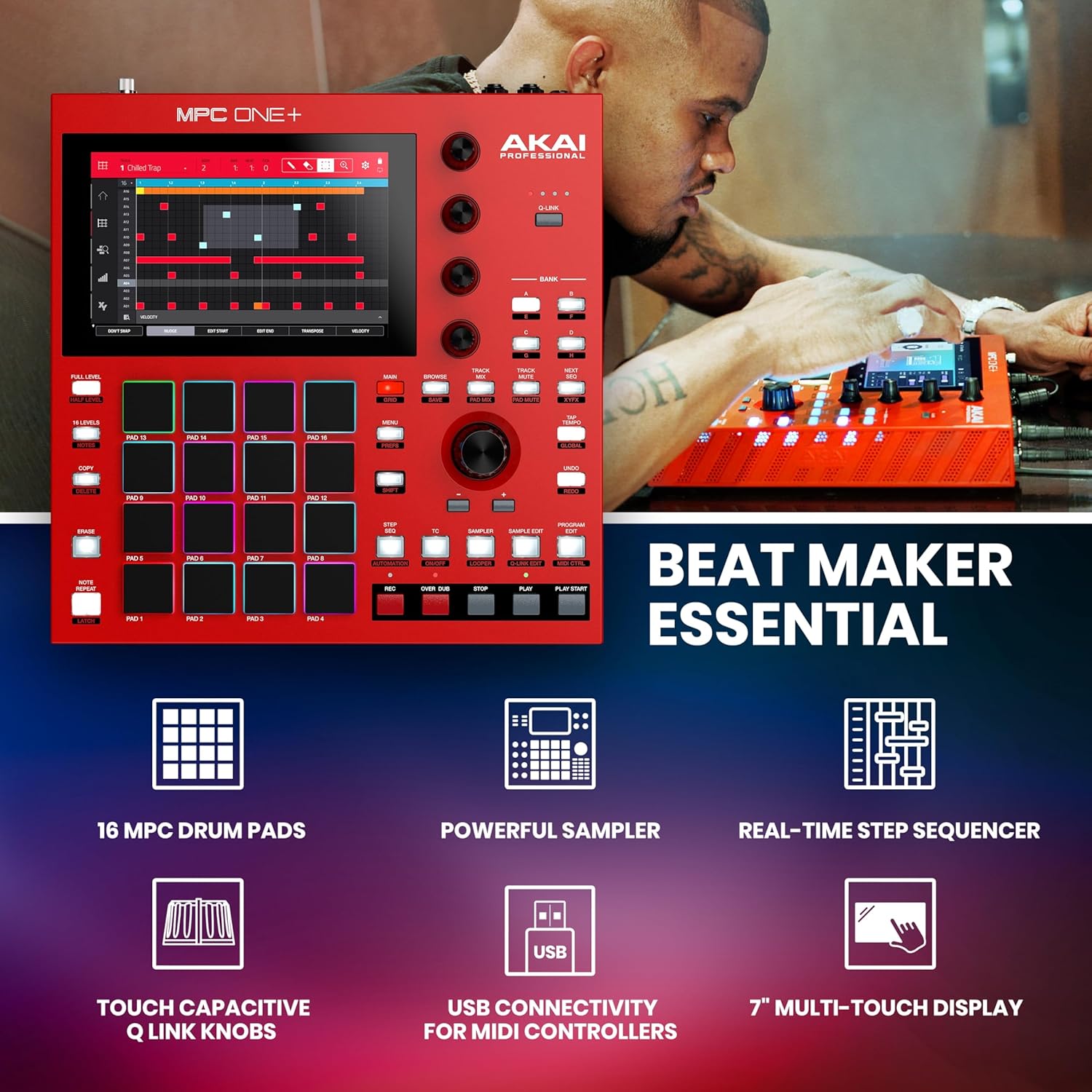
The MPC One+ is a fast, powerful music-making machine with Wi-Fi, Bluetooth, and 16GB of storage. It lets you connect your gear, play with thousands of sounds, and stay creative anywhere—no computer needed.
Sonicware Lofi-12 XT
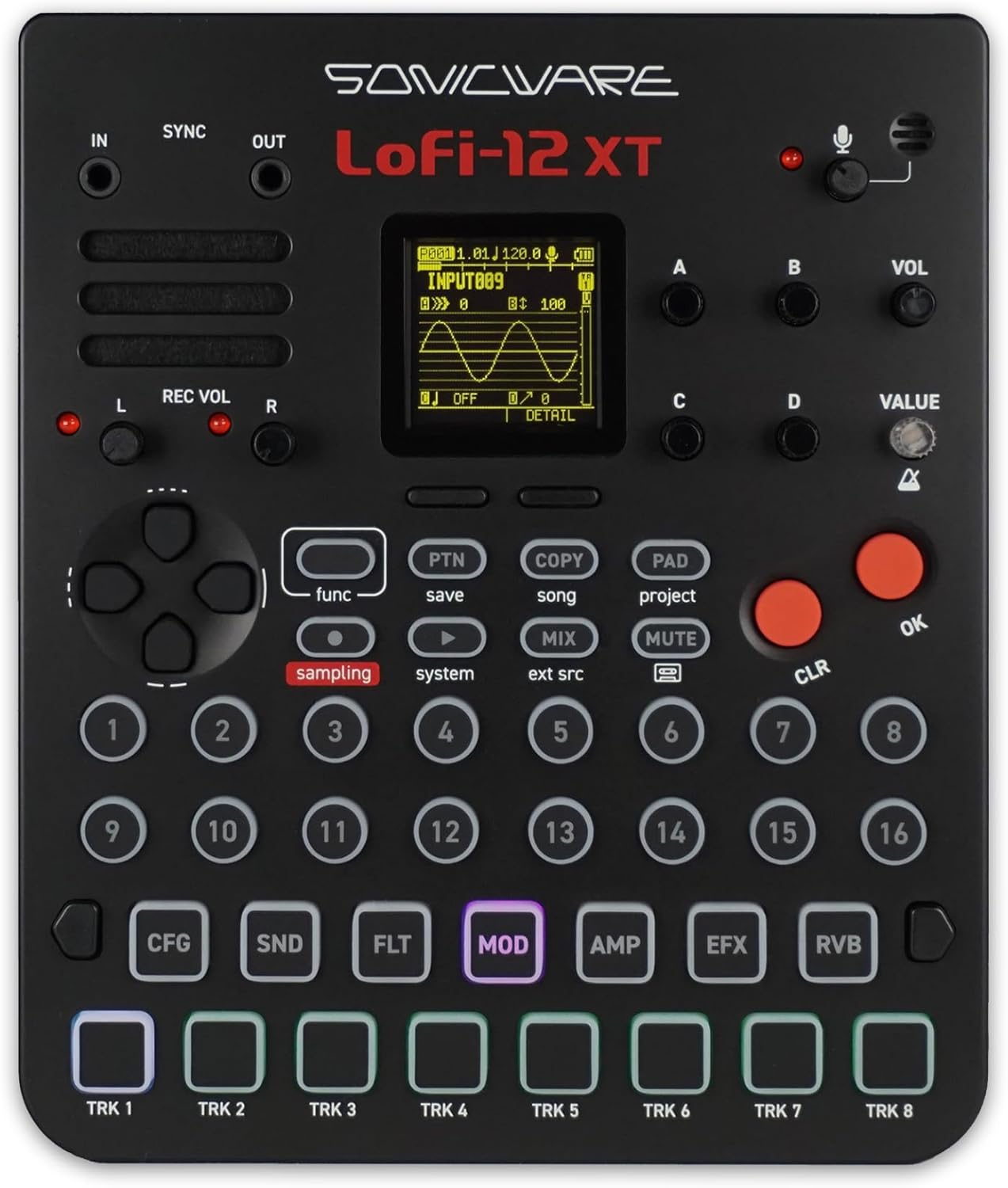
The Sonicware Lofi-12 XT is a powerful groovebox sampler that focuses on crunchy, nostalgic lo-fi sound design. It features multi-engine sampling modes, real-time time stretch, and a rich effects section, all in a highly portable form factor. The Lofi-12 XT adds stereo sampling and new workflow features compared to the original.
| Spec | Akai MPC One+ | Sonicware Lofi-12 XT |
|---|---|---|
| Manufacturer | Akai Professional | Sonicware |
| Year Released | 2023 | 2023 |
| Polyphony | 128 | 10 |
| Sample Rate | 44.1kHz | 12kHz / 24kHz / 48kHz |
| Storage | Internal SSD | SD card |
| Pads | 16 velocity-sensitive RGB pads | 8 velocity-sensitive pads |
| Sequencer | Yes | Yes |
| Effects | EQ, Reverb, Delay, Compression | Reverb, Delay, Bit Crusher, Chorus, EQ |
| I/O | MIDI In/Out, USB, Audio In/Out | Line In/Out, Headphone, MIDI In/Out, USB-C |
| Screen | 7-inch multi-touch display | OLED screen |
| Software Integration | MPC Software | None |
| Build | Standalone | Portable groovebox |
| Price | $750 | $289 |
| More about | Details | Details |
Buy the Akai MPC One+ on Amazon.com
Buy Now On AmazonBuy the Sonicware Lofi-12 XT on Amazon.com
Buy Now On AmazonAkai MPC One+ vs. Sonicware Lofi-12 XT: A Head-to-Head Comparison
Curious about which sampler is the right fit for you? In this blog post, we will explore and compare two popular samplers: the Akai MPC One+ and the Sonicware Lofi-12 XT. Whether you’re looking for powerful music production capabilities or a nostalgic lo-fi sound, we’ve got you covered!
Introduction
Music is a magical thing that can make us feel happy, sad, excited, or calm. For those who love creating music, samplers are the tools that help bring those emotions to life. Samplers let you record sounds and use them to make new music. Today, we’re looking at two samplers: the Akai MPC One+ and the Sonicware Lofi-12 XT. Each of these has its own special features and strengths. Let’s dive in and see which one might be your next musical companion!
Features Comparison
Build and Design
The Akai MPC One+ is a standalone music-making machine. This means you don’t need a computer to use it. It has a big 7-inch multi-touch display and 16 bright, colorful pads that respond to how hard you hit them. The MPC One+ feels solid and professional, making it perfect for serious music creators.
On the other hand, the Sonicware Lofi-12 XT is a portable groovebox. It’s smaller and lighter, which means you can take it anywhere. It has 8 pads and a smaller OLED screen. This makes it great for music-makers who love to create on the go.
Sounds and Effects
The Akai MPC One+ offers a lot of power with 128 polyphony, which means it can play many sounds at once. It also has a high sample rate of 44.1kHz, ensuring clear and crisp sound quality. With its built-in EQ, Reverb, Delay, and Compression effects, you can shape your sounds to perfection.
In contrast, the Sonicware Lofi-12 XT focuses on a lo-fi sound, which is all about creating warm, nostalgic music. It offers sample rates of 12kHz, 24kHz, and 48kHz, giving you a range of sound textures to play with. The Lofi-12 XT comes with effects like Bit Crusher and Chorus, which help create its signature lo-fi character.
Storage and Connectivity
The MPC One+ has an internal SSD for storage, along with Wi-Fi and Bluetooth capabilities. This means you have a lot of space for your sounds and can easily connect to other devices wirelessly. It also has MIDI In/Out, USB, and Audio In/Out for all your connectivity needs.
The Lofi-12 XT uses an SD card for storage, making it easy to swap out sounds. It has Line In/Out, Headphone, MIDI In/Out, and USB-C ports. While it doesn’t have wireless connectivity, its ports are enough for most music setups.
Sequencing and Software
Both samplers have a sequencer, which is like a musical timeline where you can arrange your sounds to create songs. The MPC One+ integrates with MPC Software, providing a seamless music production experience. This software integration gives you even more tools for creating music.
The Lofi-12 XT does not have any software integration, but its intuitive design makes it easy to use right out of the box. It’s designed for those who prefer hands-on music-making without the need for a computer.
Pros and Cons
Akai MPC One+
Pros:
- Powerful standalone capabilities
- High polyphony and sample rate for professional sound
- Large, responsive touch display with colorful pads
- Robust connectivity options including wireless
- Seamless integration with MPC Software
Cons:
- Higher price point at $750
- Larger and less portable than the Lofi-12 XT
Sonicware Lofi-12 XT
Pros:
- Highly portable and easy to carry
- Unique lo-fi sound with multiple sample rates
- Affordable price at $289
- Intuitive design with real-time sound manipulation
- Fun, quirky effects for creative sound design
Cons:
- Lower polyphony compared to the MPC One+
- No software integration
- Smaller screen and fewer pads
Summary
Both the Akai MPC One+ and Sonicware Lofi-12 XT are fantastic tools for making music, each with its own strengths. The MPC One+ is a powerhouse for serious music producers, while the Lofi-12 XT offers a unique, portable option for lo-fi enthusiasts.
Final Verdict
The Akai MPC One+ is best for musicians who want a comprehensive, standalone music production tool with professional features and software integration. It’s ideal for those who plan to produce high-quality music in a studio setting.
The Sonicware Lofi-12 XT is perfect for creators who love the lo-fi aesthetic and want a portable device for on-the-go music-making. Its unique sound and affordable price make it accessible for hobbyists and those exploring music production for the first time.
No matter which sampler you choose, both the Akai MPC One+ and the Sonicware Lofi-12 XT offer exciting possibilities for creating music that moves the heart and soul. Happy music-making!