Akai MPC One+ — VS — Teenage Engineering EP-133 K.O. II Sampler
Akai MPC One+
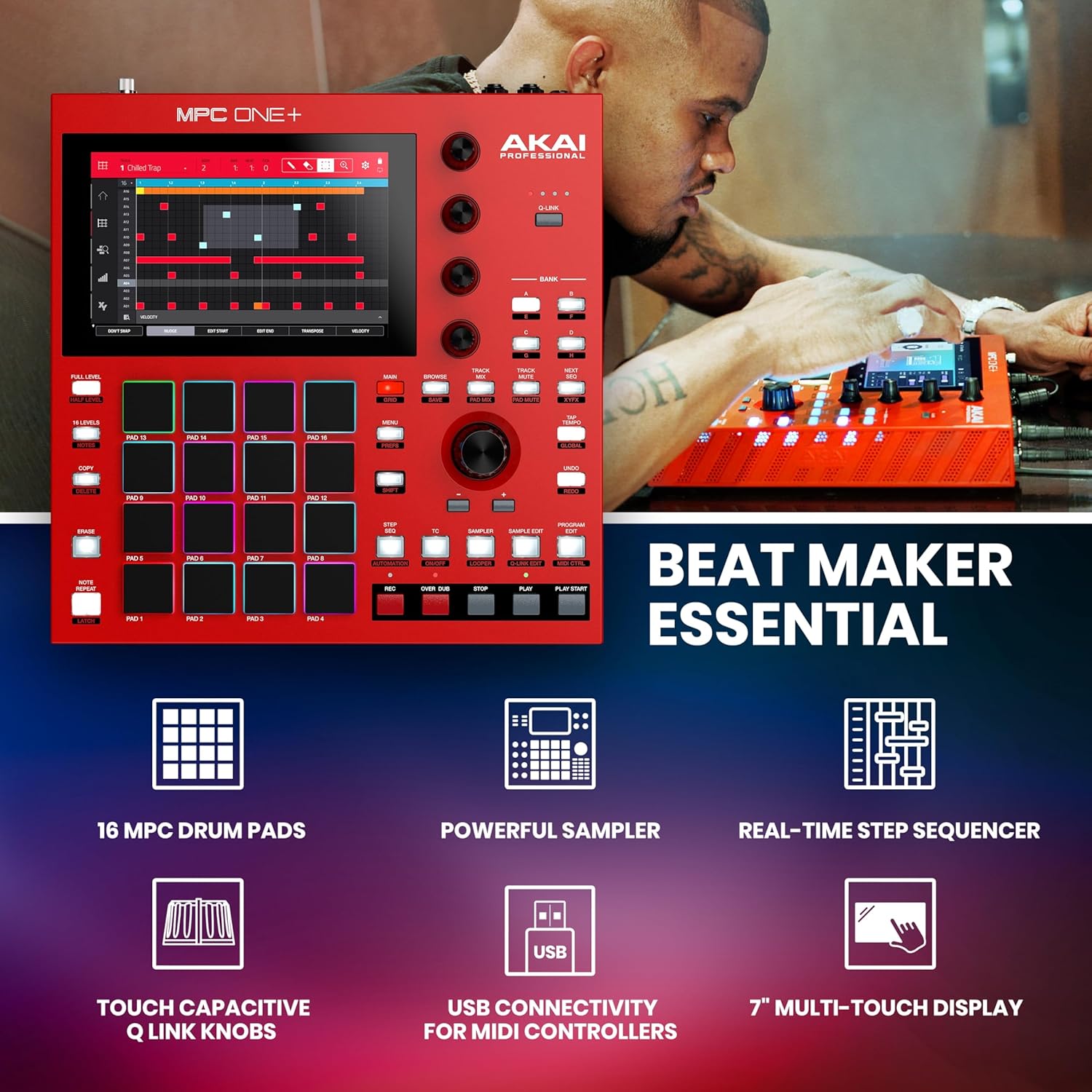
The MPC One+ is a fast, powerful music-making machine with Wi-Fi, Bluetooth, and 16GB of storage. It lets you connect your gear, play with thousands of sounds, and stay creative anywhere—no computer needed.
Teenage Engineering EP-133 K.O. II Sampler
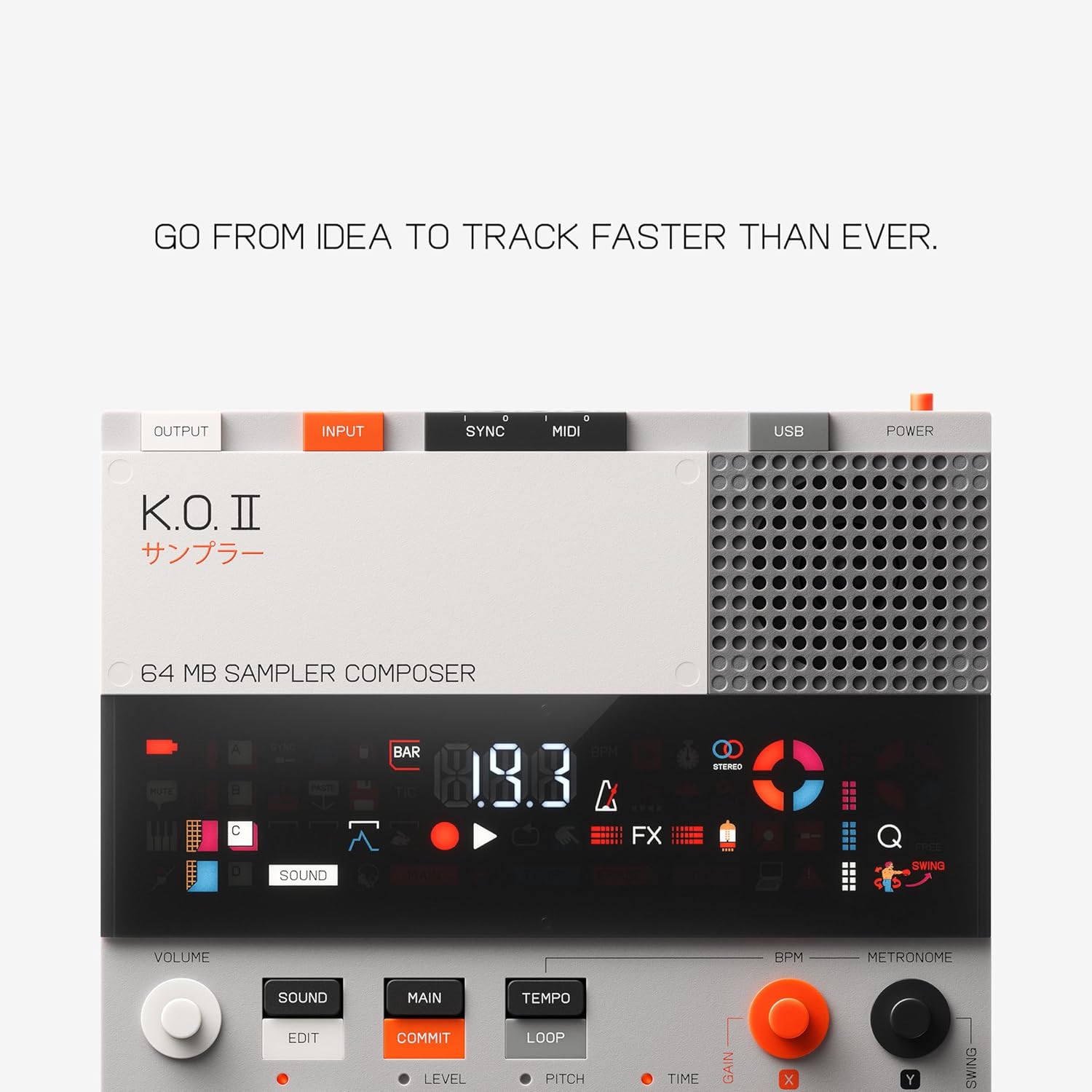
The EP-133 K.O. II is Teenage Engineering's next-gen portable sampler. It features punchy pads, step sequencing, powerful FX, and sample warping—all in a stylish and compact design. It's a fantastic upgrade from the original PO-33 for musicians looking for portability and hands-on performance.
| Spec | Akai MPC One+ | Teenage Engineering EP-133 K.O. II Sampler |
|---|---|---|
| Manufacturer | Akai Professional | Teenage Engineering |
| Year Released | 2023 | 2023 |
| Polyphony | 128 | Polyphonic (unspecified) |
| Sample Rate | 44.1kHz | 16-bit / 46.875kHz |
| Storage | Internal SSD | Internal + microSD |
| Pads | 16 velocity-sensitive RGB pads | 16 velocity-sensitive pads |
| Sequencer | Yes | Yes |
| Effects | EQ, Reverb, Delay, Compression | Filter, Delay, Reverb, Compression |
| I/O | MIDI In/Out, USB, Audio In/Out | USB-C, Line In/Out, MIDI via TRS |
| Screen | 7-inch multi-touch display | OLED display |
| Software Integration | MPC Software | Minimal, plug-and-play |
| Build | Standalone | Durable plastic housing with step sequencer |
| Price | $750 | $299 |
| More about | Details | Details |
Buy the Akai MPC One+ on Amazon.com
Buy Now On AmazonBuy the Teenage Engineering EP-133 K.O. II Sampler on Amazon.com
Buy Now On AmazonThe Ultimate Comparison: Akai MPC One+ vs. Teenage Engineering EP-133 K.O. II Sampler
If you’re in the market for a new sampler, two devices that might catch your eye are the Akai MPC One+ and the Teenage Engineering EP-133 K.O. II Sampler. Both of these samplers are incredible tools for music creation, but they cater to different needs and preferences. In this blog post, we’ll dive deep into what makes each of these samplers unique, compare their features, and help you decide which one is the right fit for you.
Introduction
Sampling is a crucial part of music production today. Whether you’re a budding beatmaker, a seasoned producer, or just someone who loves to experiment with sounds, having the right sampler can make all the difference. The Akai MPC One+ and the Teenage Engineering EP-133 K.O. II Sampler are standout options in the sampler world. Both released in 2023, they offer unique features that cater to different types of musicians. Let’s explore each device in detail.
The Akai MPC One+
Features and Design
The Akai MPC One+ is a powerhouse in a compact form. It’s a standalone unit, meaning you don’t need a computer to use it. This makes it perfect for on-the-go music production. The device features 16 velocity-sensitive RGB pads that are not only responsive but also visually appealing with customizable colors. It comes with a 7-inch multi-touch display that allows for intuitive navigation and editing.
Under the hood, the MPC One+ is packed with a polyphony of 128, allowing for complex compositions and arrangements. It operates at a sample rate of 44.1kHz, giving you high-quality audio output. The internal SSD provides ample storage, while Wi-Fi and Bluetooth connectivity ensure you can easily access and transfer your music files.
The MPC One+ integrates seamlessly with MPC Software, giving you a vast array of sound libraries and production tools at your disposal. The device also includes a wide range of effects like EQ, Reverb, Delay, and Compression, which are essential for shaping your sound. Its I/O options include MIDI In/Out, USB, and Audio In/Out, allowing you to connect various instruments and controllers.
Pros and Cons
Pros:
- Standalone functionality with no need for a computer
- Large, user-friendly multi-touch display
- Extensive connectivity options (Wi-Fi, Bluetooth, MIDI)
- High polyphony for complex compositions
- Rich effects suite for sound shaping
Cons:
- Higher price point at $750
- May be overkill for simple sampling needs
The Teenage Engineering EP-133 K.O. II Sampler
Features and Design
The Teenage Engineering EP-133 K.O. II Sampler is a portable and stylish device perfect for musicians on the move. It’s housed in durable plastic, making it both lightweight and robust. The 16 velocity-sensitive pads provide an excellent tactile experience and are well-suited for live performance.
While its polyphony is unspecified, the K.O. II delivers a unique sound character with its 16-bit / 46.875kHz sample rate. It offers internal storage along with a microSD slot for expandable storage options. The OLED display, while smaller than the MPC One+’s screen, is clear and provides essential information quickly.
The K.O. II sampler has a minimalistic approach to software integration, offering a plug-and-play experience. It includes essential effects like Filter, Delay, Reverb, and Compression, and features a step sequencer for creative beat-making. Connectivity options are streamlined with USB-C, Line In/Out, and MIDI via TRS.
Pros and Cons
Pros:
- Highly portable and lightweight
- Affordable price at $299
- Simple, intuitive interface
- Expandable storage with microSD
- Great for live performances
Cons:
- Limited software integration
- Smaller display
- Lower sample rate compared to MPC One+
Feature Comparison
Let’s break down the features of these samplers to see how they stack up against each other.
Build and Design
The Akai MPC One+ is built for those who need a comprehensive music production tool. Its standalone design, large touch screen, and robust build make it ideal for studio use as well as portable setups. Meanwhile, the Teenage Engineering EP-133 K.O. II shines in portability and simplicity, perfect for musicians who prefer a more hands-on and immediate approach to sampling.
Sound and Polyphony
When it comes to sound quality, the Akai MPC One+ offers a higher sample rate at 44.1kHz, compared to the EP-133 K.O. II’s 46.875kHz. This means the MPC One+ can deliver clearer and more detailed audio. The MPC One+ also boasts a high polyphony of 128, allowing complex layering and sequencing without worry. The K.O. II, on the other hand, keeps its polyphony unspecified but offers a unique sound character that appeals to those who appreciate a distinct sonic texture.
Connectivity and Integration
The Akai MPC One+ provides extensive connectivity options, including MIDI In/Out, USB, and Audio In/Out, and integrates seamlessly with MPC Software. This makes it a versatile choice for those who want to connect multiple instruments and use comprehensive sound libraries. The EP-133 K.O. II offers a more streamlined approach with USB-C, Line In/Out, and MIDI via TRS, catering to musicians who value simplicity and ease of use.
Price and Value
Price is a significant factor for many musicians. The Akai MPC One+ is priced at $750, reflecting its extensive features and standalone capabilities. The Teenage Engineering EP-133 K.O. II is more budget-friendly at $299, making it accessible for those who need a portable sampler without the bells and whistles.
Final Verdict: Who Should Choose Which?
The Akai MPC One+ is best suited for producers and musicians who need a comprehensive, standalone device for both studio and live settings. If you require high polyphony, extensive connectivity, and robust software integration, this is the sampler for you.
The Teenage Engineering EP-133 K.O. II Sampler is ideal for musicians who prioritize portability and simplicity. Its affordable price and intuitive interface make it perfect for beginners and those who enjoy creating music on the go.
In conclusion, both samplers offer unique features that cater to different needs. Your choice will depend on whether you prioritize portability and simplicity or require a more robust, standalone music production tool.