Akai MPC5000 — VS — Roland Verselab MV-1
Akai MPC5000
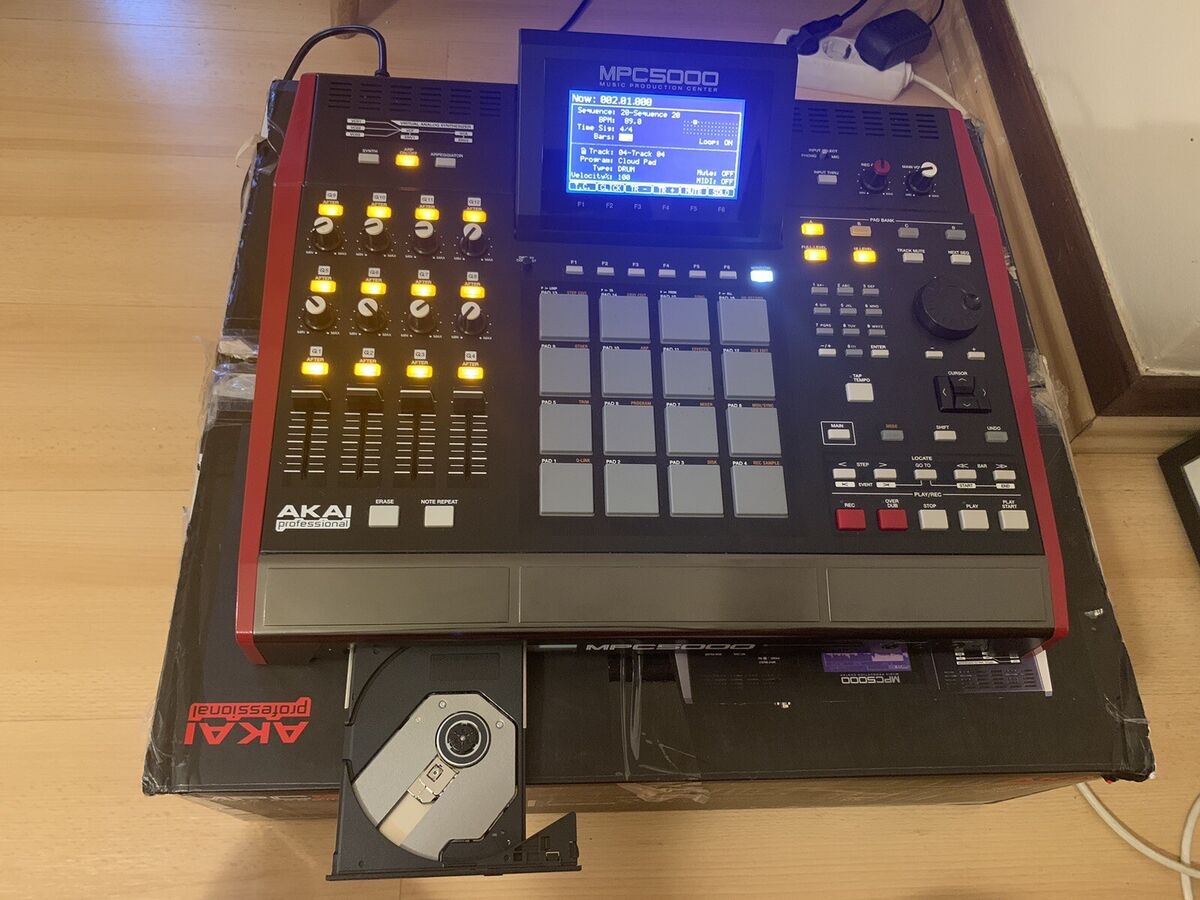
High-end MPC with expanded sampling and advanced effects.
Roland Verselab MV-1
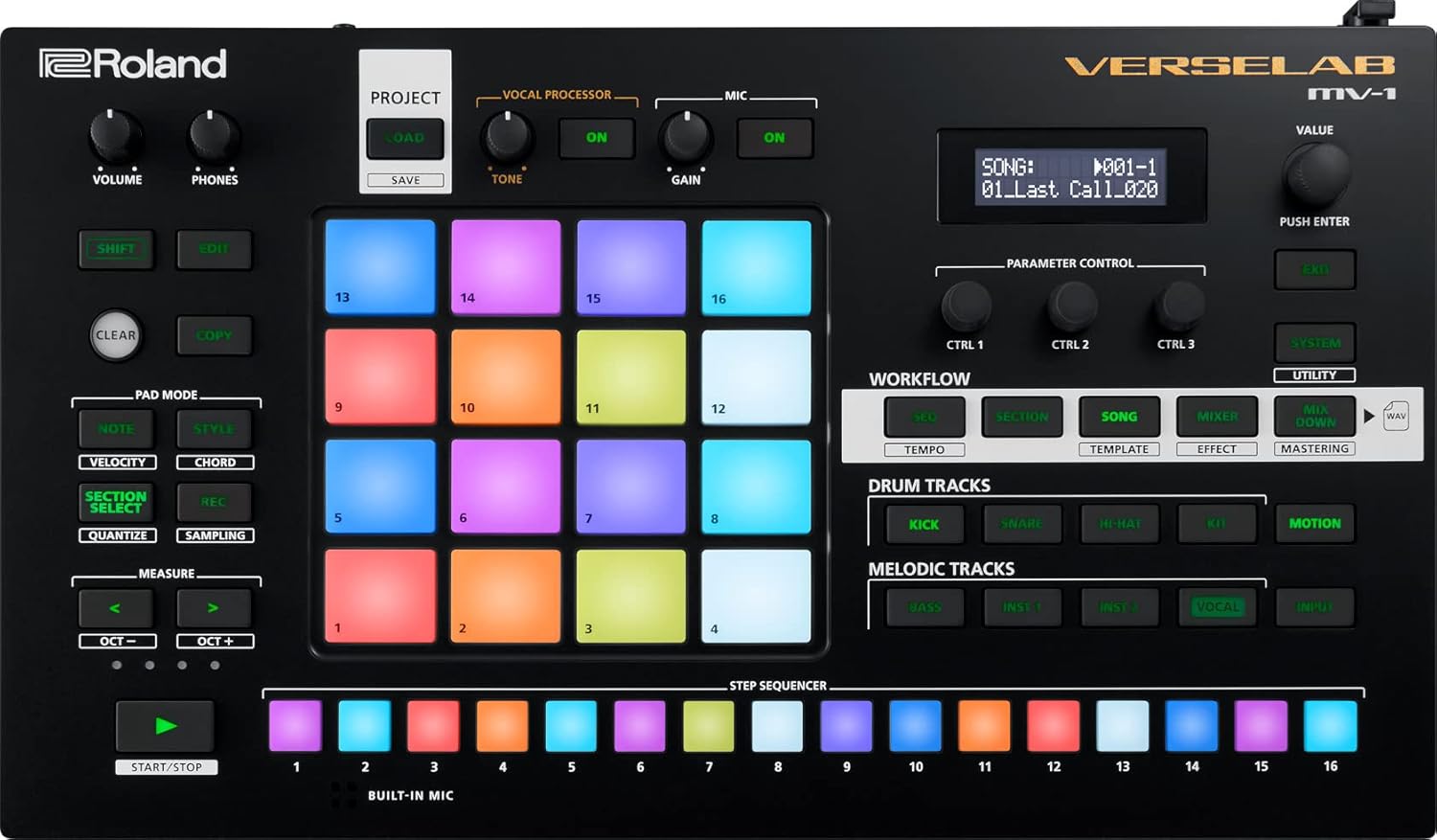
The VERSELAB MV-1 is a fun, all-in-one music studio that helps you make your own songs—from beats to vocals—right out of the box. It comes with over 3,000 cool sounds, easy-to-use tools for writing and recording music, and special effects like Auto-Pitch and harmonies. You can tap out beats with pads, record your voice, and even connect it to your phone, tablet, or computer. It's made to help anyone—beginner or pro—create awesome music without needing a bunch of extra stuff.
| Spec | Akai MPC5000 | Roland Verselab MV-1 |
|---|---|---|
| Manufacturer | Akai Professional | Roland |
| Year Released | 2006 | 2021 |
| Polyphony | 128 | 128 |
| Sample Rate | 44.1kHz | 44.1kHz |
| Storage | Internal Hard Drive, CompactFlash | SD card |
| Pads | 16 velocity-sensitive pads | No pads |
| Sequencer | Yes | Yes |
| Effects | EQ, Compression, Reverb, Delay, Filtering | EQ, Reverb, Delay |
| I/O | MIDI In/Out, Audio In/Out | MIDI In/Out, USB, Audio In/Out |
| Screen | Color LCD | LCD display |
| Software Integration | MPC Software | Roland Software |
| Build | Standalone | Groovebox |
| Price | $1200 used | $500 |
| More about | Details | Details |
Buy the Roland Verselab MV-1 on Amazon.com
Buy Now On AmazonRoland Verselab MV-1 vs. Akai MPC5000: A Sampler Showdown
Summary: Dive into this detailed comparison of the Roland Verselab MV-1 and the Akai MPC5000. Discover their unique features, pros, cons, and who they’re best suited for.
Introduction
If you’re into making music, you’ve probably heard of samplers. They’re these cool machines that let you take bits of sounds and turn them into something amazing. Today, we’re looking at two popular samplers: the Roland Verselab MV-1 and the Akai MPC5000. Both are super powerful, but they’re a bit different from each other. Let’s see which one might be right for you!
The Battle of the Samplers: Roland Verselab MV-1 vs. Akai MPC5000
A Quick Look at Each Sampler
-
Roland Verselab MV-1: This is a groovebox made by Roland in 2021. It comes with integrated sampling and beat production tools. It’s priced at $500 and is known for being user-friendly with its LCD display and software integration.
-
Akai MPC5000: Akai Professional released this high-end MPC in 2006. It’s a standalone device with advanced sampling and effects capabilities. It’s a bit more expensive, usually costing around $1200 used.
Features Comparison
Polyphony and Sample Rate
Both the Roland Verselab MV-1 and Akai MPC5000 offer a polyphony of 128 voices. This means that both can play up to 128 sounds at the same time, which is great for creating complex music. They also share the same sample rate of 44.1kHz, providing good sound quality for your tracks.
Storage and Pads
The Roland Verselab MV-1 uses an SD card for storage. This makes it easy to swap cards and expand your memory. However, it doesn’t have pads, which are often used for drumming or triggering samples. Instead, it relies on its sequencer for creating beats.
On the other hand, the Akai MPC5000 has an internal hard drive and CompactFlash for storage. This gives you a lot of room to store your sounds. Plus, it comes with 16 velocity-sensitive pads, making it perfect for those who love to finger-drum or perform live.
Sequencer and Effects
Both devices come equipped with sequencers, allowing you to arrange and edit your music. The Roland Verselab MV-1 includes effects like EQ, Reverb, and Delay, which are great for basic sound shaping.
The Akai MPC5000 takes it up a notch with added Compression and Filtering effects alongside EQ, Reverb, and Delay. This allows for more in-depth sound manipulation, ideal for advanced users who want precise control.
I/O and Screen
The I/O (input/output) options are similar for both samplers, featuring MIDI In/Out and Audio In/Out. This makes it easy to connect them to other equipment in your studio. The Roland Verselab MV-1 has a USB connection, enhancing its connectivity further.
When it comes to screens, the Roland features an LCD display, which is straightforward and easy to read. The Akai MPC5000 boasts a color LCD, providing more vibrant visuals and making navigation more intuitive.
Software Integration and Build
The Roland Verselab MV-1 integrates seamlessly with Roland Software, making it a great pick for those already using Roland products. It’s built as a groovebox, which means it’s compact and portable, fitting well into small studio spaces.
The Akai MPC5000 uses MPC Software, known for its robust capabilities and professional-grade features. It’s a standalone device, offering an all-in-one solution for music production without needing a computer.
Pros and Cons
Roland Verselab MV-1
Pros:
- Affordable Price: At $500, it’s accessible for beginners and hobbyists.
- User-Friendly: Easy to use with a simple interface and software integration.
- Compact and Portable: Ideal for small spaces or taking on the go.
Cons:
- No Pads: Lacks the tactile feel of drumming pads.
- Basic Effects: Limited to EQ, Reverb, and Delay.
Akai MPC5000
Pros:
- Advanced Features: Includes a wide range of effects and a color LCD screen.
- 16 Pads: Perfect for live performances and hands-on control.
- Standalone: Doesn’t require a computer, great for focused music sessions.
Cons:
- Higher Cost: Priced at $1200 used, it’s a bigger investment.
- Heavier and Larger: Not as portable as the Roland Verselab MV-1.
Final Verdict: Who Should Buy Which Sampler?
If you’re new to music production or want something portable and affordable, the Roland Verselab MV-1 is a great choice. It’s simple and integrates easily with other Roland gear. However, if you’re serious about sampling and want more control over your sound, the Akai MPC5000 is worth the investment. It’s packed with features that cater to professional musicians and producers.
In conclusion, both samplers have their strengths. Choose the one that fits your needs and budget, and start creating amazing music!