Elektron Analog Rytm MKII — VS — Synthstrom Deluge
Elektron Analog Rytm MKII
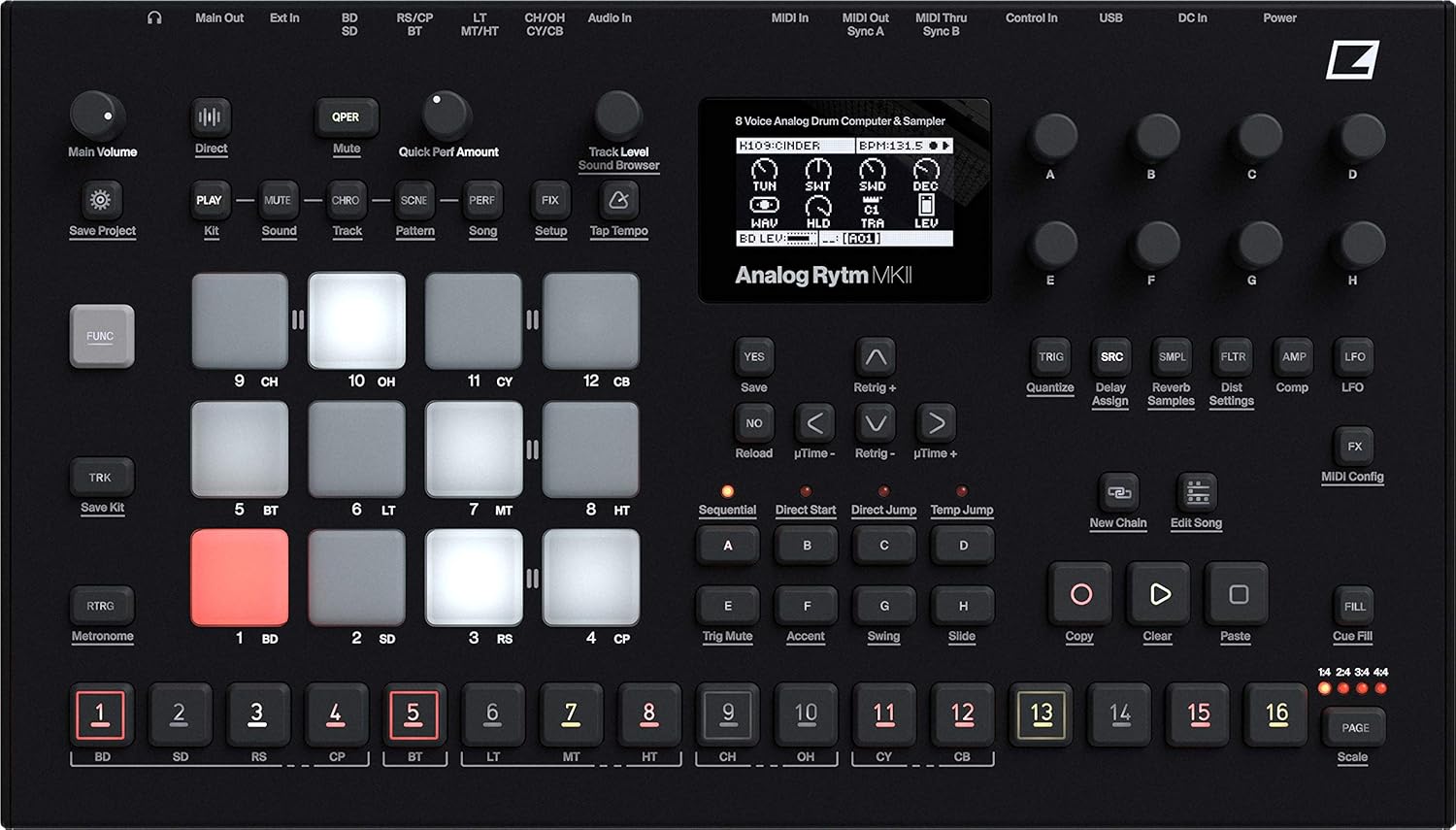
The Analog Rytm MKII is a powerful drum machine and sampler that helps you make awesome beats. It has 8 different drum sounds you can shape with real analog power and digital samples. You can tap on big, fun pads to play your sounds, or use the step sequencer to build cool rhythms. It lets you record sounds, change them up, and mix them however you like. Whether you're making music at home or performing on stage, this beat machine is ready to help you create something amazing.
Synthstrom Deluge
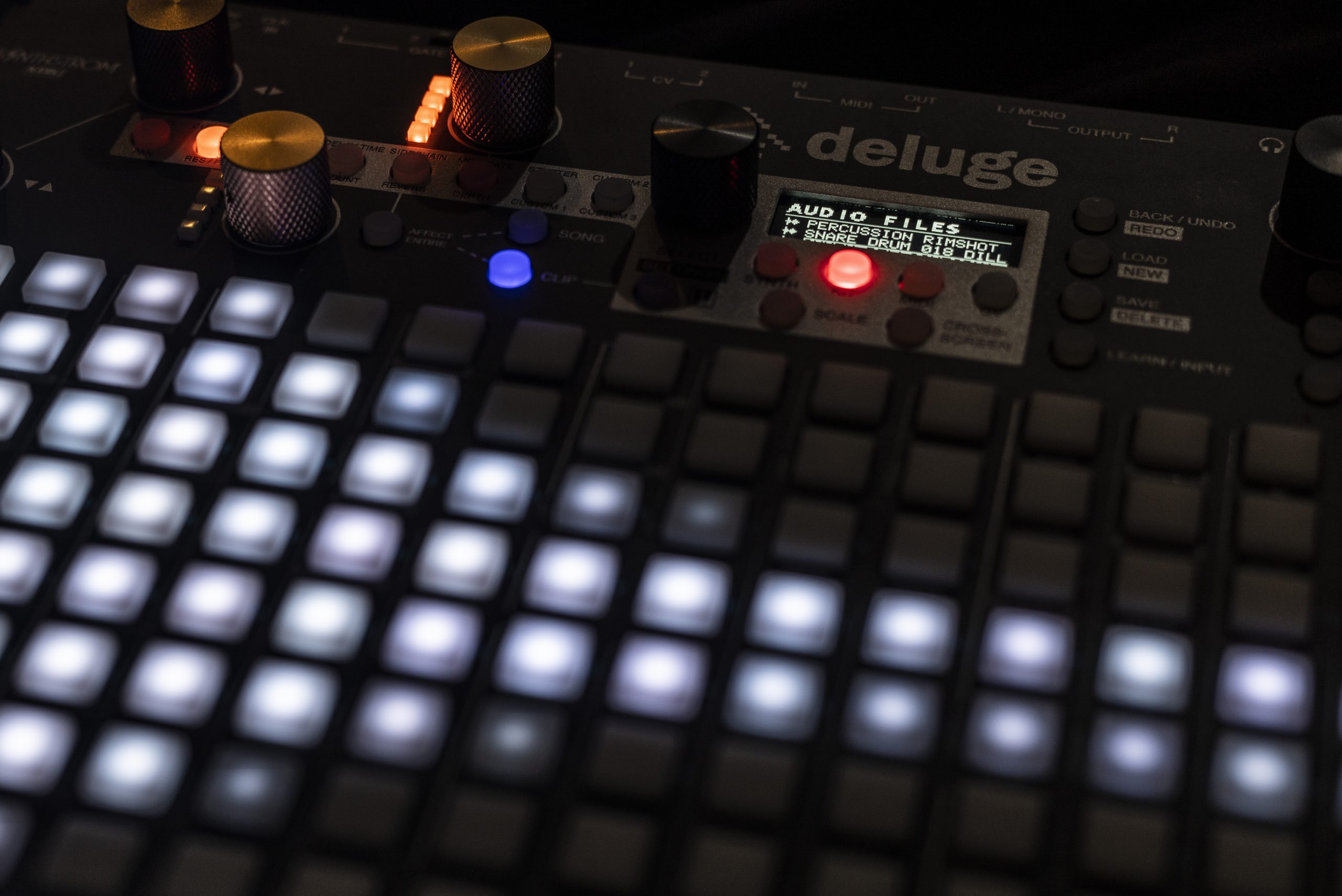
The Synthstrom Deluge is a powerful all-in-one music production workstation that combines a synthesizer, sampler, sequencer, and audio looper in a compact, portable design. Featuring a versatile internal synth engine (subtractive, wavetable, and FM), deep modulation capabilities, and MPE support, it allows for rich sound design and expressive control. Its 128-pad interface enables piano-roll-style sequencing, live performance, and arranging with features like Euclidean sequencing, probability, and advanced timing options. The Deluge streams samples directly from SD, supports multisampling and resampling, and includes robust live looping tools with seamless overdubbing. With extensive connectivity (CV/gate, MIDI, USB), a built-in mic and speaker, and a rechargeable battery for standalone operation, the Deluge is a fully self-contained music creation tool designed for both studio composition and live performance.
| Spec | Elektron Analog Rytm MKII | Synthstrom Deluge |
|---|---|---|
| Manufacturer | Elektron | Synthstrom Audible |
| Year Released | 2018 | 2017 |
| Polyphony | 12 | 128 |
| Sample Rate | 48kHz | 44.1kHz |
| Storage | SD card | MicroSD card |
| Pads | 8 velocity-sensitive pads | No pads, uses buttons and keyboard |
| Sequencer | Yes | Yes |
| Effects | Analog and digital effects | Multiple effects |
| I/O | MIDI In/Out/Thru, USB, Audio In/Out | MIDI In/Out, USB, Audio In/Out |
| Screen | OLED display | LCD display |
| Software Integration | Elektron Transfer | No |
| Build | Desktop | Standalone sampler/synth/sequencer |
| Price | $2299 | $1529 |
| More about | Details | Details |
Buy the Elektron Analog Rytm MKII on Amazon.com
Buy Now On AmazonBuy the Synthstrom Deluge on Amazon.com
Buy Now On Amazontitle: Elektron Analog Rytm MKII vs. Synthstrom Deluge: A Detailed Comparison
Summary: This article explores the features, pros, and cons of the Elektron Analog Rytm MKII and the Synthstrom Deluge, two powerful music-making devices. We’ll help you decide which one might be the right fit for your needs!
Choosing the Right Music Gear: Elektron Analog Rytm MKII vs. Synthstrom Deluge
When you’re looking to make some awesome beats or create new music, having the right gear can make a huge difference. Today, we’re diving into two exciting devices: the Elektron Analog Rytm MKII and the Synthstrom Deluge. Both are unique, packed with features, and designed to help take your music to the next level. Whether you’re a beginner or a seasoned pro, understanding what each device offers is key. So let’s jump in and see what makes them special!
Meet the Elektron Analog Rytm MKII
The Elektron Analog Rytm MKII is a drum machine with a twist. Released in 2018 by Elektron, it combines analog sounds with sampling capabilities and digital effects. This desktop device is known for its high-quality build and its ability to create deep, punchy beats. It comes with 12-voice polyphony, meaning it can play 12 notes at once. With a crisp OLED display, it’s easy to navigate through its features, and the 8 velocity-sensitive pads make it a joy to play.
Say Hello to the Synthstrom Deluge
On the other hand, the Synthstrom Deluge, which hit the market in 2017, is a powerful standalone sampler, synth, and sequencer all wrapped into one. Made by Synthstrom Audible, this device is loved for its versatility and extensive capabilities. Unlike the Rytm MKII, it doesn’t have pads, but instead uses buttons and a keyboard for input. With a whopping 128-voice polyphony, it’s a beast when it comes to layering sounds. Its LCD display helps users navigate through its features, and it’s all housed in a durable standalone unit.
Feature Face-Off: What Do They Offer?
Polyphony and Sound
The first thing to note is the polyphony of each device. The Analog Rytm MKII offers 12-voice polyphony, which is great for drum patterns and basic melodies. But if you’re looking to create complex compositions with many layers, the Deluge’s 128-voice polyphony is hard to beat. It allows for much more elaborate soundscapes and intricate compositions.
Sampling and Storage
When it comes to sampling, both devices shine but in different ways. The Analog Rytm MKII has a sample rate of 48kHz and uses an SD card for storage. This means you can store a decent number of samples and have them sound crisp and clear. The Deluge, however, uses a MicroSD card and has a sample rate of 44.1kHz. While slightly lower, this is still very good quality and provides plenty of room for creativity.
Inputs, Outputs, and Effects
Both devices have solid input and output options, including MIDI In/Out and USB connectivity. The Analog Rytm MKII includes MIDI Thru as well, offering more flexibility in connecting with other gear. When it comes to effects, the Rytm MKII has both analog and digital effects, giving users a wide range of sounds to experiment with. The Deluge, although it doesn’t have analog effects, offers multiple digital effects that are just as versatile and powerful.
Interface and Integration
The interface is another area where these devices differ. The OLED display on the Rytm MKII is bright and easy to read, making it simple to navigate through its features. The Deluge’s LCD display, while functional, is not as sharp but does the job. In terms of software integration, the Rytm MKII works with Elektron Transfer, which makes transferring samples and managing files a breeze. The Deluge, on the other hand, doesn’t offer software integration, which might be a drawback for those who like to manage their music on a computer.
Build and Price
Both devices are built to last, but they serve different purposes. The Analog Rytm MKII is a desktop unit, ideal for studio setups. It’s priced at $1800, which is a significant investment but reflects its quality and capabilities. The Deluge, at $2000, is a standalone device, meaning it can be used anywhere without needing to be connected to other equipment. This makes it a bit more versatile in terms of where and how you can use it.
Pros and Cons
Elektron Analog Rytm MKII
Pros:
- High-quality build and design
- Excellent for creating deep, analog drum sounds
- Combines analog and digital effects
- Easy navigation with OLED display
- Integrates well with software
Cons:
- Limited to 12-voice polyphony
- Higher learning curve for beginners
- No standalone capability
Synthstrom Deluge
Pros:
- Extremely versatile with 128-voice polyphony
- Standalone functionality for use anywhere
- Multiple digital effects
- Great for complex compositions
Cons:
- No pads, uses buttons and keyboard
- No software integration
- Higher price point
Final Thoughts: Which One is Right for You?
In the end, choosing between the Elektron Analog Rytm MKII and the Synthstrom Deluge comes down to your specific needs and how you plan to use the device.
The Elektron Analog Rytm MKII is perfect for those who love creating rich, analog drum sounds and want a device that integrates seamlessly with software. It’s great for studio use and offers a range of effects that can enhance your music-making experience.
The Synthstrom Deluge, with its standalone capabilities, is ideal for musicians who need flexibility and power in one package. It’s perfect for creating layered compositions and is highly portable, making it suitable for both live performances and studio work.
Ultimately, both devices are amazing tools for music enthusiasts. Whether you prioritize rich analog sounds or the ability to create complex compositions on the go, either choice will be a valuable addition to your music production arsenal.