Elektron Digitakt II — VS — Elektron Octatrack MKI
Elektron Digitakt II
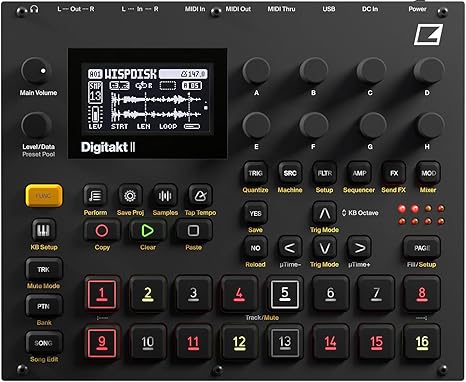
The Digitakt II is a fun music machine that lets you make beats and play with sounds. It has 16 tracks you can use to mix music, record sounds in stereo, or control other gear. You can change and shape your sounds in cool ways, with lots of new and improved features. It has tons of memory so you can store lots of sounds and keep creating for a long time. It's like a sound playground for your imagination!
Elektron Octatrack MKI
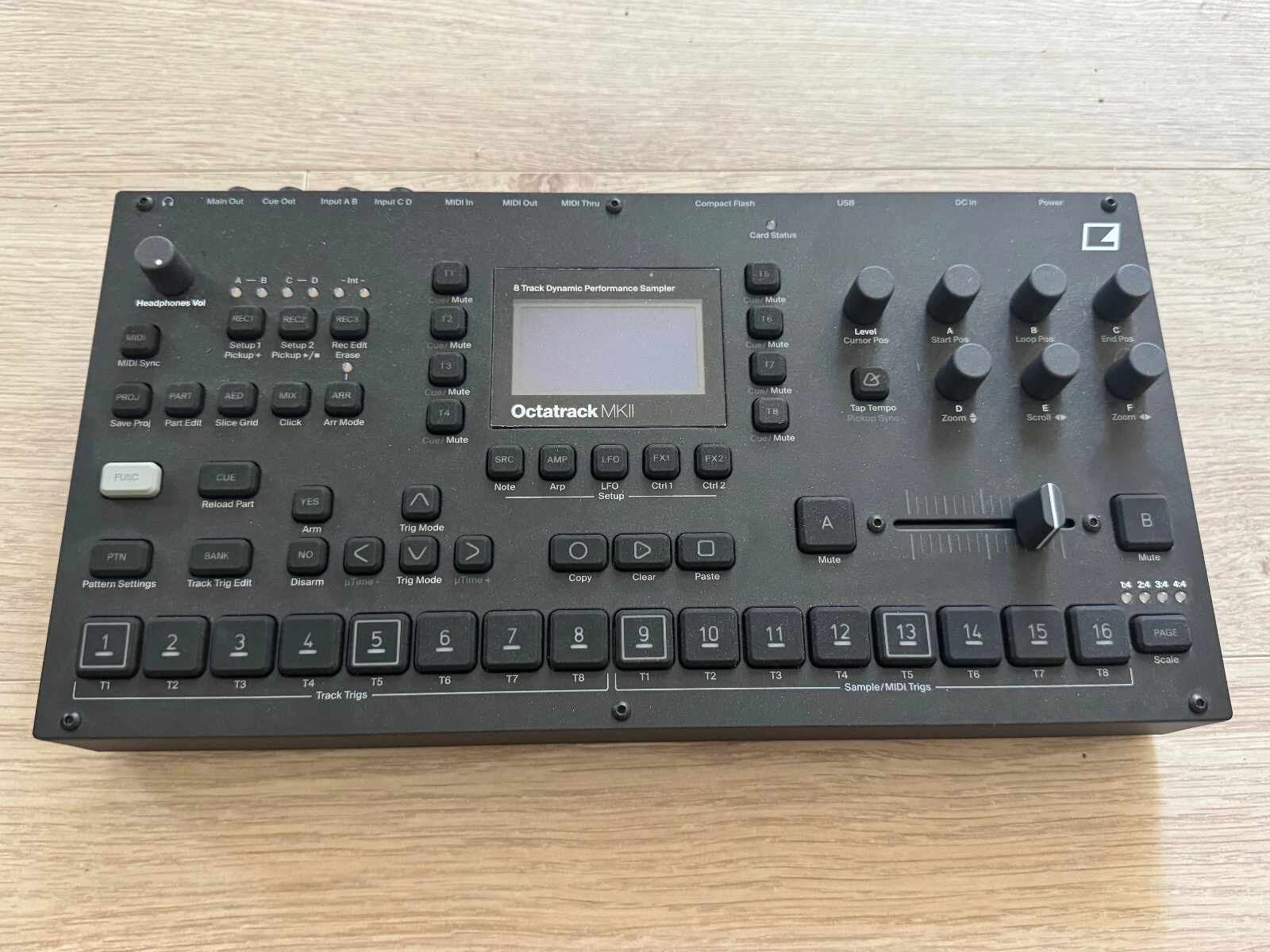
The Elektron Octatrack is a powerful music tool that lets you sample, loop, and remix sounds in real time. It has 8 tracks for playing and twisting audio, plus 8 more for controlling other gear with MIDI. You can load sounds from a memory card or record them live, then use built-in effects, a crossfader, and a step sequencer to create unique tracks. Whether you're performing live or making music in the studio, the Octatrack MK1 gives you deep control over your sound in a hands-on, creative way.
| Spec | Elektron Digitakt II | Elektron Octatrack MKI |
|---|---|---|
| Manufacturer | Elektron | Elektron |
| Year Released | 2024 | 2010 |
| Polyphony | 16 | 8 |
| Sample Rate | 48kHz | 48kHz |
| Storage | Internal storage | Compact Flash |
| Pads | No pads, uses buttons | No pads, uses buttons and encoders |
| Sequencer | Yes | Yes |
| Effects | Delay, reverb, chorus, bit reduction, sample reduction, and overdrive per track | Filters, Delay, Reverb |
| I/O | MIDI In/Out/Thru, USB, Audio Out | MIDI In/Out/Thru, Audio In/Out |
| Screen | OLED display | OLED display |
| Software Integration | Elektron Transfer | Elektron Transfer |
| Build | Desktop | Desktop |
| Price | $1149 | |
| More about | Details | Details |
Buy the Elektron Digitakt II on Amazon.com
Buy Now On AmazonElektron Octatrack MKI vs Elektron Digitakt II: A Comprehensive Comparison
Summary
Are you torn between the Elektron Octatrack MKI and the Elektron Digitakt II? This guide will help you decide! We’ll compare these two popular samplers, looking at their features, pros and cons, and who they are best for. Whether you’re a music producer, a live performer, or just someone who loves playing with sound, this post is for you!
Introduction
Welcome to the world of electronic music creation, where beats, loops, and samples come alive! Today, we’re diving into two incredible devices from Elektron: the Octatrack MKI and the Digitakt II. Both are powerful tools that let you make amazing music, but they have some differences that might make one a better fit for your needs. Let’s explore what makes these samplers tick and how they can help you create your next masterpiece!
Features Comparison
Polyphony and Tracks
The first thing to know about these samplers is how many sounds they can play at once, which is called polyphony. The Elektron Octatrack MKI has 8 tracks with 8-note polyphony, meaning it can play 8 different sounds at the same time. This is great for layering beats and melodies. Meanwhile, the Elektron Digitakt II doubles that with 16 tracks and 16-note polyphony, providing even more room for creativity. This makes the Digitakt II a better choice if you want to create complex compositions.
Sample Rate and Storage
Both samplers offer a high-quality sample rate of 48kHz, ensuring your sounds are crisp and clear. However, they differ in storage options. The Octatrack MKI uses a Compact Flash card, which allows you to swap out cards for different projects. On the other hand, the Digitakt II boasts internal storage, making it more convenient for quickly accessing your sounds without needing extra cards.
Controls and Interface
Neither device has traditional drum pads, but instead, they use buttons and encoders for control. This design is typical of Elektron and offers a tactile experience that many users appreciate. Each sampler features an OLED display, providing a clear view of your parameters and settings.
Effects and Sound Shaping
When it comes to effects, both samplers offer a range of options to enhance your music. The Octatrack MKI includes filters, delay, and reverb, allowing you to twist and shape your sounds creatively. The Digitakt II steps it up with additional effects like chorus, bit reduction, sample reduction, and overdrive per track. This expanded array of effects gives you even more tools to sculpt your sound precisely.
Connectivity and Integration
Connectivity is crucial for integrating samplers into your music setup. Both samplers come with MIDI In/Out/Thru, making them compatible with other MIDI gear. The Digitakt II adds USB connectivity, which is excellent for modern studio setups. Both devices support Elektron Transfer software, simplifying the process of moving samples and projects between your computer and the sampler.
Pros and Cons
Elektron Octatrack MKI
Pros:
- Real-time Sampling: Perfect for live performances and spontaneous creativity.
- Crossfader: Allows for smooth transitions and dynamic live effects.
- Expandable Storage: Use multiple Compact Flash cards for different projects.
Cons:
- Limited Polyphony: Only 8-note polyphony, which might be limiting for complex compositions.
- Older Design: Released in 2010, it may lack some modern features found in newer devices.
Elektron Digitakt II
Pros:
- High Polyphony: 16 tracks with 16-note polyphony for intricate arrangements.
- Modern Effects: A wide range of effects per track for detailed sound shaping.
- Internal Storage: No need for additional memory cards.
Cons:
- Higher Price: At $1149, it might be a bigger investment for beginners.
- No Pads: Some users may miss the tactile feel of traditional drum pads.
Final Verdict
Choosing between the Octatrack MKI and the Digitakt II depends on your specific needs and preferences.
The Elektron Octatrack MKI is ideal for live performers who value real-time sampling and seamless transitions using the crossfader. It’s a trusty companion for those who enjoy hands-on music creation.
The Elektron Digitakt II is perfect for producers who want a modern sampler with more tracks and advanced effects. Its internal storage and USB connectivity make it a convenient choice for studio environments.
In conclusion, both samplers offer unique features that can greatly enhance your music-making experience. Consider what aspects are most important to you—whether it’s live performance capabilities or advanced sound design features—and make your choice accordingly. Happy music making!