Elektron Model:Samples — VS — Polyend Play
Elektron Model:Samples
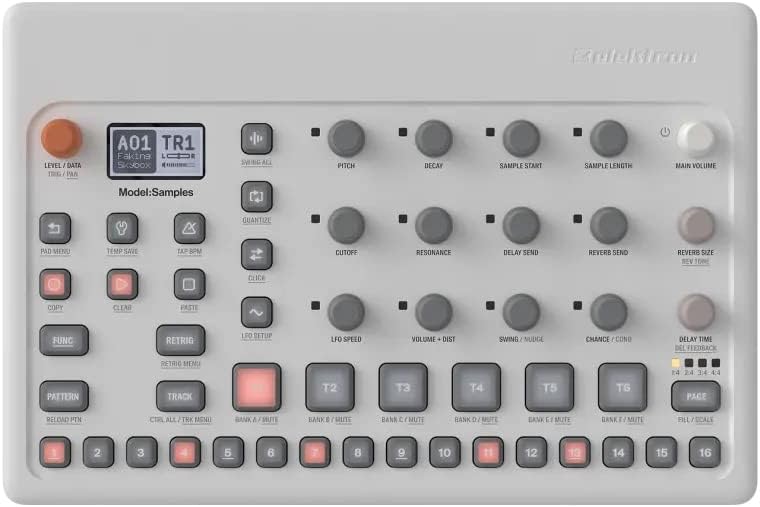
The Elektron Model:Samples is a small and powerful music machine that lets you make your own beats and songs using sounds called samples. It has 6 sound tracks, cool built-in effects like echo and reverb, and big pads you can tap to play music. You can use the sounds that come with it or add your own. It's light, easy to carry, and fun to use—perfect for anyone who wants to start making music, anywhere!
Polyend Play
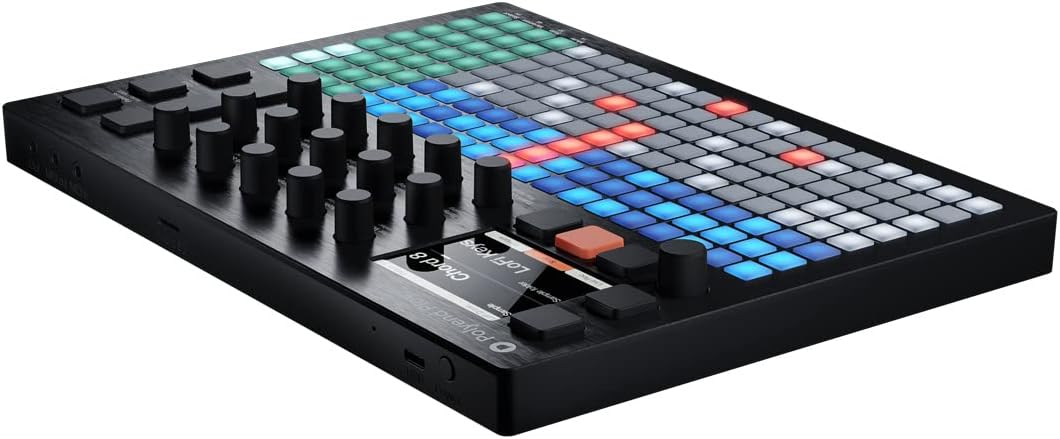
The Polyend Play is a powerful and intuitive sampler and groovebox designed for creative freedom without the complexity. It features over 30 ready-to-use sample kits, eight audio tracks, and eight polyphonic MIDI tracks, all accessible through a user-friendly interface tailored for both studio production and live performance. With 35 unique playback modes, randomizer and step repeater functions, a flexible 64-step sequencer, customizable pattern placement, onboard effects, and deep MIDI integration, the Play invites hands-on experimentation and effortless arrangement—whether you're jamming or building complete tracks from scratch.
| Spec | Elektron Model:Samples | Polyend Play |
|---|---|---|
| Manufacturer | Elektron | Polyend |
| Year Released | 2019 | 2022 |
| Polyphony | 6 | 64 |
| Sample Rate | 48kHz | 44.1kHz |
| Storage | Internal storage | MicroSD card |
| Pads | No pads, uses buttons | 16 velocity-sensitive pads |
| Sequencer | Yes | Yes |
| Effects | distortion, filter effects, and a global delay and reverb send | Multiple effects |
| I/O | 1/4 inch headphone output, 2x balanced 1/4 inch main outputs, a 3.5mm TRS jack for MIDI in/out, and a USB mini 2.0 port | MIDI In/Out, USB, Audio In/Out |
| Screen | 128 x 64 pixel LCD screen | LCD display |
| Software Integration | Elektron Transfer | No |
| Build | Desktop | Groovebox |
| Price | $349 | $1100 |
| More about | Details | Details |
Buy the Elektron Model:Samples on Amazon.com
Buy Now On AmazonBuy the Polyend Play on Amazon.com
Buy Now On AmazonPolyend Play vs. Elektron Model:Samples: A Detailed Comparison
Summary: Dive into the world of samplers with our detailed comparison of the Polyend Play and the Elektron Model:Samples. We’ll explore their features, pros and cons, and determine which one is best suited for your music production needs.
Introduction
Music production can be a thrilling journey, especially when you have the right tools at your disposal. If you’re a music enthusiast looking to create beats and explore soundscapes, samplers are your best friends. Today, we’re going to compare two exciting samplers: the Polyend Play and the Elektron Model:Samples. Both are designed for creativity but differ in their features, build, and price. Whether you’re a beginner or a seasoned producer, understanding these differences will help you make an informed decision.
Feature Comparison
Build and Design
The Polyend Play is a groovebox that boasts a sleek design with 16 velocity-sensitive pads. It’s built for both studio production and live performance, offering a tactile interface that invites hands-on experimentation. On the other hand, the Elektron Model:Samples is a compact desktop unit that forgoes pads for buttons. This makes it lightweight and easy to carry, perfect for those who want portability without sacrificing functionality.
Polyphony and Sound Quality
Polyphony refers to the number of sounds a device can produce simultaneously. The Polyend Play offers an impressive 64-note polyphony, allowing for complex layering of sounds and intricate compositions. It samples at 44.1kHz, which is the standard CD quality. In contrast, the Elektron Model:Samples provides 6-note polyphony, suitable for simpler arrangements. However, it samples at a higher rate of 48kHz, which provides slightly better sound quality.
Storage and Sounds
The Polyend Play uses a MicroSD card for storage, providing flexibility in expanding your sound library beyond the 30 ready-to-use sample kits included. In contrast, the Model:Samples relies on internal storage, which is sufficient for most beginners but might feel limiting as your need for diverse sounds grows. However, the ability to add your own samples offers a degree of customization.
Sequencer and Playback
Both devices come equipped with sequencers, but they serve different purposes. The Polyend Play’s 64-step sequencer is designed for in-depth pattern creation and modification, featuring 35 unique playback modes. This allows for highly customizable and intricate tracks. The Model:Samples also has a sequencer, but it is more straightforward, focusing on ease of use with its intuitive design and button layout.
Effects and Integration
Effects can dramatically alter your sound. The Polyend Play provides multiple effects, which are perfect for those who love to experiment with different sound textures. Meanwhile, the Model:Samples includes distortion, filter effects, and a global delay and reverb send, which can be used to enhance your beats. When it comes to software integration, the Polyend Play does not offer direct software integration, while the Model:Samples uses Elektron Transfer, providing a seamless way to manage your samples and projects.
Price
Price is often a significant factor when choosing a sampler. The Polyend Play, with its extensive features and capabilities, comes at a premium price of $1100. The Model:Samples, on the other hand, is much more budget-friendly at $349, making it an attractive option for beginners or those on a tight budget.
Pros and Cons
Polyend Play
Pros:
- High polyphony of 64 notes for complex arrangements.
- Touch-sensitive pads for dynamic performance.
- Extensive effects and playback modes for deep customization.
- Flexible storage with MicroSD card.
Cons:
- High price point may be prohibitive for some users.
- Lacks software integration, limiting connectivity with digital audio workstations (DAWs).
Elektron Model:Samples
Pros:
- Affordable price, ideal for beginners.
- Compact and lightweight for easy portability.
- User-friendly interface with essential features.
- Built-in effects enhance sound creativity.
Cons:
- Limited polyphony of 6 notes, restricting complex compositions.
- Internal storage may feel limited as needs grow.
- Button interface may not appeal to those who prefer pads.
Final Verdict
Choosing between the Polyend Play and the Elektron Model:Samples boils down to your specific needs and budget.
If you’re a professional or advanced user looking for a powerhouse sampler with extensive features, the Polyend Play is your go-to device. Its high polyphony, versatile effects, and customizable playback modes make it ideal for detailed and dynamic music production.
On the other hand, if you’re just starting out or need a portable and cost-effective solution, the Elektron Model:Samples is an excellent choice. Its affordability, ease of use, and essential features make it a perfect fit for beginners and those who want to create music on the go.
In conclusion, both samplers offer unique advantages, and your choice should reflect your musical goals and budget constraints. Happy music-making!