Elektron Model:Samples — VS — Sonicware Lofi-12 XT
Elektron Model:Samples
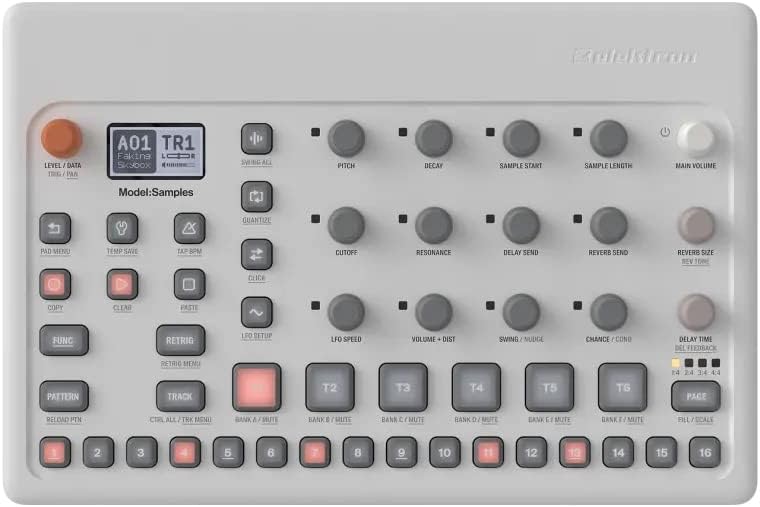
The Elektron Model:Samples is a small and powerful music machine that lets you make your own beats and songs using sounds called samples. It has 6 sound tracks, cool built-in effects like echo and reverb, and big pads you can tap to play music. You can use the sounds that come with it or add your own. It's light, easy to carry, and fun to use—perfect for anyone who wants to start making music, anywhere!
Sonicware Lofi-12 XT
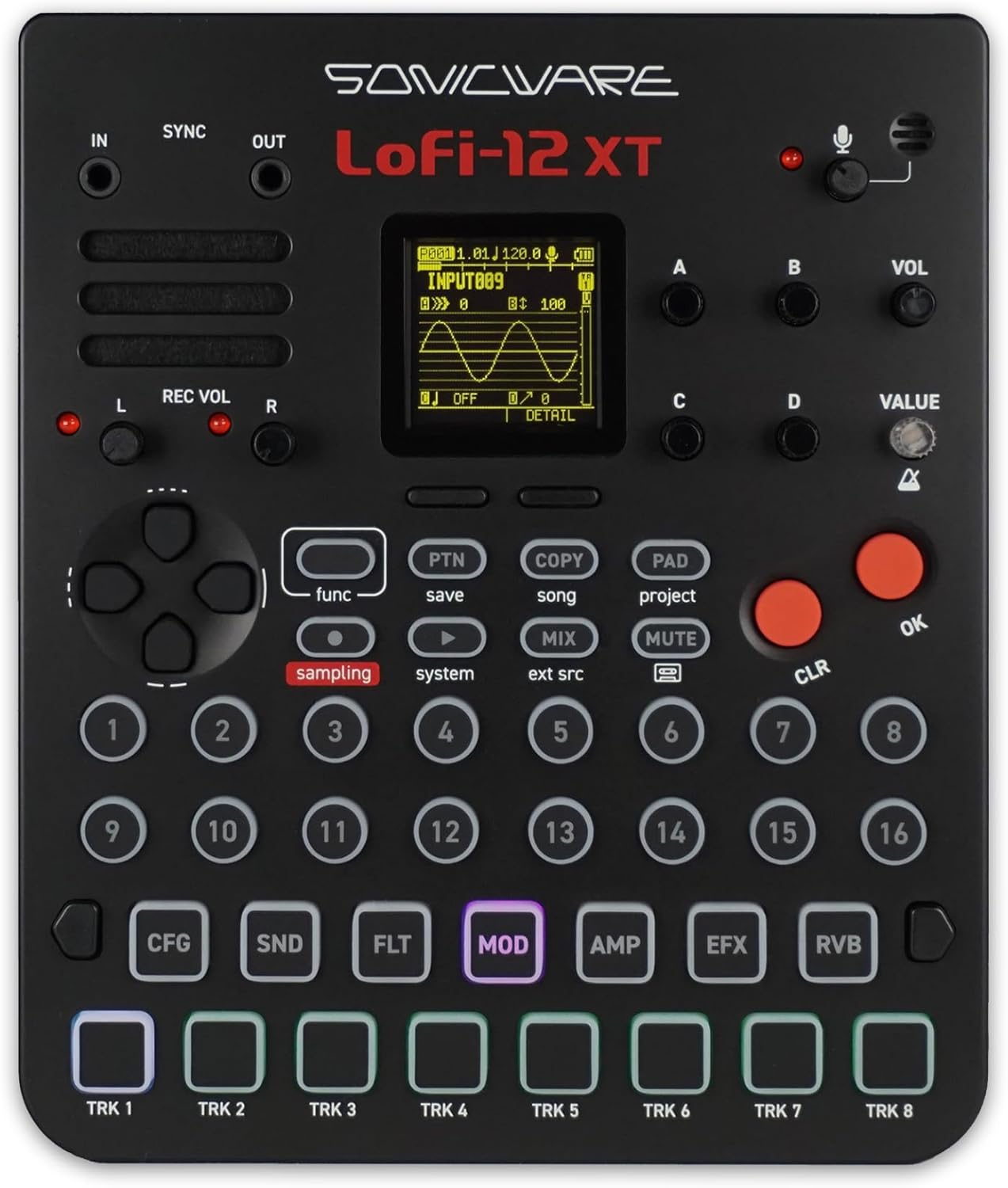
The Sonicware Lofi-12 XT is a powerful groovebox sampler that focuses on crunchy, nostalgic lo-fi sound design. It features multi-engine sampling modes, real-time time stretch, and a rich effects section, all in a highly portable form factor. The Lofi-12 XT adds stereo sampling and new workflow features compared to the original.
| Spec | Elektron Model:Samples | Sonicware Lofi-12 XT |
|---|---|---|
| Manufacturer | Elektron | Sonicware |
| Year Released | 2019 | 2023 |
| Polyphony | 6 | 10 |
| Sample Rate | 48kHz | 12kHz / 24kHz / 48kHz |
| Storage | Internal storage | SD card |
| Pads | No pads, uses buttons | 8 velocity-sensitive pads |
| Sequencer | Yes | Yes |
| Effects | distortion, filter effects, and a global delay and reverb send | Reverb, Delay, Bit Crusher, Chorus, EQ |
| I/O | 1/4 inch headphone output, 2x balanced 1/4 inch main outputs, a 3.5mm TRS jack for MIDI in/out, and a USB mini 2.0 port | Line In/Out, Headphone, MIDI In/Out, USB-C |
| Screen | 128 x 64 pixel LCD screen | OLED screen |
| Software Integration | Elektron Transfer | None |
| Build | Desktop | Portable groovebox |
| Price | $349 | $289 |
| More about | Details | Details |
Buy the Elektron Model:Samples on Amazon.com
Buy Now On AmazonBuy the Sonicware Lofi-12 XT on Amazon.com
Buy Now On AmazonElektron Model:Samples vs. Sonicware Lofi-12 XT: Which Sampler Is Right for You?
Summary: Are you ready to dive into the world of music-making with samplers? Today, we’re comparing two fantastic options: the Elektron Model:Samples and the Sonicware Lofi-12 XT. Both are excellent tools for creating music, but they each have their own unique features and strengths. Let’s explore which one might be the best fit for your musical journey.
Introduction
Hello, music lovers! If you’ve always wanted to create your own beats and songs, samplers are a fantastic place to start. They let you use different sounds, called samples, to make music. Today, we’re going to look at two popular samplers: the Elektron Model:Samples and the Sonicware Lofi-12 XT. Both are amazing in their own ways, but they have different features that make them special. Let’s dive in and see what each one has to offer!
Feature Comparison
Sound and Polyphony
The Elektron Model:Samples comes with 6 tracks of polyphony, which means you can play up to 6 different sounds at the same time. It has a sample rate of 48kHz, which means the sounds are very clear and detailed. On the other hand, the Sonicware Lofi-12 XT offers more flexibility with 10 tracks of polyphony. It also supports multiple sample rates: 12kHz, 24kHz, and 48kHz. This means you can choose lo-fi sounds that are crunchy and nostalgic or go for cleaner, more modern sounds.
Storage and Build
The Elektron Model:Samples has internal storage, so you don’t need to worry about memory cards. It’s a desktop build, which makes it easy to use in a studio setting. In contrast, the Sonicware Lofi-12 XT uses an SD card for storage. This means you can easily swap out cards to load different sets of sounds. It’s a portable groovebox, perfect for making music on the go.
Pads and Interface
When it comes to playing your samples, the Elektron Model:Samples uses buttons instead of pads. This might be a bit less intuitive for those used to drumming on pads, but it still works well for creating beats. The Sonicware Lofi-12 XT, however, features 8 velocity-sensitive pads. This means you can tap harder or softer to control the volume of each note, which adds a lot of expressiveness to your music.
Effects and Sequencer
Both samplers come with built-in effects to enhance your music. The Elektron Model:Samples includes distortion, filter effects, and a global delay and reverb send. On the other hand, the Sonicware Lofi-12 XT offers a wider range of effects: reverb, delay, bit crusher, chorus, and EQ. Both devices have a sequencer, allowing you to arrange your sounds into full songs.
Connectivity and Integration
The Elektron Model:Samples has a variety of connectivity options, including a 1/4 inch headphone output, 2 balanced 1/4 inch main outputs, a 3.5mm TRS jack for MIDI in/out, and a USB mini 2.0 port. It also integrates with Elektron Transfer software, making it easy to manage your sounds. The Sonicware Lofi-12 XT has line in/out, headphone, MIDI in/out, and USB-C connections. However, it does not offer any software integration.
Screen and Price
For the screen, the Elektron Model:Samples has a 128 x 64 pixel LCD screen, while the Sonicware Lofi-12 XT features a clearer OLED screen. As for the price, the Elektron Model:Samples is priced at $349, and the Sonicware Lofi-12 XT comes in at $289, making it a more budget-friendly option.
Pros and Cons
Elektron Model:Samples
Pros:
- High-quality sound output at 48kHz
- Built-in storage
- Good effects range
- Easy-to-use sequencer
- Great for studio use
Cons:
- No pads, only buttons
- Slightly more expensive
Sonicware Lofi-12 XT
Pros:
- More polyphony (10 tracks)
- Flexible sample rates
- Velocity-sensitive pads
- Portable design
- More affordable
Cons:
- Requires SD card for storage
- No software integration
Final Verdict
In conclusion, both the Elektron Model:Samples and Sonicware Lofi-12 XT are excellent samplers, each with its own strengths. If you’re looking for a more studio-focused sampler with high-quality sound and built-in storage, the Elektron Model:Samples could be the perfect choice for you. However, if you want a portable device with more polyphony and the ability to create lo-fi sounds, the Sonicware Lofi-12 XT is a great option, especially for those on a budget.
Ultimately, the best sampler for you depends on your needs and how you plan to use it. Happy music-making!