Elektron Octatrack MKI — VS — Synthstrom Deluge
Elektron Octatrack MKI
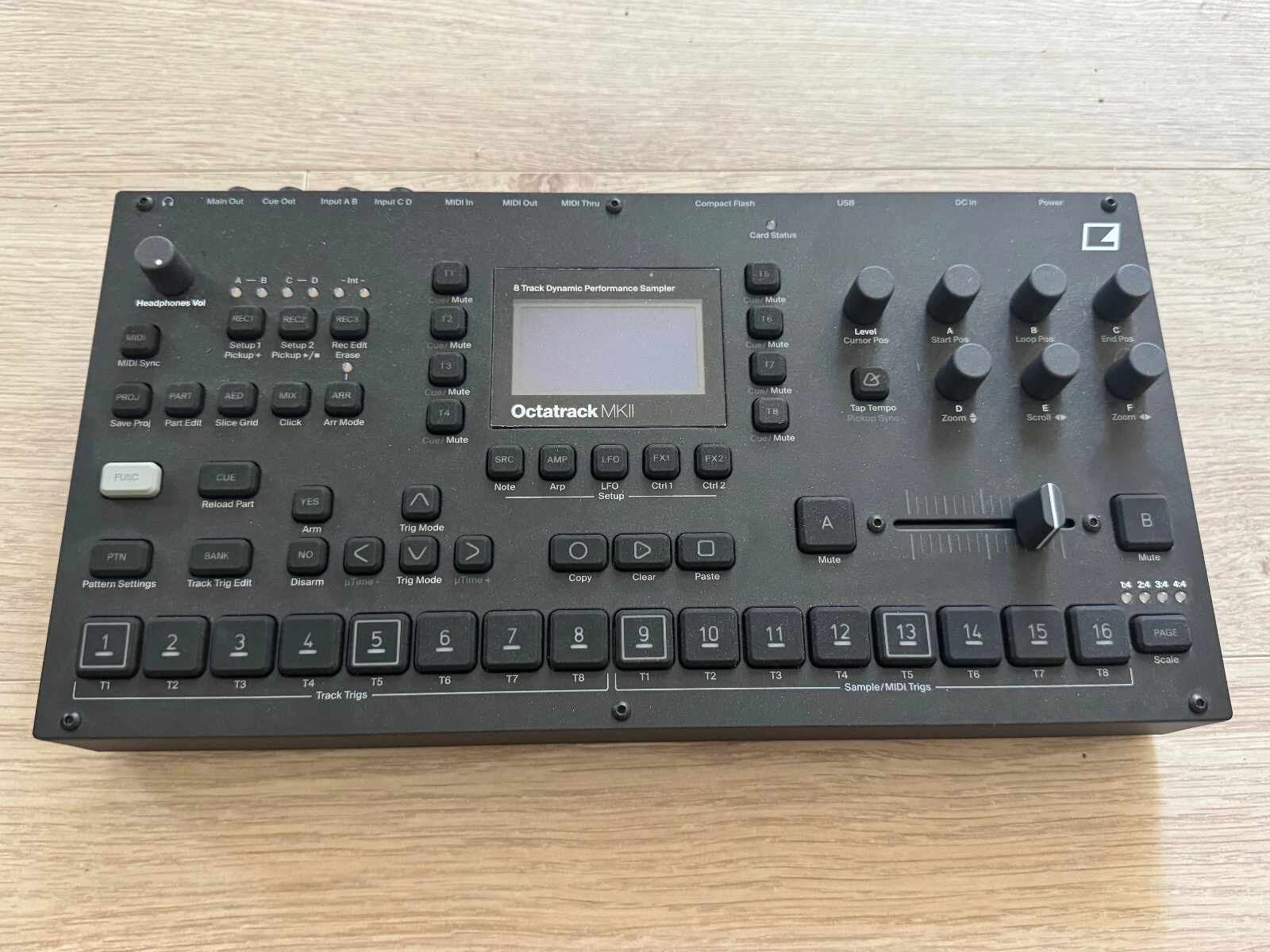
The Elektron Octatrack is a powerful music tool that lets you sample, loop, and remix sounds in real time. It has 8 tracks for playing and twisting audio, plus 8 more for controlling other gear with MIDI. You can load sounds from a memory card or record them live, then use built-in effects, a crossfader, and a step sequencer to create unique tracks. Whether you're performing live or making music in the studio, the Octatrack MK1 gives you deep control over your sound in a hands-on, creative way.
Synthstrom Deluge
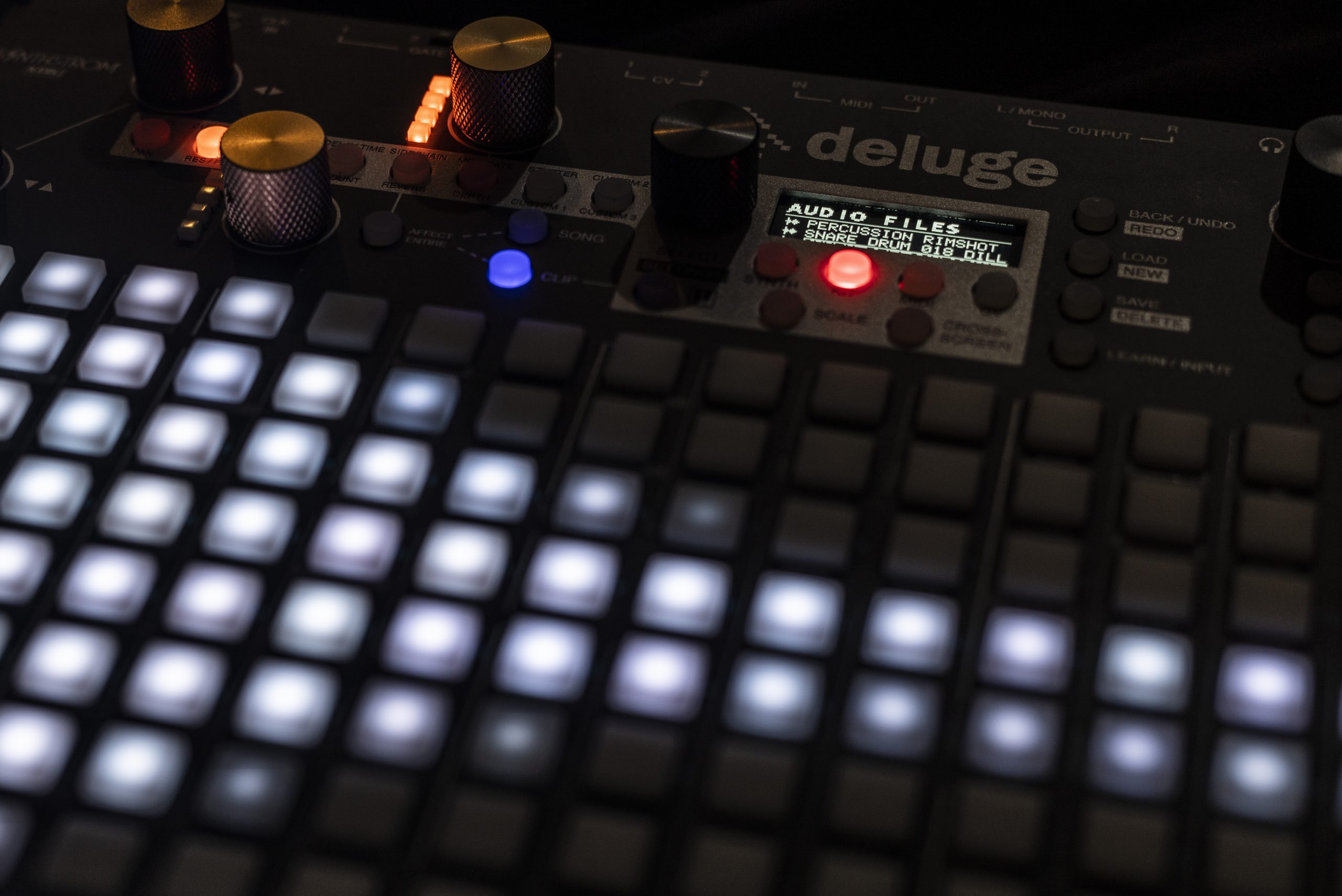
The Synthstrom Deluge is a powerful all-in-one music production workstation that combines a synthesizer, sampler, sequencer, and audio looper in a compact, portable design. Featuring a versatile internal synth engine (subtractive, wavetable, and FM), deep modulation capabilities, and MPE support, it allows for rich sound design and expressive control. Its 128-pad interface enables piano-roll-style sequencing, live performance, and arranging with features like Euclidean sequencing, probability, and advanced timing options. The Deluge streams samples directly from SD, supports multisampling and resampling, and includes robust live looping tools with seamless overdubbing. With extensive connectivity (CV/gate, MIDI, USB), a built-in mic and speaker, and a rechargeable battery for standalone operation, the Deluge is a fully self-contained music creation tool designed for both studio composition and live performance.
| Spec | Elektron Octatrack MKI | Synthstrom Deluge |
|---|---|---|
| Manufacturer | Elektron | Synthstrom Audible |
| Year Released | 2010 | 2017 |
| Polyphony | 8 | 128 |
| Sample Rate | 48kHz | 44.1kHz |
| Storage | Compact Flash | MicroSD card |
| Pads | No pads, uses buttons and encoders | No pads, uses buttons and keyboard |
| Sequencer | Yes | Yes |
| Effects | Filters, Delay, Reverb | Multiple effects |
| I/O | MIDI In/Out/Thru, Audio In/Out | MIDI In/Out, USB, Audio In/Out |
| Screen | OLED display | LCD display |
| Software Integration | Elektron Transfer | No |
| Build | Desktop | Standalone sampler/synth/sequencer |
| Price | $1529 | |
| More about | Details | Details |
Buy the Synthstrom Deluge on Amazon.com
Buy Now On AmazonSynthstrom Deluge vs. Elektron Octatrack MKI: A Comparative Guide for Music Gear Enthusiasts
Summary:
The Synthstrom Deluge and Elektron Octatrack MKI are both powerful music-making devices with unique features. The Deluge offers a modern, standalone experience with high polyphony and onboard synthesis, while the Octatrack is known for its robust sampling capabilities and unique workflow. Each has its advantages, making the choice between them dependent on your specific needs and style.
Introduction
Hello, music gear enthusiasts! Today, we’re diving into the world of samplers, specifically two of the most talked-about devices: the Synthstrom Deluge and the Elektron Octatrack MKI. These are not just any samplers; they are powerful, feature-rich machines that have captivated musicians worldwide. Whether you’re a budding producer, a seasoned performer, or just someone who loves to tinker with sound, understanding the differences between these two can help you decide which one might be the perfect fit for you.
Feature Comparisons
Year of Release and Build
The Synthstrom Deluge made its debut in 2017, crafted by Synthstrom Audible, a relatively new player in the music gear industry. It’s a standalone sampler, synth, and sequencer, which means you can use it without needing a computer. This device is like a Swiss Army knife for music production, offering a wide range of capabilities in one package.
On the other hand, the Elektron Octatrack MKI was released in 2010 by Elektron, a well-respected name in electronic music gear. It’s a desktop sampler and sequencer, meaning it sits nicely on your studio desk and integrates well with other gear. The Octatrack MKI is beloved for its unique approach to sampling and sequencing.
Polyphony and Sample Rate
Polyphony refers to the number of individual notes or voices a device can play at once. The Synthstrom Deluge boasts an impressive polyphony of 128, allowing for complex compositions with many layers of sound. Its sample rate is 44.1kHz, which is standard for professional audio.
In contrast, the Elektron Octatrack MKI offers a polyphony of 8. This might seem low compared to the Deluge, but the Octatrack’s strength lies in its deep sampling capabilities and powerful sound manipulation features. Its sample rate is slightly higher at 48kHz, providing crisp audio quality.
Storage and Pads
When it comes to storage, the Synthstrom Deluge uses a MicroSD card, which is convenient and widely available. This makes it easy to expand your storage as needed. The Deluge doesn’t have traditional pads; instead, it uses a combination of buttons and a keyboard for input.
The Elektron Octatrack MKI uses Compact Flash for storage, which can be a bit more cumbersome to find and use compared to MicroSD. Like the Deluge, it doesn’t have pads but instead relies on buttons and encoders for control.
Sequencer and Effects
Both devices feature powerful sequencers that allow for intricate pattern creation. The Synthstrom Deluge offers multiple effects, giving you a wide palette of sounds to work with. Its sequencer is known for being intuitive and versatile.
The Octatrack MKI comes with filters, delay, and reverb effects. Its sequencer, while not as visually intuitive as the Deluge’s, is renowned for its flexibility and depth, allowing for complex and evolving patterns.
I/O and Screen
In terms of inputs and outputs, the Synthstrom Deluge includes MIDI In/Out, USB, and Audio In/Out. This makes it versatile and easy to integrate into various setups. It features an LCD display, which is functional but not as vibrant as some modern screens.
The Elektron Octatrack MKI offers MIDI In/Out/Thru and Audio In/Out, providing ample connectivity options. It features an OLED display, which is known for its clarity and contrast, making it easier to navigate menus and settings.
Software Integration
The Synthstrom Deluge operates as a standalone unit and does not offer software integration. This makes it perfect for those who prefer a computer-free music-making experience.
Conversely, the Octatrack MKI integrates with Elektron Transfer software, allowing for easier management of samples and projects. This can be a big plus for users who like to move between hardware and software environments.
Pros and Cons
Synthstrom Deluge
Pros:
- High polyphony of 128
- Standalone operation
- Versatile with sampling, synthesis, and sequencing
- Expandable storage with MicroSD
- Multiple effects for sound shaping
Cons:
- No software integration
- LCD display lacks color
- No traditional pads for input
Elektron Octatrack MKI
Pros:
- Unique sampling capabilities
- Integrates with Elektron Transfer software
- High-quality OLED display
- Flexible sequencer
- Well-suited for live performance and sound manipulation
Cons:
- Lower polyphony of 8
- Uses Compact Flash storage
- Released in 2010, may lack some modern features
Final Verdict
In conclusion, both the Synthstrom Deluge and Elektron Octatrack MKI offer unique advantages. The Deluge is ideal for those who want a modern, all-in-one device with high polyphony and extensive sound design options. It’s great for studio use and anyone seeking a standalone solution.
The Octatrack MKI, on the other hand, is perfect for those who appreciate deep sampling capabilities and a flexible sequencer. It’s especially well-suited for live performers and sound designers who value its unique workflow and integration with software.
Choosing between these two ultimately depends on your specific needs and workflow preferences. Whether you’re drawn to the comprehensive feature set of the Deluge or the focused sampling prowess of the Octatrack, both are excellent choices for any music gear enthusiast.