Elektron Octatrack MKII — VS — Polyend Play
Elektron Octatrack MKII
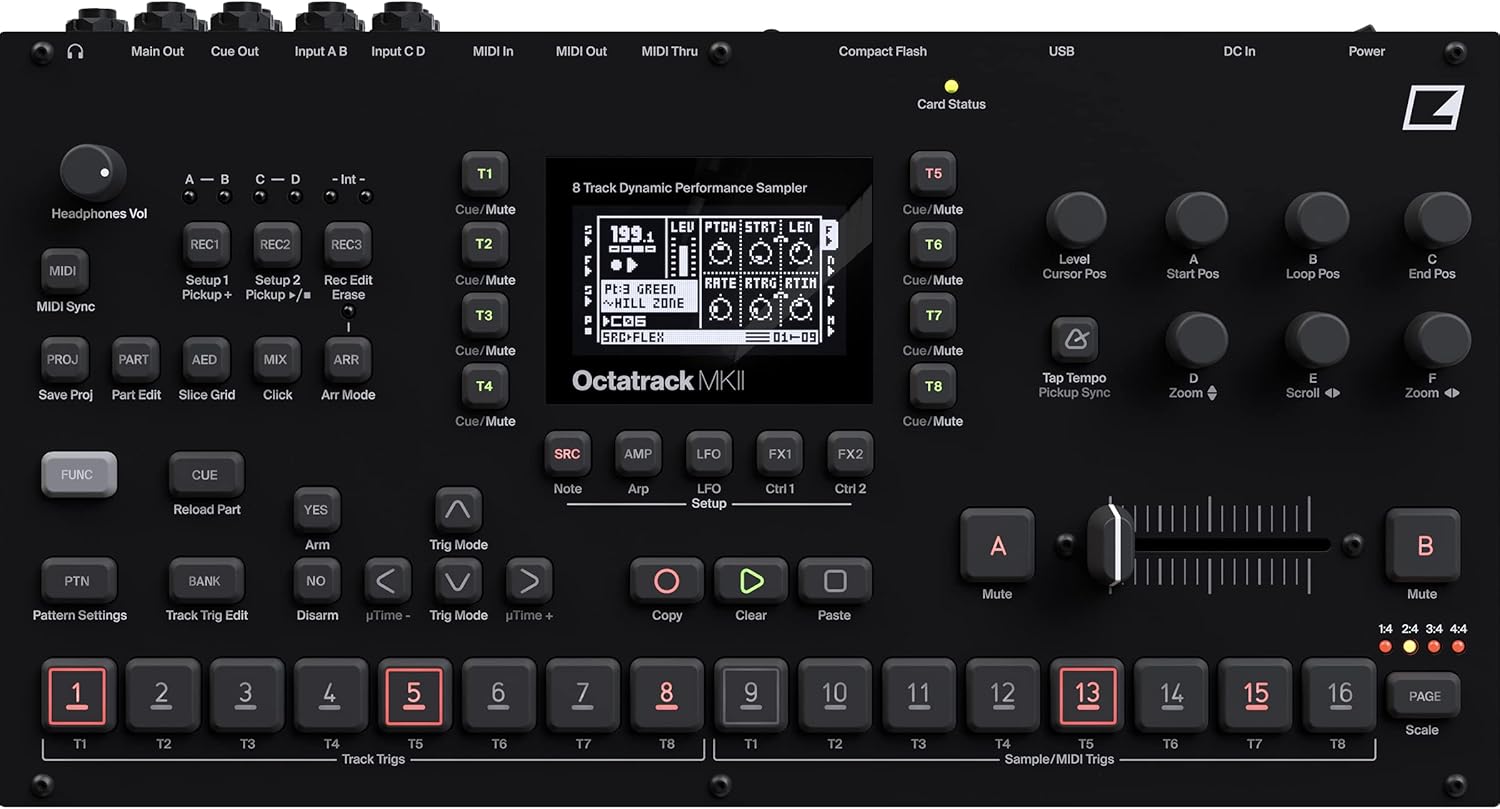
The Octatrack MKII is a powerful music machine that helps you record, change, and mix sounds in fun and creative ways. It has 8 tracks for samples, 8 tracks to control other music gear, and lots of buttons and features to shape your sound. You can twist and stretch sounds, connect microphones or instruments, and even control other music machines with it. Whether you're making a song, performing live, or just having fun, the Octatrack MKII gives you tons of ways to play with sound and make music your own.
Polyend Play
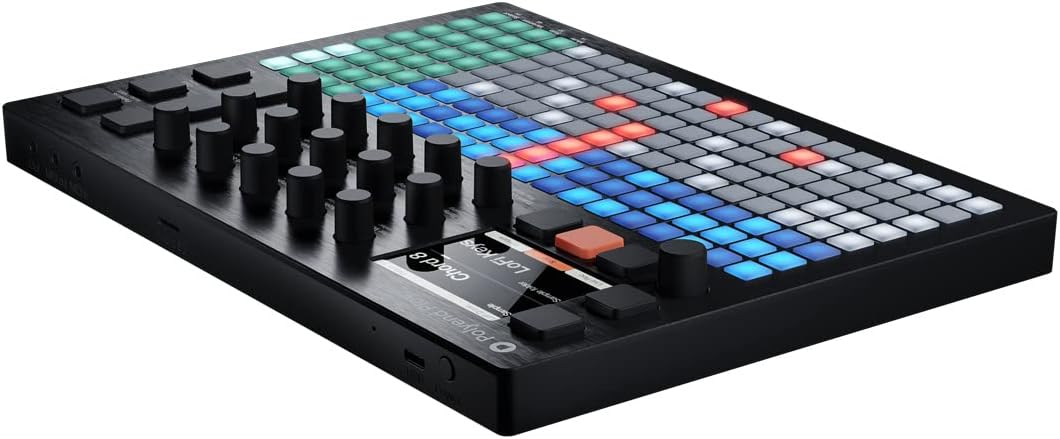
The Polyend Play is a powerful and intuitive sampler and groovebox designed for creative freedom without the complexity. It features over 30 ready-to-use sample kits, eight audio tracks, and eight polyphonic MIDI tracks, all accessible through a user-friendly interface tailored for both studio production and live performance. With 35 unique playback modes, randomizer and step repeater functions, a flexible 64-step sequencer, customizable pattern placement, onboard effects, and deep MIDI integration, the Play invites hands-on experimentation and effortless arrangement—whether you're jamming or building complete tracks from scratch.
| Spec | Elektron Octatrack MKII | Polyend Play |
|---|---|---|
| Manufacturer | Elektron | Polyend |
| Year Released | 2017 | 2022 |
| Polyphony | 8 | 64 |
| Sample Rate | 48kHz | 44.1kHz |
| Storage | SD card | MicroSD card |
| Pads | No pads, uses encoders and buttons | 16 velocity-sensitive pads |
| Sequencer | Yes | Yes |
| Effects | Filters, Delay, Reverb | Multiple effects |
| I/O | MIDI In/Out/Thru, USB, Audio In/Out | MIDI In/Out, USB, Audio In/Out |
| Screen | OLED display | LCD display |
| Software Integration | Elektron Transfer | No |
| Build | Desktop | Groovebox |
| Price | $1799 | $1100 |
| More about | Details | Details |
Buy the Elektron Octatrack MKII on Amazon.com
Buy Now On AmazonBuy the Polyend Play on Amazon.com
Buy Now On AmazonElektron Octatrack MKII vs. Polyend Play: Which Sampler is Right for You?
Summary: The Elektron Octatrack MKII and the Polyend Play are two popular samplers that cater to different musicians’ needs. The Octatrack MKII is a powerful tool for live performance and complex sound manipulation, while the Polyend Play is a user-friendly groovebox designed for creative production.
Welcome to our in-depth comparison of two exciting musical instruments: the Elektron Octatrack MKII and the Polyend Play. If you’re a music gear enthusiast, you’re in for a treat! Whether you’re new to music production or a seasoned pro, understanding these samplers can help you choose the right tool for your musical journey. Both instruments have unique features that make them stand out. Let’s dive in and explore what makes these samplers tick!
Meet the Samplers
Before we start comparing, let’s get to know our two contenders.
Elektron Octatrack MKII
Released in 2017 by Elektron, the Octatrack MKII is a desktop sampler and performance sequencer known for its powerful real-time manipulation capabilities. With a price tag of $1400, it’s an investment for serious musicians. This sampler doesn’t have traditional pads; instead, it uses encoders and buttons to control its functions. It’s perfect for those who love diving deep into sound design.
Polyend Play
The Polyend Play, on the other hand, is a groovebox released in 2022. It comes from Polyend and costs around $1100. This sampler is all about modern workflow and ease of use, featuring 16 velocity-sensitive pads. It offers a creative platform for music production, making it a great choice for those who prefer a hands-on approach.
Feature Showdown
Now that we’ve introduced the two samplers, let’s compare their features.
Polyphony and Sample Rate
The first thing to know is how many sounds each sampler can play at the same time. The Octatrack MKII has a polyphony of 8, which means it can play eight sounds together. Its sample rate is 48kHz, offering high-quality audio. In contrast, the Polyend Play offers a whopping 64 notes of polyphony with a sample rate of 44.1kHz. This makes it more suitable for complex compositions with many layers of sound.
Storage and Interface
The Octatrack MKII uses an SD card for storage, while the Polyend Play uses a MicroSD card. Both options offer plenty of space for your samples and projects. When it comes to user interface, the Octatrack MKII relies on encoders and buttons, which might be a bit challenging for beginners. Meanwhile, the Polyend Play is equipped with 16 velocity-sensitive pads, making it more intuitive and tactile for those who enjoy hands-on music creation.
Sequencer and Effects
Sequencers are crucial for creating patterns and arranging music. Both samplers feature powerful sequencers. The Octatrack MKII is renowned for its complex sequencing capabilities, perfect for intricate compositions. It also offers a selection of effects, including filters, delay, and reverb, allowing for deep sound manipulation.
The Polyend Play, while also having a sequencer, leans towards a more straightforward approach. It offers multiple effects, though not as specialized as the Octatrack’s, which fits its groovebox nature—ideal for producing beats and loops quickly.
I/O and Screen
Both samplers provide versatile inputs and outputs. The Octatrack MKII includes MIDI In/Out/Thru, USB, and Audio In/Out, giving you a robust setup for integrating other gear. It also features an OLED display, which is sharp and clear, great for detailed editing.
The Polyend Play offers MIDI In/Out, USB, and Audio In/Out as well, though it lacks the MIDI Thru option. It has an LCD display, which, while functional, might not be as crisp as the Octatrack’s screen.
Software Integration and Build Quality
Software integration can make or break a music production setup. The Octatrack MKII integrates with Elektron Transfer, allowing for easy sample management and project backups. The Polyend Play does not offer dedicated software integration, which could be a downside for some users.
As for build quality, the Octatrack MKII is a sturdy desktop unit, designed to withstand the rigors of live performance. The Polyend Play, being a groovebox, is also portable and robust, but its design focuses more on studio and creative environments.
Pros and Cons
Let’s sum up what we’ve covered by highlighting the strengths and weaknesses of each sampler.
Elektron Octatrack MKII
Pros:
- Powerful real-time manipulation
- High-quality 48kHz audio
- Robust build for live performances
- Complex sequencer for detailed compositions
Cons:
- Higher price point at $1400
- Steeper learning curve
- Lack of pads might be less intuitive for some users
Polyend Play
Pros:
- User-friendly interface with 16 pads
- Higher polyphony of 64
- More affordable at $1100
- Great for quick music production and creativity
Cons:
- Lower sample rate at 44.1kHz
- No dedicated software integration
- Limited MIDI I/O options
Final Thoughts
In conclusion, both the Elektron Octatrack MKII and the Polyend Play have their own unique strengths. The Octatrack MKII is best suited for experienced musicians looking for a powerful tool for live performances and detailed sound manipulation. It’s an excellent choice for those who enjoy complex sequencing and sound design.
On the other hand, the Polyend Play is ideal for beginners and those who prefer a more straightforward, tactile approach. Its groovebox design and user-friendly interface make it perfect for quick music production and creative exploration.
No matter which sampler you choose, both the Elektron Octatrack MKII and the Polyend Play are fantastic tools for bringing your musical ideas to life. Whether you’re crafting intricate soundscapes or laying down catchy beats, these samplers offer endless possibilities. Happy music-making!