Polyend Play+ — VS — Roland Verselab MV-1
Polyend Play+
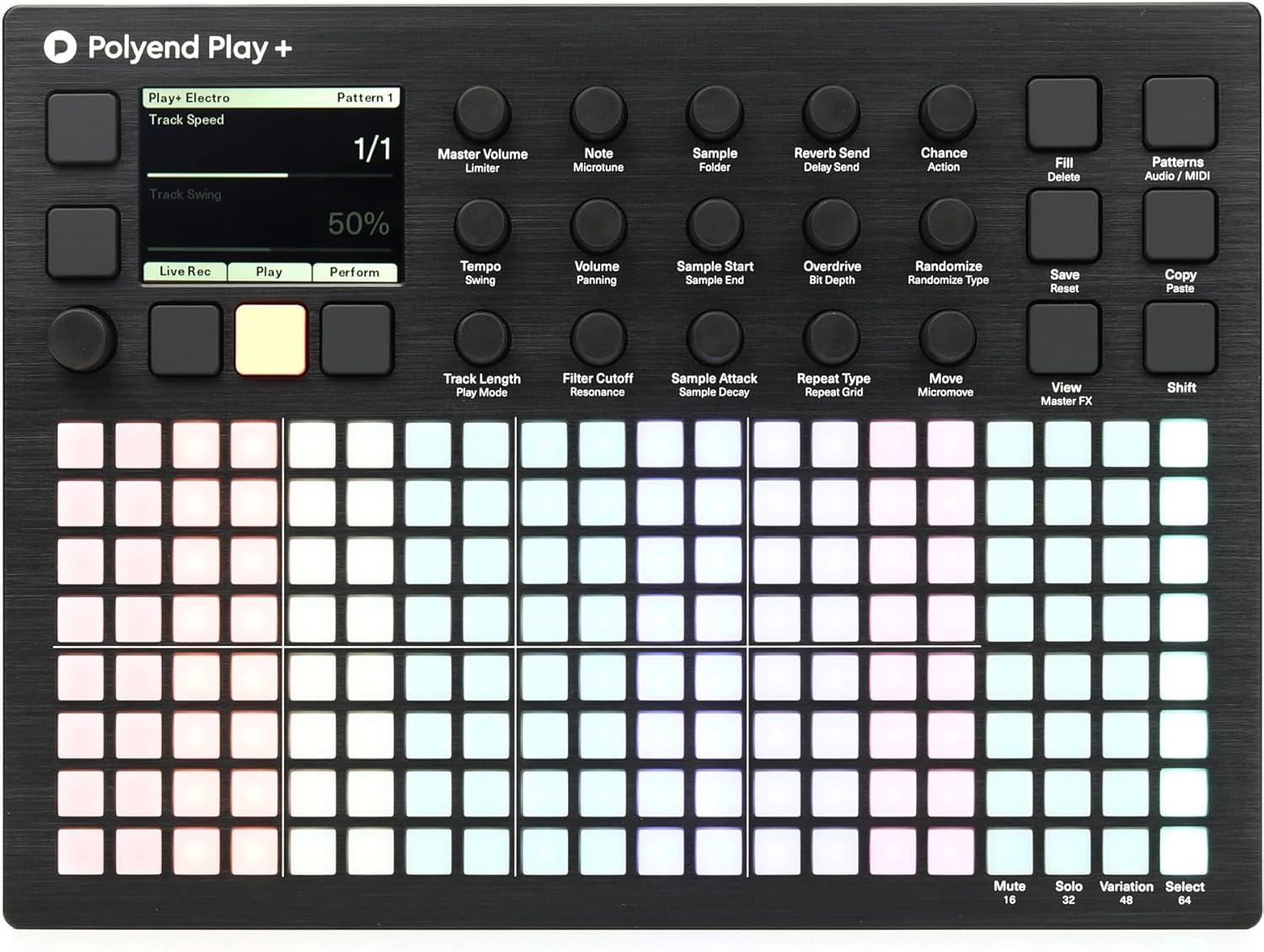
The Polyend Play+ builds on the original Polyend Play by adding upgraded internals and expanded features for creative sequencing, sample playback, and live performance. It supports stereo sample playback, powerful track-based sequencing, per-step automation, and advanced MIDI sequencing—all with a large 8x8 grid and deep performance tools. Ideal for electronic producers and live performers looking for a portable yet capable music workstation.
Roland Verselab MV-1
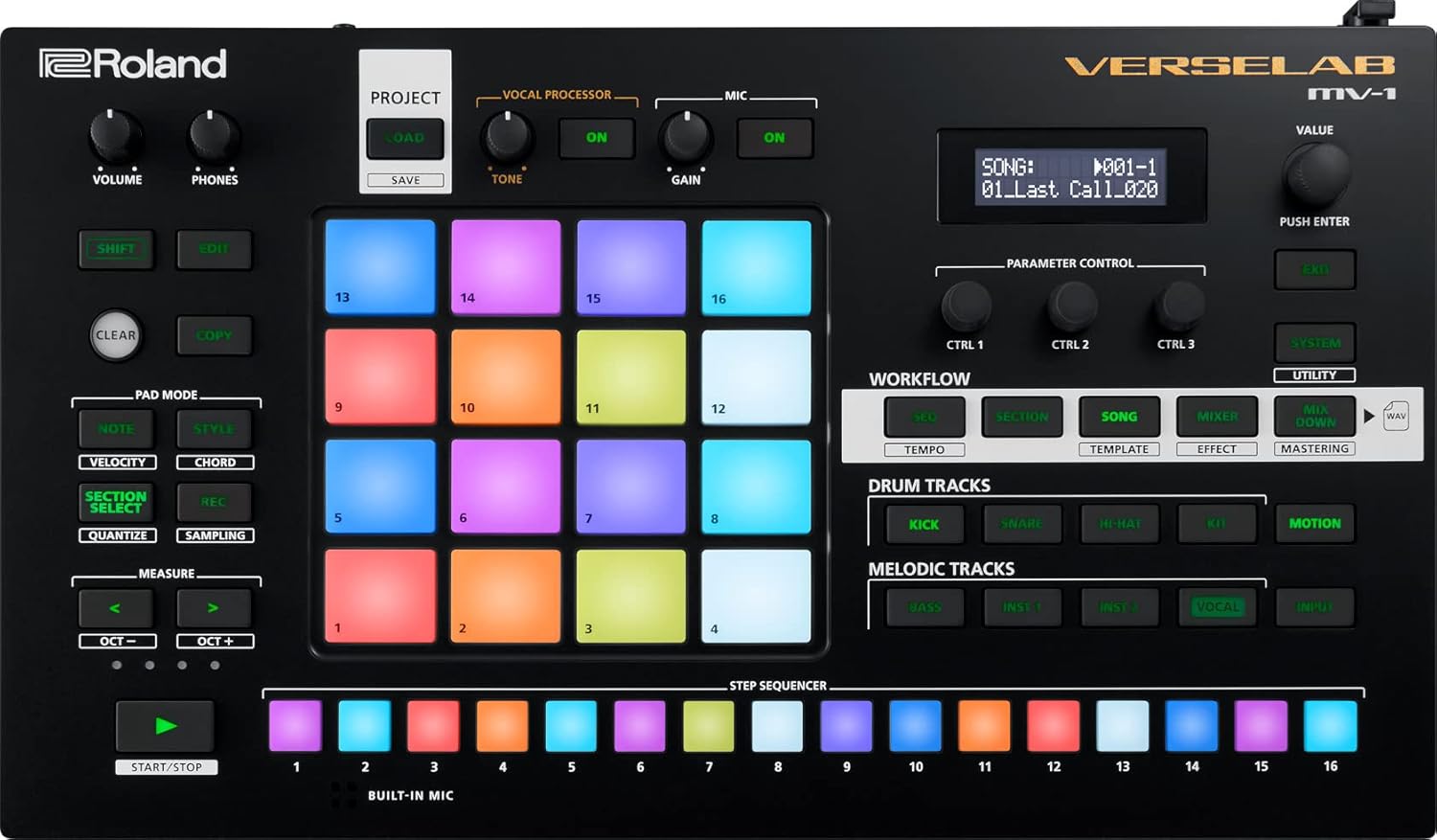
The VERSELAB MV-1 is a fun, all-in-one music studio that helps you make your own songs—from beats to vocals—right out of the box. It comes with over 3,000 cool sounds, easy-to-use tools for writing and recording music, and special effects like Auto-Pitch and harmonies. You can tap out beats with pads, record your voice, and even connect it to your phone, tablet, or computer. It's made to help anyone—beginner or pro—create awesome music without needing a bunch of extra stuff.
| Spec | Polyend Play+ | Roland Verselab MV-1 |
|---|---|---|
| Manufacturer | Polyend | Roland |
| Year Released | 2023 | 2021 |
| Polyphony | 8 | 128 |
| Sample Rate | 44.1kHz / 16-bit | 44.1kHz |
| Storage | MicroSD card | SD card |
| Pads | 8x8 velocity-sensitive pad grid | No pads |
| Sequencer | Yes, 16-track pattern-based | Yes |
| Effects | Reverb, Delay, Overdrive, EQ, Master FX | EQ, Reverb, Delay |
| I/O | Stereo In, Stereo Out, MIDI In/Out/Thru, USB-C | MIDI In/Out, USB, Audio In/Out |
| Screen | High-res color display | LCD display |
| Software Integration | Drag-and-drop sample management via USB | Roland Software |
| Build | Modern standalone groovebox sampler | Groovebox |
| Price | $799 | $500 |
| More about | Details | Details |
Buy the Polyend Play+ on Amazon.com
Buy Now On AmazonBuy the Roland Verselab MV-1 on Amazon.com
Buy Now On AmazonRoland Verselab MV-1 vs. Polyend Play+: A Detailed Comparison
Summary: In this comparison, we dive deep into the features, pros, and cons of the Roland Verselab MV-1 and the Polyend Play+. Both are fantastic tools for music creation, but each caters to different needs. Let’s explore which one might be the perfect fit for you.
Introduction
Music production has never been more accessible, thanks to innovative devices like the Roland Verselab MV-1 and the Polyend Play+. These grooveboxes are designed to help musicians craft beats and melodies, whether they’re in a studio or on the go. With so many options available, choosing the right sampler can be challenging. Today, we’ll break down the features of these two powerful machines to help you decide which one might be your next musical companion.
Feature Comparisons
Design and Build
The Roland Verselab MV-1 is a compact, all-in-one music studio built as a groovebox. It’s designed for ease of use, making it a great choice for beginners and professionals alike. The MV-1 lacks physical pads but compensates with a user-friendly interface and an LCD display that guides users through the music-making process.
In contrast, the Polyend Play+ boasts a modern design with a substantial 8x8 velocity-sensitive pad grid, ideal for dynamic beat-making and live performances. Its build is also a standalone groovebox sampler, but with a focus on performance and advanced sequencing capabilities. The high-resolution color display enhances its user experience, providing clear visual feedback during use.
Sound and Sampling
Both devices operate at a sample rate of 44.1kHz, ensuring high-quality audio output. The Verselab MV-1 offers a remarkable polyphony of 128 voices, allowing for rich and complex compositions without sacrificing performance. It comes loaded with over 3,000 sounds, giving users an extensive library to choose from.
On the other hand, the Polyend Play+ supports stereo sample playback and has a polyphony of 8 voices. While the polyphony is lower than the MV-1, the Play+ makes up for it with its powerful track-based sequencing and per-step automation, which are excellent for electronic music producers looking to create intricate tracks.
Sequencing and Performance
The Roland Verselab MV-1 includes a built-in sequencer, enabling users to arrange their music efficiently. It supports writing and recording with ease, making it a great tool for song creation from start to finish. Its effects like EQ, Reverb, and Delay add depth to the tracks, while features like Auto-Pitch and harmonies enhance vocal recordings.
The Polyend Play+ shines with its 16-track pattern-based sequencer. It offers advanced MIDI sequencing capabilities and deep performance tools, making it ideal for live performances. The per-step automation feature allows for precise control over each element of a track, providing producers with the flexibility to experiment and innovate.
Connectivity
When it comes to connectivity, the Verselab MV-1 is equipped with MIDI In/Out, USB, and Audio In/Out, making it highly versatile for integrating with other equipment. Its integration with Roland Software further enhances its capabilities, allowing users to expand their creative possibilities.
The Polyend Play+ offers a robust set of I/O options, including Stereo In, Stereo Out, MIDI In/Out/Thru, and USB-C. Its drag-and-drop sample management via USB simplifies the process of importing and organizing samples, making it especially appealing to producers who rely heavily on sample manipulation.
Storage
The Roland Verselab MV-1 uses an SD card for storage, providing ample space for saving projects and samples. This traditional storage method is reliable and easy to manage, ensuring that users can keep their work safe and accessible.
The Polyend Play+ utilizes a MicroSD card for storage, which is compact and convenient. This choice aligns with its modern design, offering ample space for storing samples and projects while maintaining a portable form factor.
Pros and Cons
Roland Verselab MV-1
Pros:
- High polyphony of 128 voices
- Extensive library of over 3,000 sounds
- User-friendly interface with LCD display
- Good integration with Roland Software
- Affordable price at $500
Cons:
- No physical pads for beat-making
- Limited to single sample rate
Polyend Play+
Pros:
- 8x8 velocity-sensitive pad grid for dynamic performances
- High-res color display
- Advanced sequencing with per-step automation
- Extensive I/O options with USB-C and drag-and-drop sample management
- Great for live performance and electronic music production
Cons:
- Lower polyphony of 8 voices
- Higher price at $799
Final Verdict
If you’re a beginner looking for an all-in-one solution to create music effortlessly, the Roland Verselab MV-1 is your best bet. With its vast sound library and intuitive interface, it offers excellent value for its price.
For experienced producers and live performers seeking a powerful, portable workstation, the Polyend Play+ stands out. Its advanced sequencing capabilities and performance-oriented design make it ideal for those who want to push the boundaries of their music.
Both the Roland Verselab MV-1 and Polyend Play+ are outstanding devices, each with its unique strengths. Your choice will ultimately depend on your individual needs and goals in music production.