Polyend Play+ — VS — Teenage Engineering EP-133 K.O. II Sampler
Polyend Play+
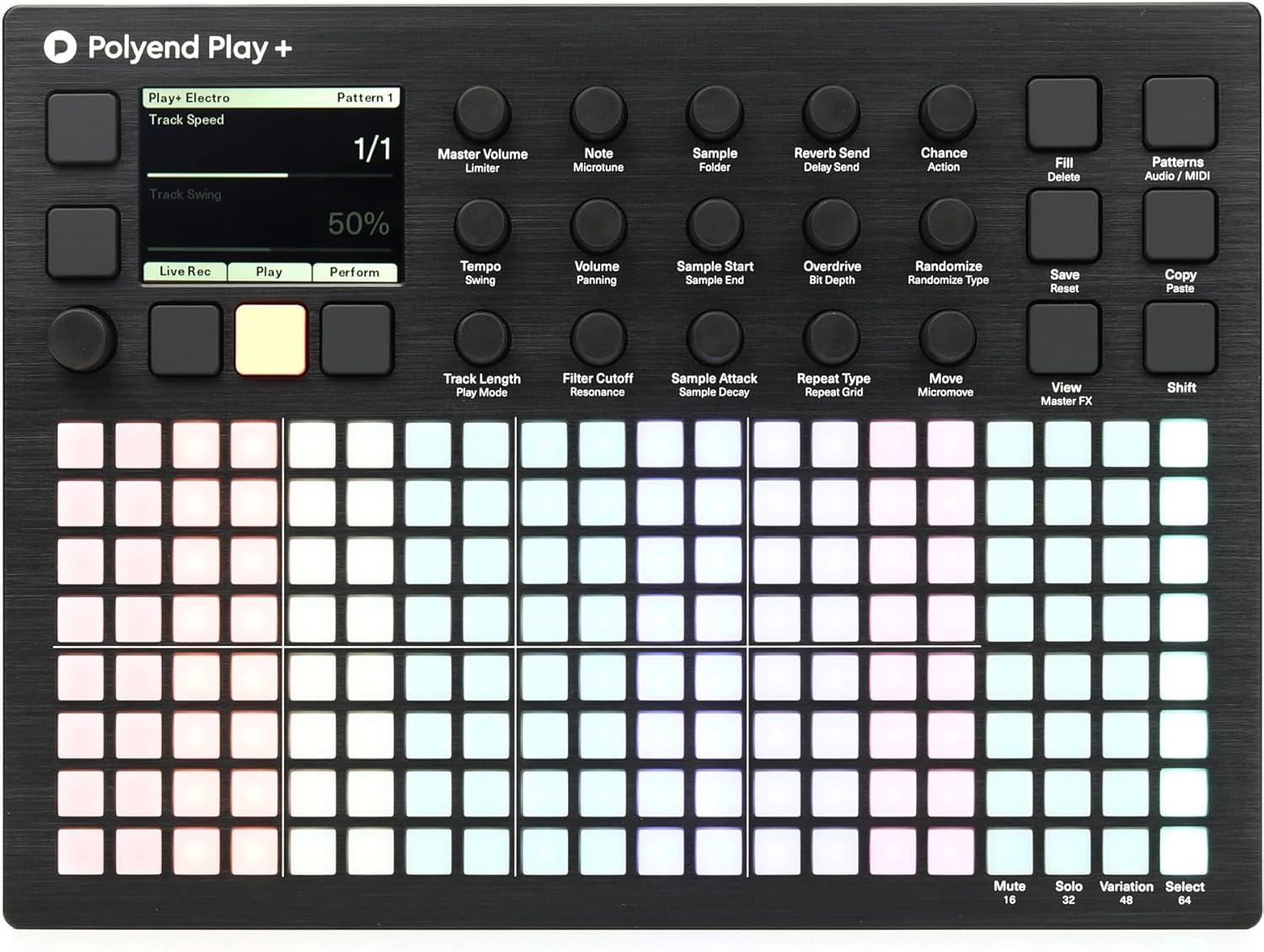
The Polyend Play+ builds on the original Polyend Play by adding upgraded internals and expanded features for creative sequencing, sample playback, and live performance. It supports stereo sample playback, powerful track-based sequencing, per-step automation, and advanced MIDI sequencing—all with a large 8x8 grid and deep performance tools. Ideal for electronic producers and live performers looking for a portable yet capable music workstation.
Teenage Engineering EP-133 K.O. II Sampler
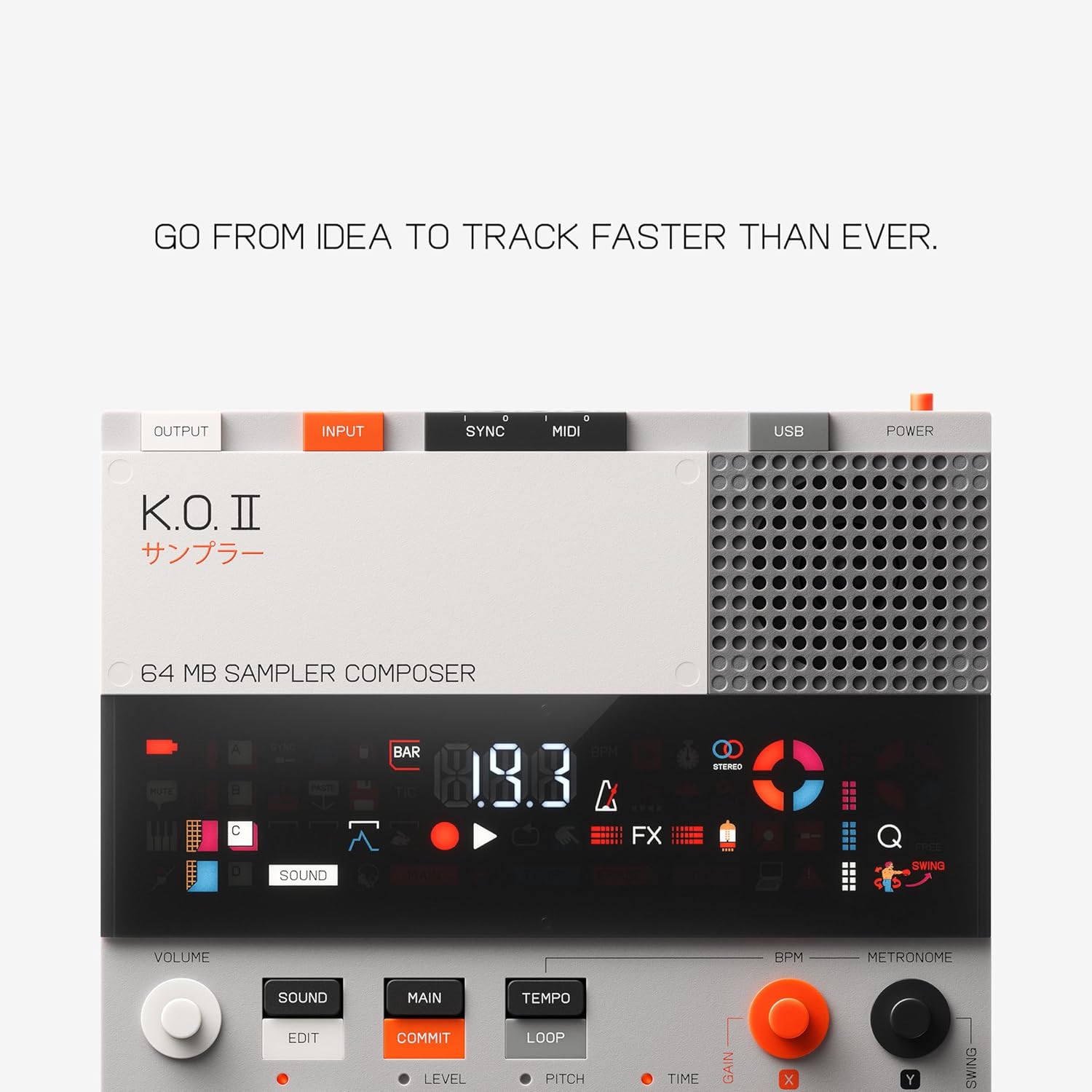
The EP-133 K.O. II is Teenage Engineering's next-gen portable sampler. It features punchy pads, step sequencing, powerful FX, and sample warping—all in a stylish and compact design. It's a fantastic upgrade from the original PO-33 for musicians looking for portability and hands-on performance.
| Spec | Polyend Play+ | Teenage Engineering EP-133 K.O. II Sampler |
|---|---|---|
| Manufacturer | Polyend | Teenage Engineering |
| Year Released | 2023 | 2023 |
| Polyphony | 8 | Polyphonic (unspecified) |
| Sample Rate | 44.1kHz / 16-bit | 16-bit / 46.875kHz |
| Storage | MicroSD card | Internal + microSD |
| Pads | 8x8 velocity-sensitive pad grid | 16 velocity-sensitive pads |
| Sequencer | Yes, 16-track pattern-based | Yes |
| Effects | Reverb, Delay, Overdrive, EQ, Master FX | Filter, Delay, Reverb, Compression |
| I/O | Stereo In, Stereo Out, MIDI In/Out/Thru, USB-C | USB-C, Line In/Out, MIDI via TRS |
| Screen | High-res color display | OLED display |
| Software Integration | Drag-and-drop sample management via USB | Minimal, plug-and-play |
| Build | Modern standalone groovebox sampler | Durable plastic housing with step sequencer |
| Price | $799 | $299 |
| More about | Details | Details |
Buy the Polyend Play+ on Amazon.com
Buy Now On AmazonBuy the Teenage Engineering EP-133 K.O. II Sampler on Amazon.com
Buy Now On AmazonSummary
When it comes to portable music-making, the Teenage Engineering EP-133 K.O. II Sampler and the Polyend Play+ both offer unique features tailored to different kinds of musicians. The EP-133 K.O. II is perfect for those who value portability and ease of use, while the Polyend Play+ is designed for producers who want a powerful, standalone music workstation. Let’s dive into the details!
Introduction
Hello, music gear enthusiasts! Today, we’re exploring two exciting samplers that have caught the attention of musicians everywhere: the Teenage Engineering EP-133 K.O. II Sampler and the Polyend Play+. Whether you’re a budding bedroom producer or a seasoned live performer, these devices promise to enhance your creative toolkit. Let’s see how they stack up against each other!
Feature Comparisons
Design and Build
The Teenage Engineering EP-133 K.O. II is known for its stylish and compact design. Made from durable plastic, it’s built to withstand the rigors of both studio and stage. You’ll appreciate its portability, making it easy to take with you wherever you go.
On the other hand, the Polyend Play+ sports a modern and sophisticated look. Its solid build makes it a reliable choice for those who need a sturdy, standalone groovebox. The 8x8 pad grid is a focal point, providing ample space for complex performances.
Polyphony and Sample Rate
Polyphony refers to the number of notes a sampler can play simultaneously. The EP-133 K.O. II offers polyphonic capabilities, although the specific number isn’t detailed. It records and plays back samples at a rate of 46.875kHz, providing good audio quality.
The Polyend Play+ is more specific, offering 8-note polyphony and a sample rate of 44.1kHz. This ensures that your samples will sound clean and clear, suitable for professional productions.
Pads and Sequencing
The EP-133 K.O. II features 16 velocity-sensitive pads, making it easy to create dynamic beats. Its step sequencer allows for intuitive pattern creation, perfect for live performances and quick idea generation.
In contrast, the Polyend Play+ boasts a larger 8x8 velocity-sensitive pad grid. This setup is ideal for intricate pattern-based sequencing, offering 16 tracks for complex compositions. If you’re into detailed sequencing, the Play+ might be your go-to device.
Effects and IO
Effects can make your music more interesting. The EP-133 K.O. II comes with a range of effects, including filters, delay, reverb, and compression. Its connectivity options include USB-C, Line In/Out, and MIDI via TRS, offering flexibility for different setups.
Meanwhile, the Polyend Play+ offers reverb, delay, overdrive, EQ, and master effects, along with stereo inputs and outputs. It also supports MIDI In/Out/Thru and USB-C, making it a versatile choice for various production environments.
Screen and Software Integration
The EP-133 K.O. II features a compact OLED display. Its software integration is minimal, emphasizing a plug-and-play approach, which is great for those who prefer to focus on music rather than technical setups.
The Polyend Play+ boasts a high-res color display, enhancing the user experience with clear visuals. It also supports drag-and-drop sample management via USB, simplifying the process of organizing and loading samples.
Pros and Cons
Teenage Engineering EP-133 K.O. II
Pros:
- Portable and stylish design
- Intuitive step sequencer
- Wide range of effects
- Affordable price at $299
Cons:
- Minimal software integration
- Unspecified polyphony
Polyend Play+
Pros:
- Large 8x8 pad grid for detailed sequencing
- High-res color display
- Extensive connectivity options
- Advanced MIDI capabilities
Cons:
- Higher price at $799
- More complex setup may not be beginner-friendly
Final Verdict
The Teenage Engineering EP-133 K.O. II is perfect for musicians who value portability and simplicity. It’s a great choice for those who want a straightforward, hands-on approach to music-making. Check out more about it here.
The Polyend Play+, on the other hand, is ideal for producers and performers who need a powerful, standalone workstation. Its advanced features and larger pad grid make it suitable for complex compositions and live performances. For more details, visit the Polyend Play+ page.
Both samplers bring something unique to the table, so choose the one that best fits your musical needs and start creating!