Polyend Play — VS — Roland SP-404MKII
Polyend Play
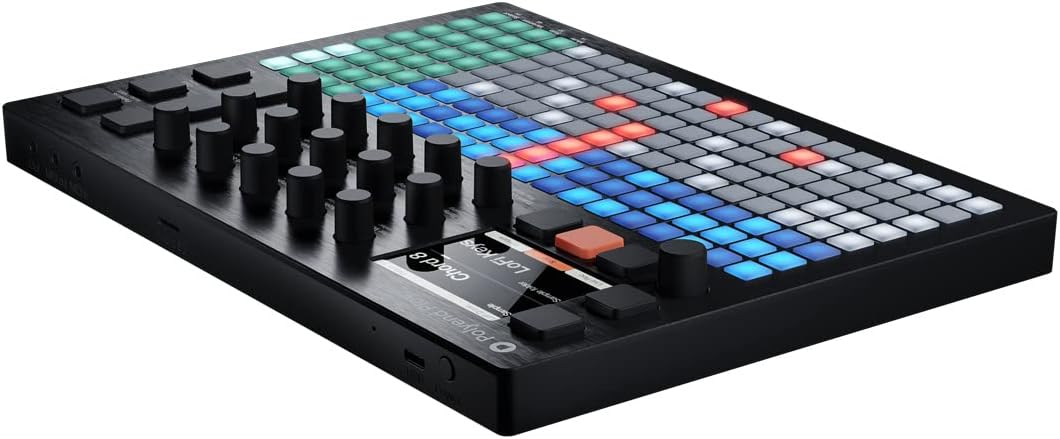
The Polyend Play is a powerful and intuitive sampler and groovebox designed for creative freedom without the complexity. It features over 30 ready-to-use sample kits, eight audio tracks, and eight polyphonic MIDI tracks, all accessible through a user-friendly interface tailored for both studio production and live performance. With 35 unique playback modes, randomizer and step repeater functions, a flexible 64-step sequencer, customizable pattern placement, onboard effects, and deep MIDI integration, the Play invites hands-on experimentation and effortless arrangement—whether you're jamming or building complete tracks from scratch.
Roland SP-404MKII
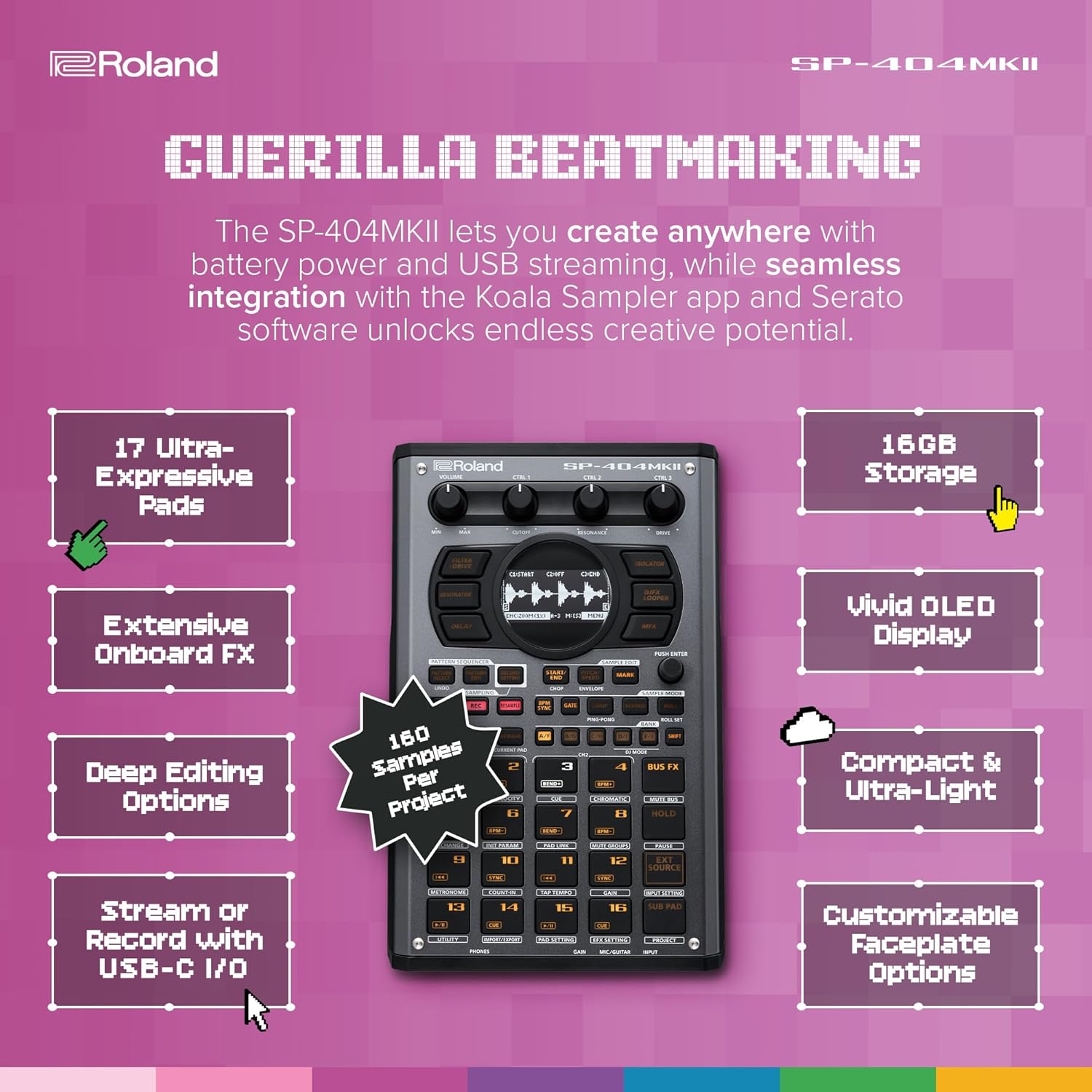
The SP-404MKII is a music-making machine that helps you create beats fast and have fun doing it. You can play sounds with cool pads, mix in effects, and use a big library of awesome sounds. It has a bright screen to help you see everything easily, and it's great for making music anywhere you go. DJs and beatmakers love it because it's super fun, powerful, and easy to use!
| Spec | Polyend Play | Roland SP-404MKII |
|---|---|---|
| Manufacturer | Polyend | Roland |
| Year Released | 2022 | 2021 |
| Polyphony | 64 | 128 |
| Sample Rate | 44.1kHz | 44.1kHz |
| Storage | MicroSD card | SD card |
| Pads | 16 velocity-sensitive pads | 16 velocity-sensitive pads |
| Sequencer | Yes | Yes |
| Effects | Multiple effects | Vintage effects, Reverb, Delay |
| I/O | MIDI In/Out, USB, Audio In/Out | MIDI In/Out, USB, Audio In/Out |
| Screen | LCD display | OLED display |
| Software Integration | No | Roland Software |
| Build | Groovebox | Portable |
| Price | $1100 | $650 |
| More about | Details | Details |
Buy the Polyend Play on Amazon.com
Buy Now On AmazonBuy the Roland SP-404MKII on Amazon.com
Buy Now On AmazonRoland SP-404MKII vs. Polyend Play: A Sampler Showdown
Summary: In this blog post, we dive into the similarities and differences between two popular samplers, the Roland SP-404MKII and the Polyend Play. We’ll explore their features, pros, and cons to help you decide which one might be the best fit for your music-making needs.
Introduction
Sampling is an exciting way to create music. It allows you to take sounds from the world around you and turn them into something new and unique. Two popular tools in the world of sampling are the Roland SP-404MKII and the Polyend Play. Both of these devices are packed with features that can help you make amazing music, but they also have their differences. In this blog post, we’ll compare these two samplers to help you figure out which one might be the best choice for you.
Feature Comparisons
Design and Build
The Roland SP-404MKII is designed to be portable, making it easy to take with you wherever you go. It’s a modern update of the popular SP-404, and it has a stylish look with an OLED display that makes navigating its features a breeze. The device is lightweight and can easily fit into a backpack, making it perfect for musicians on the move.
On the other hand, the Polyend Play is a groovebox, which means it’s designed to be a standalone music-making machine. It also has a sleek design and comes with an LCD display. While it might not be as portable as the SP-404MKII, it offers a robust build that’s perfect for home studios and live performances.
Pads and Sequencer
Both samplers come with 16 velocity-sensitive pads and a sequencer. This means you can play and record your sounds with different levels of intensity, adding dynamics to your music. The sequencer in both devices allows you to string together your sounds to create full songs.
The SP-404MKII’s sequencer is praised for its simplicity and ease of use, making it a great option for beginners. It allows you to quickly record and arrange your sounds without getting bogged down in complex menus.
The Polyend Play, however, offers a more advanced sequencer that provides more options for those who want to dive deeper into their music arrangements. This might be a better choice for experienced producers looking for more control over their compositions.
Effects and Sound Quality
Both samplers offer a range of effects to enhance your sounds. The SP-404MKII is known for its vintage effects, including reverb and delay. These effects can give your music a warm and nostalgic feel, reminiscent of classic hip-hop and electronic tracks.
The Polyend Play also offers multiple effects, but they are more modern and varied. This allows for a wider range of sound manipulation, which can be appealing for those looking to experiment and push the boundaries of their sound design.
In terms of sound quality, both devices have a sample rate of 44.1kHz, ensuring high-quality audio playback and recording. However, the SP-404MKII supports polyphony of up to 128 voices, whereas the Polyend Play offers 64. This means the SP-404MKII can handle more simultaneous sounds, which might be important for complex compositions.
Storage and Connectivity
Storage is another important aspect to consider when choosing a sampler. The SP-404MKII uses an SD card for storage, while the Polyend Play uses a MicroSD card. Both options offer expandable storage, so you can load them up with samples to your heart’s content.
When it comes to connectivity, both devices come equipped with MIDI In/Out, USB, and Audio In/Out. This allows you to connect them to other gear and integrate them into your existing setup. However, the SP-404MKII offers software integration with Roland Software, providing additional tools and features for those who like to work on a computer. The Polyend Play, on the other hand, does not offer software integration, which might be a downside for some users.
Price
Price is always an important factor when making a purchase decision. The SP-404MKII is priced at $650, making it a more affordable option for those on a budget. The Polyend Play, however, comes in at $1100, which might be a consideration for those who are willing to spend more for its advanced features and capabilities.
Pros and Cons
Roland SP-404MKII
Pros:
- Portable and lightweight design
- Easy-to-use sequencer
- Vintage effects for a classic sound
- Higher polyphony (128 voices)
- More affordable price ($650)
- Software integration with Roland Software
Cons:
- Limited to the effects provided
- Might not have as many advanced features as other samplers
Polyend Play
Pros:
- Robust build suitable for studios and live performances
- Advanced sequencer with more options
- Multiple modern effects for sound manipulation
- Good for experienced producers
Cons:
- Higher price point ($1100)
- Not as portable as the SP-404MKII
- No software integration
Conclusion
Both the Roland SP-404MKII and the Polyend Play are excellent samplers, each with their own strengths and weaknesses. The SP-404MKII is a great choice for beginners and those who need a portable and affordable option. It’s perfect for musicians who love the classic sound of vintage effects and want a straightforward, easy-to-use device.
The Polyend Play, on the other hand, is ideal for experienced producers who want a more advanced tool with modern effects and a powerful sequencer. It’s perfect for those who need a robust groovebox for their home studio or live performances.
Ultimately, the choice between the two comes down to your personal needs and preferences. If you want something portable and budget-friendly, go with the Roland SP-404MKII. If you’re looking for a more advanced groovebox with a modern workflow, the Polyend Play might be the better fit. Happy sampling!