Roland Verselab MV-1 — VS — Synthstrom Deluge
Roland Verselab MV-1
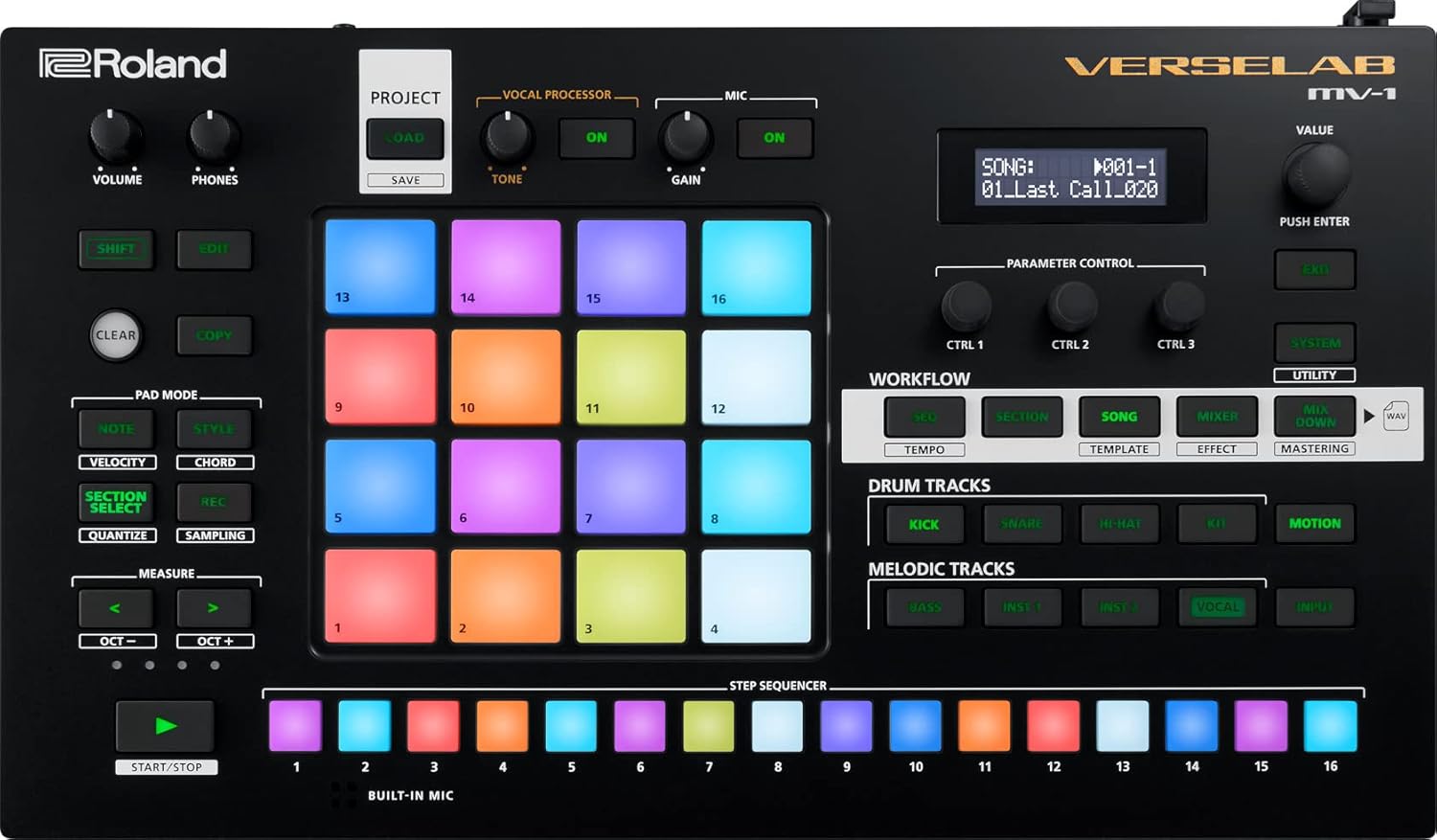
The VERSELAB MV-1 is a fun, all-in-one music studio that helps you make your own songs—from beats to vocals—right out of the box. It comes with over 3,000 cool sounds, easy-to-use tools for writing and recording music, and special effects like Auto-Pitch and harmonies. You can tap out beats with pads, record your voice, and even connect it to your phone, tablet, or computer. It's made to help anyone—beginner or pro—create awesome music without needing a bunch of extra stuff.
Synthstrom Deluge
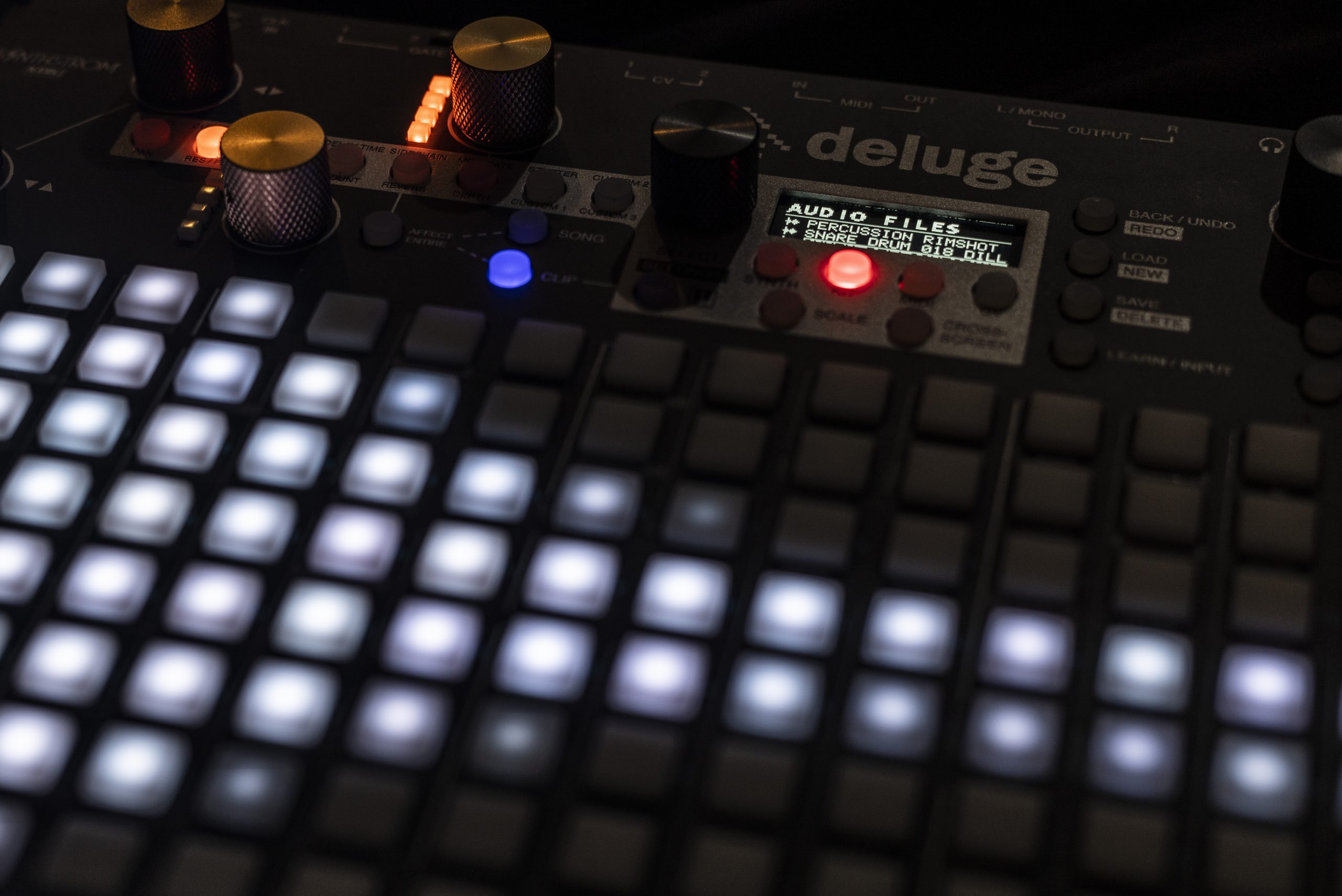
The Synthstrom Deluge is a powerful all-in-one music production workstation that combines a synthesizer, sampler, sequencer, and audio looper in a compact, portable design. Featuring a versatile internal synth engine (subtractive, wavetable, and FM), deep modulation capabilities, and MPE support, it allows for rich sound design and expressive control. Its 128-pad interface enables piano-roll-style sequencing, live performance, and arranging with features like Euclidean sequencing, probability, and advanced timing options. The Deluge streams samples directly from SD, supports multisampling and resampling, and includes robust live looping tools with seamless overdubbing. With extensive connectivity (CV/gate, MIDI, USB), a built-in mic and speaker, and a rechargeable battery for standalone operation, the Deluge is a fully self-contained music creation tool designed for both studio composition and live performance.
| Spec | Roland Verselab MV-1 | Synthstrom Deluge |
|---|---|---|
| Manufacturer | Roland | Synthstrom Audible |
| Year Released | 2021 | 2017 |
| Polyphony | 128 | 128 |
| Sample Rate | 44.1kHz | 44.1kHz |
| Storage | SD card | MicroSD card |
| Pads | No pads | No pads, uses buttons and keyboard |
| Sequencer | Yes | Yes |
| Effects | EQ, Reverb, Delay | Multiple effects |
| I/O | MIDI In/Out, USB, Audio In/Out | MIDI In/Out, USB, Audio In/Out |
| Screen | LCD display | LCD display |
| Software Integration | Roland Software | No |
| Build | Groovebox | Standalone sampler/synth/sequencer |
| Price | $500 | $1529 |
| More about | Details | Details |
Buy the Roland Verselab MV-1 on Amazon.com
Buy Now On AmazonBuy the Synthstrom Deluge on Amazon.com
Buy Now On AmazonRoland Verselab MV-1 vs Synthstrom Deluge: A Comprehensive Comparison
Summary: The Roland Verselab MV-1 and the Synthstrom Deluge are both powerful music production tools. The MV-1 is a groovebox designed for easy beat-making and sampling, while the Deluge is a robust sampler, synthesizer, and sequencer with a wide range of features. In this blog post, we’ll delve into their features, pros and cons, and help you decide which one might be the right fit for your musical journey.
Introduction
When it comes to creating music, having the right equipment can make all the difference. Today, we’re going to explore two popular music production tools: the Roland Verselab MV-1 and the Synthstrom Deluge. Whether you’re a budding music producer or an experienced sound designer, choosing between these two devices might be challenging. Each has its unique strengths, so let’s dive in and see what they offer.
Feature Comparison
Design and Build
The Roland Verselab MV-1 is a sleek groovebox that offers integrated sampling and beat production tools. It’s designed to be compact and user-friendly, making it an excellent option for those new to music production. On the other hand, the Synthstrom Deluge is a standalone sampler, synth, and sequencer with a more robust build. It uses buttons and a keyboard for input, which might appeal to those who prefer a more hands-on approach to music-making.
Sound and Effects
Both devices offer impressive sound capabilities. The Roland Verselab MV-1 provides a polyphony of 128 voices, ensuring rich and complex soundscapes. It features effects like EQ, reverb, and delay, which are essential for crafting professional-sounding tracks. Similarly, the Synthstrom Deluge also offers 128 voices of polyphony and includes multiple effects, allowing for a broad range of sound manipulation.
Storage and Connectivity
When it comes to storage, the Roland Verselab MV-1 uses an SD card, while the Synthstrom Deluge opts for a MicroSD card. This slight difference might not significantly impact your choice, but it’s worth noting. Both devices offer MIDI In/Out, USB, and Audio In/Out, ensuring they can be easily integrated into your existing setup.
Display and Software Integration
The Roland Verselab MV-1 features an LCD display and integrates with Roland Software, making it a seamless part of the Roland ecosystem. This integration can be beneficial if you’re already using Roland products. In contrast, the Synthstrom Deluge also has an LCD display but does not offer software integration. This lack of integration might be a downside for some, but it also means fewer distractions and a focus on hardware.
Price
One of the most significant differences between the two is the price. The Roland Verselab MV-1 is priced at $500, making it a more affordable option for beginners or those on a budget. Meanwhile, the Synthstrom Deluge costs $2000, reflecting its extensive features and robust capabilities.
Pros and Cons
Roland Verselab MV-1
Pros:
- Affordable price point
- User-friendly design
- Integrated Roland Software
- Essential effects for music production
Cons:
- Limited effects compared to the Deluge
- No pads for input
Synthstrom Deluge
Pros:
- Extensive features for advanced users
- Powerful effects and sound capabilities
- Robust build and design
Cons:
- Higher price point
- No software integration
Final Verdict
Choosing between the Roland Verselab MV-1 and the Synthstrom Deluge ultimately depends on your needs and budget. The Roland Verselab MV-1 is perfect for beginners or those looking for an affordable, easy-to-use groovebox. Its integration with Roland Software and essential effects make it a solid choice for starting your music production journey. On the other hand, the Synthstrom Deluge is ideal for advanced users who need a versatile and powerful tool. Its extensive features justify the higher price, making it an excellent investment for serious music producers.
In conclusion, both devices offer unique strengths, and your choice should align with your musical goals and experience level. Whether you’re crafting beats in your bedroom or performing on stage, either of these tools can help you create amazing music.