Roland Verselab MV-1 — VS — Teenage Engineering EP-133 K.O. II Sampler
Roland Verselab MV-1
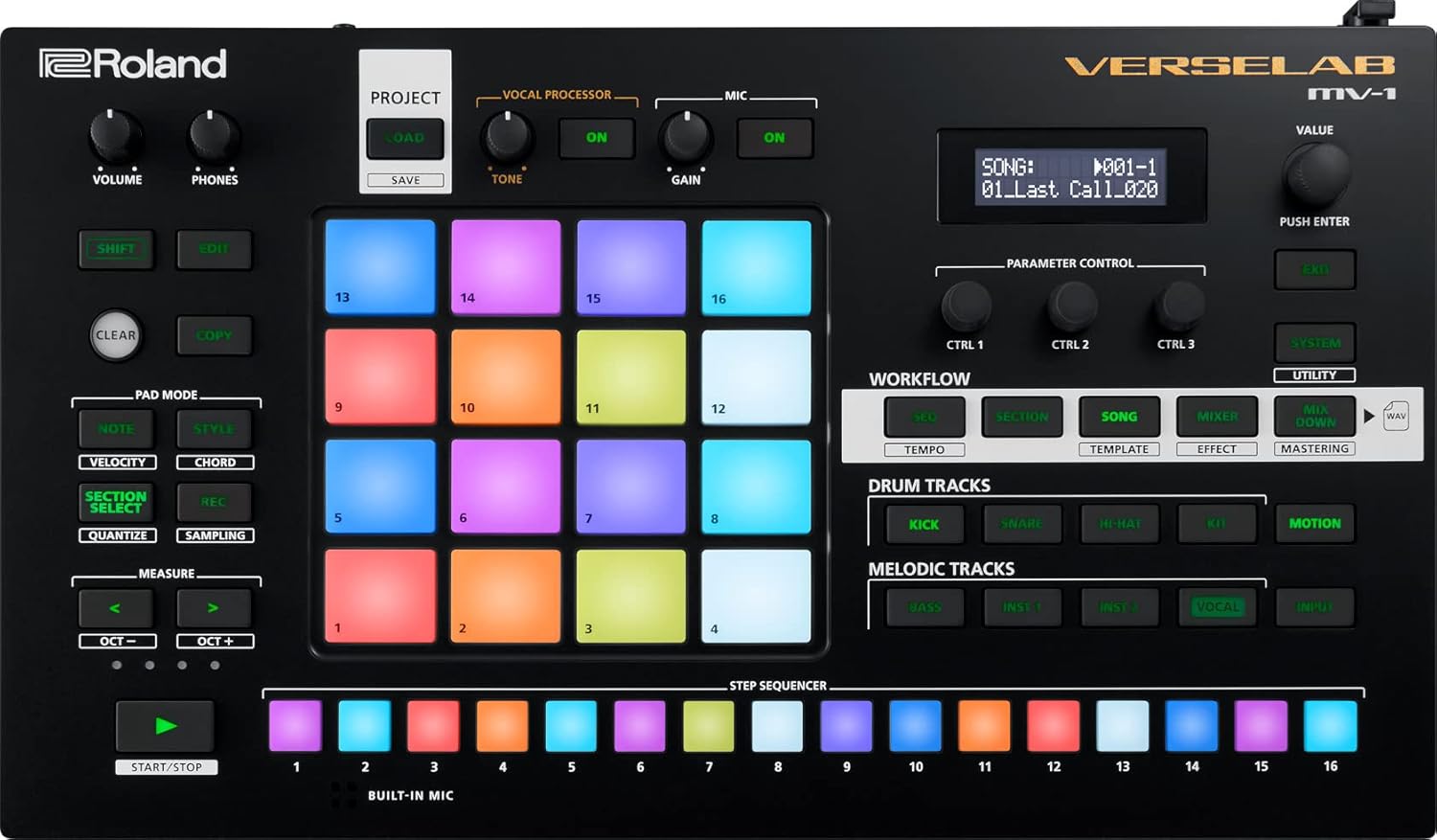
The VERSELAB MV-1 is a fun, all-in-one music studio that helps you make your own songs—from beats to vocals—right out of the box. It comes with over 3,000 cool sounds, easy-to-use tools for writing and recording music, and special effects like Auto-Pitch and harmonies. You can tap out beats with pads, record your voice, and even connect it to your phone, tablet, or computer. It's made to help anyone—beginner or pro—create awesome music without needing a bunch of extra stuff.
Teenage Engineering EP-133 K.O. II Sampler
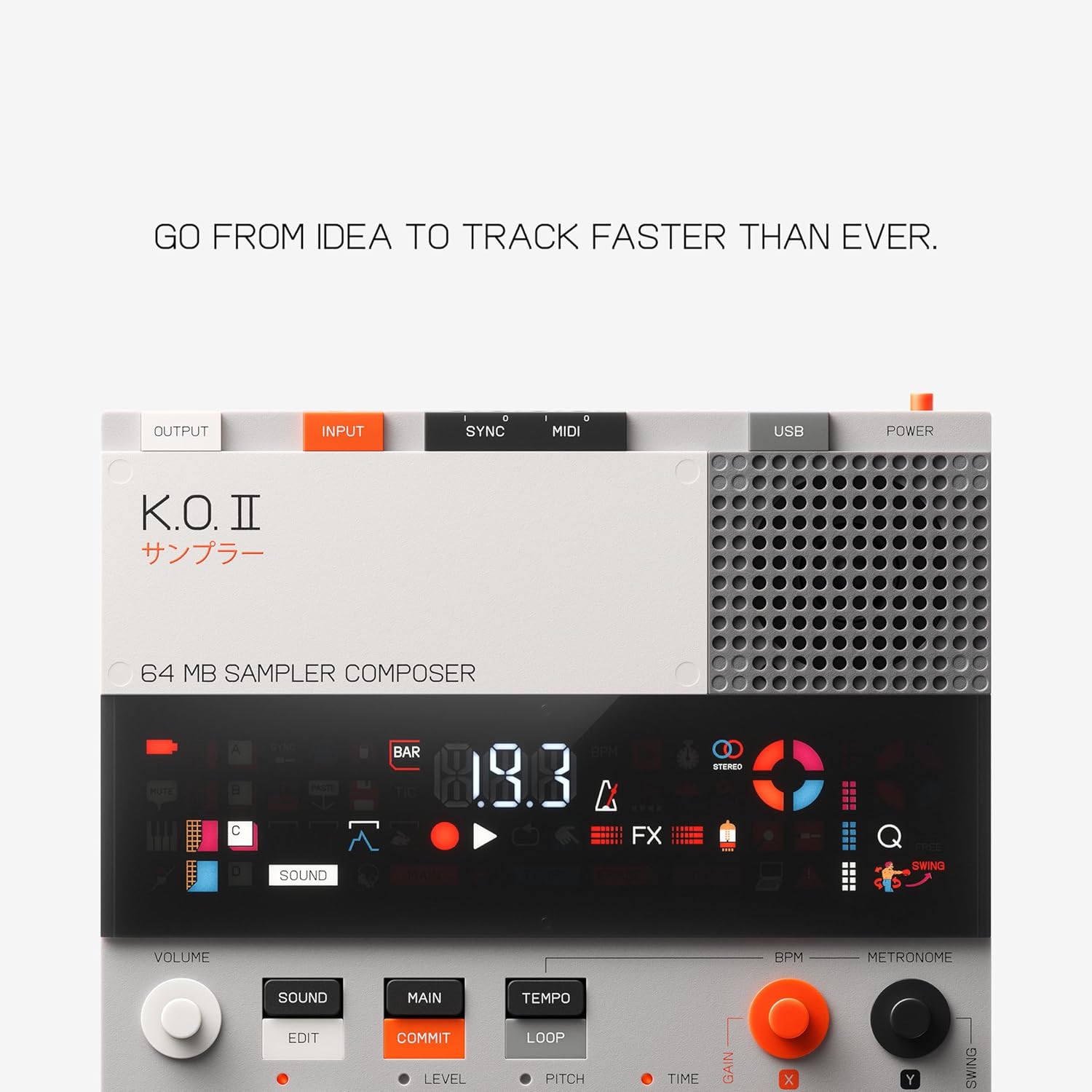
The EP-133 K.O. II is Teenage Engineering's next-gen portable sampler. It features punchy pads, step sequencing, powerful FX, and sample warping—all in a stylish and compact design. It's a fantastic upgrade from the original PO-33 for musicians looking for portability and hands-on performance.
| Spec | Roland Verselab MV-1 | Teenage Engineering EP-133 K.O. II Sampler |
|---|---|---|
| Manufacturer | Roland | Teenage Engineering |
| Year Released | 2021 | 2023 |
| Polyphony | 128 | Polyphonic (unspecified) |
| Sample Rate | 44.1kHz | 16-bit / 46.875kHz |
| Storage | SD card | Internal + microSD |
| Pads | No pads | 16 velocity-sensitive pads |
| Sequencer | Yes | Yes |
| Effects | EQ, Reverb, Delay | Filter, Delay, Reverb, Compression |
| I/O | MIDI In/Out, USB, Audio In/Out | USB-C, Line In/Out, MIDI via TRS |
| Screen | LCD display | OLED display |
| Software Integration | Roland Software | Minimal, plug-and-play |
| Build | Groovebox | Durable plastic housing with step sequencer |
| Price | $500 | $299 |
| More about | Details | Details |
Buy the Roland Verselab MV-1 on Amazon.com
Buy Now On AmazonBuy the Teenage Engineering EP-133 K.O. II Sampler on Amazon.com
Buy Now On AmazonComparing Samplers: Roland Verselab MV-1 vs. Teenage Engineering EP-133 K.O. II
Summary:
In this post, we’ll dive into a detailed comparison between two exciting music-making devices, the Roland Verselab MV-1 and the Teenage Engineering EP-133 K.O. II Sampler. We’ll look at their features, pros and cons, and help you decide which one is the best fit for your music production needs.
Introduction
Music gear enthusiasts, gather around! Today, we’re exploring two intriguing samplers: the Roland Verselab MV-1 and the Teenage Engineering EP-133 K.O. II Sampler. Whether you’re just starting your music journey or you’re a seasoned pro, choosing the right sampler can greatly influence your creative process. Let’s see what each of these devices has to offer!
Feature Comparisons
Sound and Polyphony
The first thing to consider in a sampler is how it handles sound. The Roland Verselab MV-1 boasts a remarkable polyphony of 128 voices, meaning it can play many sounds at once without a hitch. This is perfect for creating complex music layers. It uses a 44.1kHz sample rate, which is standard for high-quality audio recording.
On the other hand, the Teenage Engineering EP-133 K.O. II offers polyphonic capabilities, though the exact number is unspecified. Its sample rate is 16-bit / 46.875kHz, which is slightly lower than the Roland, but still impressive for a portable device. This sampler focuses more on delivering punchy, dynamic sounds with its 16 velocity-sensitive pads.
Storage Capacity
Storage is crucial for keeping your sounds and projects safe. The Roland Verselab MV-1 uses an SD card for storage, allowing for expanded space to house a vast library of samples and tracks. You won’t have to worry about running out of space anytime soon.
The Teenage Engineering EP-133 K.O. II comes with internal storage, plus the option to expand with a microSD card. This flexibility makes it easy to carry your sounds wherever you go, making it a great choice for mobile music-making.
User Interface and Controls
How easy is it to use these samplers? The Roland Verselab MV-1 features an LCD display that helps navigate through its various functions. However, it lacks physical pads, which might be a downside for those who enjoy tapping out beats directly on the device.
Conversely, the Teenage Engineering EP-133 K.O. II shines with its 16 velocity-sensitive pads and a bright OLED display. This setup is perfect for hands-on performance, allowing for immediate interaction with your sounds.
Effects and Sequencing
Effects can transform your music, and both samplers have plenty to offer. The Roland Verselab MV-1 includes EQ, Reverb, and Delay, providing essential tools for shaping your sound. It also features a sequencer, allowing for intricate composition and arrangement.
Teenage Engineering’s EP-133 K.O. II, however, ups the ante with additional effects like Filter and Compression. Its step sequencer is designed for ease of use, letting you build complex patterns effortlessly.
Integration and Connectivity
In today’s digital world, how a device integrates with other gear matters. The Roland Verselab MV-1 offers robust connectivity options, including MIDI In/Out, USB, and Audio In/Out, making it a versatile studio centerpiece. It also integrates seamlessly with Roland Software, expanding its capabilities even further.
The Teenage Engineering EP-133 K.O. II provides USB-C and Line In/Out with MIDI via TRS, offering essential connectivity for live performances and studio work. Its minimal software integration, however, means it’s more of a standalone device, perfect for those who prefer a plug-and-play approach.
Pros and Cons
Roland Verselab MV-1
Pros:
- High polyphony (128 voices)
- Extensive effects and sequencing capabilities
- Seamless integration with Roland Software
- Robust connectivity options
Cons:
- No physical pads for beat making
- Higher price point ($500)
Teenage Engineering EP-133 K.O. II
Pros:
- Compact and portable design
- 16 velocity-sensitive pads for dynamic performance
- Affordable price ($299)
- Punchy effects and easy-to-use sequencer
Cons:
- Lower sample rate
- Limited software integration
Final Verdict
Choosing between the Roland Verselab MV-1 and the Teenage Engineering EP-133 K.O. II really depends on your needs.
For producers focusing on studio work and requiring extensive sound layering options, the Roland Verselab MV-1 is an excellent choice. Its integration with Roland Software and high polyphony makes it ideal for detailed, complex productions.
On the other hand, if you’re a musician on the go, seeking a portable yet powerful tool for live performance, the Teenage Engineering EP-133 K.O. II is perfect. It offers hands-on interaction with its pads and a straightforward approach to music-making.
In conclusion, both samplers have their strengths and cater to different types of music creators. Consider what features matter most to you, and you’re sure to make the right choice!